



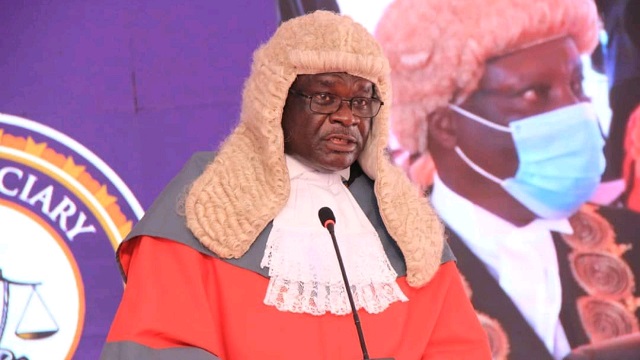

A section of Uganda’s legal fraternity has recently criticized President Yoweri Museveni’s letter to the Chief Justice regarding the case of Joram Itungo, a former State House accountant accused in the gold fraud saga. The Daily Monitor headline “Lawyers hit out at Museveni over move on gold fraud case” suggests that the President overstepped his role. But a closer constitutional and administrative reading tells a very different story.
The case in question involves a former employee of State House. That alone justifies the President’s interest. Any responsible head of government would be expected to take keen interest when matters concerning integrity, fraud, or misconduct arise within their administration. This is not a political move it is an administrative duty.
The President’s communication to the Chief Justice was not an order or directive. It was a request for review, a legitimate inquiry into whether justice was seen to be done in a case that raises serious questions about accountability within the public service. His tone was respectful, his intention transparent, and his approach constitutional.
Those quick to cry “interference” forget that the Judiciary operates under delegated authority within a system of checks and balances. The Executive, Judiciary, and Legislature are separate but interdependent arms of the same constitutional organism each accountable to the people of Uganda.
When the President seeks clarification or expresses concern about how justice is administered particularly in matters touching national integrity he is not usurping judicial powers. He is fulfilling his constitutional mandate to safeguard the rule of law and protect the public interest. Dialogue between branches of government is not an infringement; it is part of healthy democratic oversight.

If the President ignored such matters, critics would accuse him of complacency. Yet when he acts, the same voices label him a meddler. We cannot have it both ways. Leadership carries the responsibility to ask hard questions especially when the nation’s moral fabric and public confidence in justice are at stake.
The President’s letter did not instruct the Chief Justice to reverse a judgment, suspend a judge, or interfere with judicial independence. It merely invited reflection, accountability, and possible internal review within the Judiciary—something even ordinary citizens have a right to seek through petitions or complaints.
Judicial independence is sacred, but independence without accountability risks isolation. The President’s inquiry does not erode judicial autonomy; it reinforces the expectation that justice must be both done and seen to be done. His letter represents responsible leadership, not coercive control.
Moreover, the correspondence reflects a constitutional dialogue between the arms of government. In advanced democracies, similar engagements happen routinely. What matters is tone, intent, and legality all of which were appropriately observed in this case.
Ugandans deserve a justice system that commands confidence and transparency. When the Head of State takes interest in a sensitive case involving alleged fraud, it should be seen as a commitment to integrity, not interference. If the judiciary’s processes are sound, such inquiries will only affirm its strength.
The media and sections of the legal fraternity must resist the temptation to politicize every act of accountability. The President’s letter is not a constitutional breach it is a constitutional responsibility. The true threat to judicial independence is not engagement, but indifference.
In a democracy, the separation of powers must never be mistaken for the separation of purpose. The Executive and Judiciary serve the same people, under the same Constitution, for the same cause which is justice, order, and integrity. The President’s correspondence should therefore be viewed not as a challenge to judicial independence, but as a reaffirmation of shared accountability to the Ugandan people.