



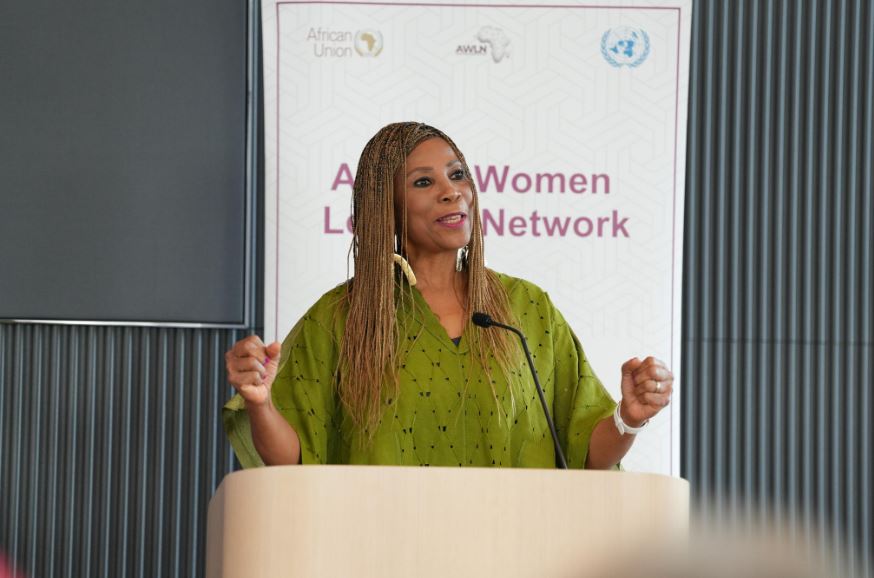

The All-Africa Pension Summit 2025 was the center-stage for a compelling address by Ahunna Eziakonwa, the UN Assistant Secretary-General and Director of the UNDP Regional Bureau for Africa, who urged African leaders to transform the continent’s US$700Bn to US$1 trillion in pension assets into an engine for inclusive and resilient domestic development.
Held in Kampala, Uganda, a few days ago, under the theme, “Unlocking Africa’s Potential Through Inclusive Trade and Economic Integration,” the UNDP Director emphasised at the Summit that Africa’s future must be locally financed and led.
Eziakonwa highlighted that while Africa’s pension assets are less than two percent of the global total, they are projected to grow 10-15-fold by 2050, driven by demographic shifts and regulatory reforms. “The challenge now lies in strategically deploying this patient capital to meet the continent’s vast development needs,” she noted.
According to Eziakonwa, the UNDP’s vision positions pension funds not merely as financial reservoirs, but as crucial agents of economic transformation, arguing that domestic investment offers both financial and high development multiplier effects.
She noted that the UNDP agrees that pension funds are uniquely suited for long-term infrastructure projects (roads, energy, healthcare) that require sustained investment to yield returns, a crucial gap that currently exists in African markets.
She also noted that utilising locally mobilised capital allows African nations to finance their own growth priorities, freeing them from the conditions imposed by foreign funding agencies and vulnerability to geopolitical shifts.
Eziakonwa explained that pooling resources to finance high-impact regional projects, such as the Trans-African Highway Network or the Lobito Corridor, can directly improve connectivity and foster economic integration under the African Continental Free Trade Area (AfCFTA) Framework.
The UNDP boss revealed that increased participation by pension funds strengthens local capital markets, enhancing corporate governance and efficiency.
Despite this immense potential, however, challenges persist. Eziakonwa underscored that pension assets remain highly concentrated in a few countries (South Africa alone holds 40-50%), and investment strategies are often conservative, with over 80% of assets in some cases allocated to low-risk domestic government bonds. “The most pressing challenge remains low coverage, with only about 6.1% of the working-age population in sub-Saharan Africa contributing to a scheme,” she stated.
The UNDP director also advocated for innovative and flexible micro-pension systems leveraging mobile money and algorithms to accommodate the large informal sector. She observed that such an approach could unlock an additional US$10–14 billion annually in domestic savings.
Outdated or restrictive regulations, according to Eziakonwa, limit the proportion of assets pension funds can allocate to alternative investments like private equity and infrastructure. She argued that modernising these rules or making them flexible is essential and should be put into consideration by African governments.
She reiterated that a key opportunity lies in investing in Africa’s rich mineral resource potential, particularly the rare earth elements essential for the global clean energy transition.
Eziakonwa highlighted successful pension reforms that demonstrate the path forward, some of which include;
- South Africa’s PIC: Has invested over US$800 million in renewable energy via the “Two-Pot” system, contributing over 2,000 MW to the national grid.
- Nigeria’s PenCom: With assets exceeding US$14.2 billion, it has successfully deployed pension assets into roads, power generation, and healthcare infrastructure.
- Kenya’s Consortium Model: The formation of a consortium has unlocked over US$500 million in just three years for projects ranging from affordable housing to transport.
In her concluding remarks, Eziakonwa emphasised that the UNDP’s role is to act as a supportive partner, exemplified by its collaboration with CPF Financial Services Group in Kenya to integrate Environmental, Social, and Governance (ESG) principles into pension investments and mobilise green finance.
She stated that the UNDP proposes further focusing on regulatory support, capacity development for ESG-aligned investments, and co-creating investable, de-risked projects in critical sectors like clean energy and digital infrastructure.
In her final call to action, Eziakonwa urged pension fund managers across Africa to commit to modernising investment regulations, expanding coverage, and championing regional cooperation to ensure that retirement security actively fuels national prosperity.