




In a significant boost to its economic diversification and growth agenda, Uganda has secured USD 150 million (over Shs537 billion) in vital funding from the Arab Bank for Economic Development in Africa (BADEA), earmarked specifically to empower its private sector.
This landmark agreement, signed today on the sidelines of the 41st Board of Governors of the Trade and Development Bank Group (TDB Group) in Kigali, Rwanda, underscores BADEA’s commitment to fostering sustainable development across the continent.
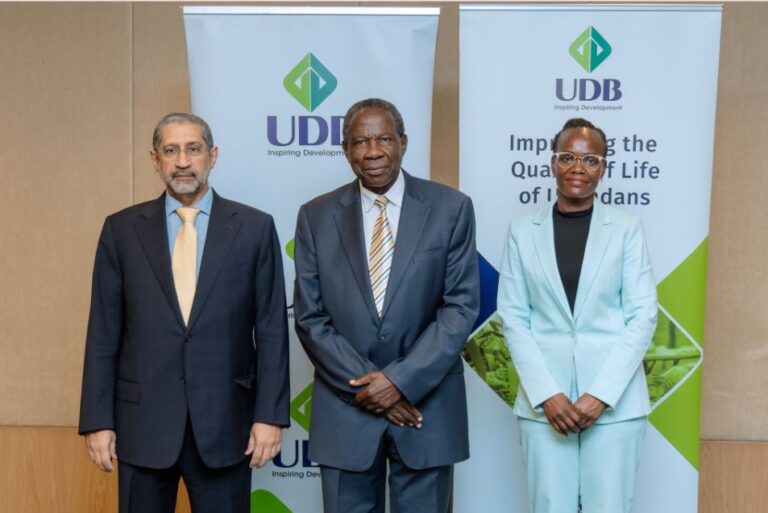
The facility agreements were formally inked by H.E. Abdullah Almusabeeh, the BADEA President, and Hon. Matia Kasaija, Uganda’s Minister of Finance, Planning and Economic Development, who were flanked by the UDB Managing Director, Dr. Patricia Ojangole.
This substantial injection of capital is expected to be a driving force for Uganda’s private sector, which is the primary engine of the nation’s economy, contributing approximately 80% of GDP and employing the vast majority of its non-farm workforce.
Empowering Local Enterprises with USD100M
A substantial two-thirds of this loan, amounting to USD 100 million, is secured by the Government of Uganda under BADEA’s Private Sector window.
This crucial tranche will be channeled through the Uganda Development Bank Limited (UDB), Uganda’s national Development Finance Institution (DFI). UDB’s mandate, according to Min. Kasaija is to accelerate socio-economic development by providing sustainable financial interventions to the private sector.
This funding, he revealed, will enable UDB to significantly expand its on-lending capabilities to critical sectors of the Ugandan economy, including:
Agro-processing: A vital sector for value addition to Uganda’s abundant agricultural produce, creating jobs and enhancing export earnings.
Infrastructure: Supporting essential projects that facilitate trade, connectivity, and overall economic activity.
Manufacturing: Boosting local production, fostering industrialisation, and reducing reliance on imports.
Health and Education: Investing in human capital development, which is crucial for long-term sustainable growth.
H.E. Abdullah emphasised the strategic importance of this collaboration, saying, “Today’s loan agreement with the Government of Uganda is an outstanding example of how Governments can leverage from BADEA’s available financial instruments from both the public and private sectors as well as from trade finance windows to empower the private sector and advance countries’ social and economic development agendas.”
Multi-faceted Approach to Development Finance
He revealed that BADEA’s support extends beyond traditional public sector loans. According to H.E. Abdullah, the Bank’s Private Sector window is designed to directly or indirectly finance private sector entities, aiming to stimulate economic growth and contribute to the general increase of GDP by supporting strategic industries. This approach aligns perfectly with Uganda’s National Development Plan, which prioritises private sector-led growth, industrialisation, and value addition.
The partnership with BADEA builds on a long-standing relationship with UDB, which has previously received and successfully utilised several lines of credit from BADEA.
This new funding further diversifies UDB’s financial base, allowing it to meet the continually growing demand for patient capital among Ugandan enterprises.
By strengthening UDB’s capacity, this USD 100 million injection is expected to:
Bridge financing gaps: Providing much-needed medium-to-long-term capital that commercial banks might be hesitant to offer, especially to emerging businesses in priority sectors.
Drive job creation: Enabling businesses to expand, invest in new equipment, and increase their workforce.
Enhance productivity and competitiveness: Supporting enterprises in acquiring modern technology and improving operational efficiencies.
Foster inclusive growth: Reaching businesses, including Micro, Small, and Medium-sized Enterprises (MSMEs), which account for over 90% of Uganda’s private sector, that are critical for broad-based economic development.
The remaining USD 50 million from the total BADEA facility will provide additional impetus to other critical areas of private sector development, potentially through direct financing or trade finance instruments, further catalysing investment and trade.
This substantial financial backing from BADEA, channelled through a national institution like UDB, is a testament to the international community’s confidence in Uganda’s economic trajectory and its commitment to fostering a vibrant and resilient private sector.
It promises to unlock new opportunities, drive innovation, and significantly accelerate Uganda’s journey towards sustainable socio-economic transformation.