



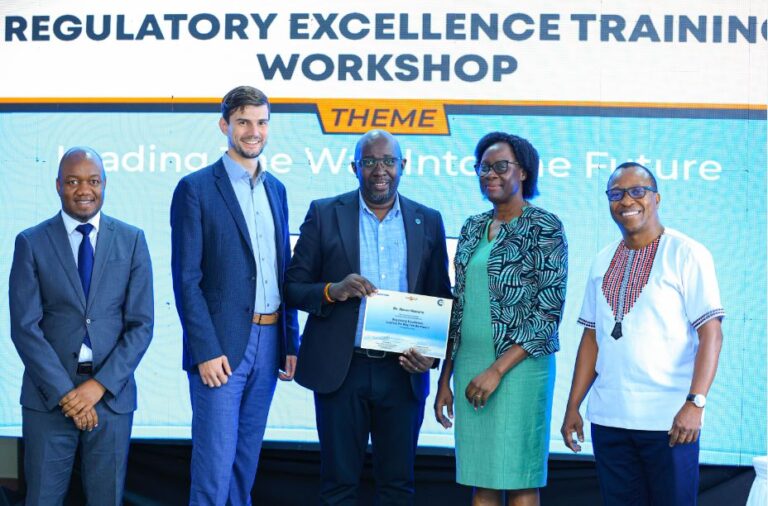

Uganda’s aviation sector is set for a major transformation, following a Regulatory Excellence Training that marked a pivotal step toward building a safer, more innovative, and globally competitive industry.
The three-day event, held at Protea Hotel in Entebbe, brought together aviation leaders from across the East African Community and beyond, being a direct result of a powerful collaboration between the Uganda Civil Aviation Authority (UCAA), Boeing International, Cranfield University, and the East African Community Civil Aviation Safety and Security Oversight Agency (EAC-CASSOA).
The technical experts from Boeing International at the training included Harry Chamwada, the Senior Organisational Effectiveness Consultant for India, Middle East and Africa (IMEA), Mr. Yohannes Amare, a Senior Program Manager at Boeing Global Safety and Regulatory Affairs and others, while Mr. Marc St-Laurent came from the Cranfield Safety and Accident Investigation Centre with Dr. Fabian Steinmaan, a lecturer in Organisational Resilience and Change at Cranfield University.
Officially opened by Mr. Fred K. Bamwesigye, the UCAA Director General, the training, which was closed on Wednesday by Ms. Olive B. Lumonya, the UCAA Deputy DG, aimed at positioning Uganda as a regional hub for aviation excellence. “The growth of aviation in Africa depends on our ability to uphold the highest standards while embracing change,” Ms. Lumonya said, urging the trainees to return to their states not just as regulators, but as leaders and champions of safety and security.”
The training, themed “Regulatory Excellence – Leading the Way into the Future,” was not just a technical workshop but a call to action to redefine the role of aviation regulators. Ms. Lumonya emphasised this shift in her closing remarks, noting that regulators must evolve from being mere enforcers of rules to champions of safety, security, and innovation. She revealed that the training sessions focused on crucial, forward-looking topics, which include:
- Strengthening regulatory and certification frameworks.
- Advancing safety management practices.
- Enhancing crisis preparedness and;
- Preparing for the challenges and opportunities of emerging technologies like drones, cybersecurity, and electric Vertical Take-off and Landing (eVTOL) systems.
This proactive approach, according to Ms. Lumonya, is essential for a sector undergoing rapid technological change. “By equipping regulators with the skills to address these new frontiers, the training is directly preparing Uganda to lead the regional aviation landscape,” Ms. Lumonya stated.

This training has significant implications for Uganda’s aviation sector and its future. First, by hosting such a high-calibre event at which seven countries were represented, Uganda demonstrates its commitment to upholding international standards and best practices as set by organisations like the International Civil Aviation Organisation (ICAO). This bolsters the country’s credibility and makes it a more attractive destination for international carriers and investors.
Second, the training promotes regional collaboration. As Ms. Lumonya noted, aviation is a global industry, and its growth in Africa depends on the ability of different states to harmonise their regulations and work together. She further noted that the event thus strengthens the networks and shared knowledge needed to build a resilient and integrated East African aviation market.
Finally, the focus on sustainability and innovation positions Uganda to embrace the future. By learning how to regulate emerging technologies and foster a culture of excellence, the country can facilitate economic growth and job creation while ensuring the highest levels of safety.
The partnership with industry giants like Boeing and academic leaders such as Cranfield University signals a long-term commitment to building the capacity required to make Uganda’s skies not only safe but also globally competitive.