



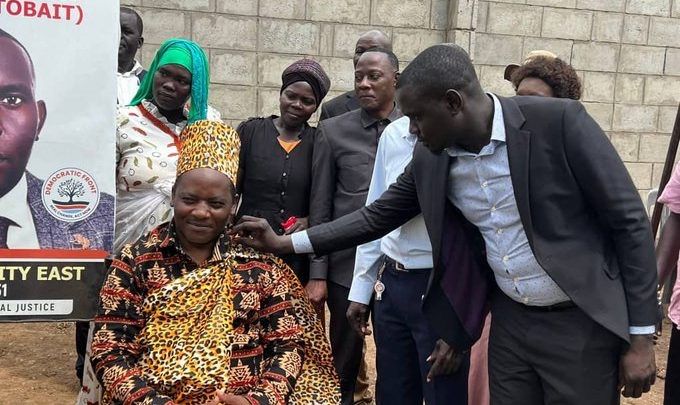

A group of senior National Unity Platform (NUP) leaders from Uganda’s Teso sub-region have officially defected to the Democratic Front (DF) Party, citing grievances over poor leadership, exclusion from national decision-making, and neglect of their region by the top NUP hierarchy.
In a memorandum dated June 21, 2025, addressed to DF party leader Hon. Mathias Mpuuga, the defectors accused NUP of “inconsistent leadership at both regional and national levels” and claimed that voices from Eastern Uganda were being deliberately sidelined.
The letter was signed by key regional figures, including Olukol Everest Awari—formerly NUP’s top leader in Teso and now DF coordinator for Amuria District—alongside Ocora Constantine, Onura Emmanuel, and Oyet Martin. Their defection marks a significant political realignment ahead of Uganda’s 2026 general elections.
“We can no longer serve under a leadership that is opaque, inconsistent, and indifferent to regional balance,” the group stated in their letter. “Our people in Teso deserve representation, resources, and respect.”
The defectors outlined a list of demands to the DF leadership, urging for formal recognition of the Teso sub-region within the party structure, establishment of a DF office in Soroti City, and logistical support for community mobilization. They requested DF-branded campaign materials and financial backing to bolster by-election participation and general campaign efforts in the region.
Pledging full loyalty to the Democratic Front, the group affirmed their readiness to help the party contest and win both parliamentary and local government seats. “Together, we will build a stronger Uganda,” the statement concluded.
Analysts say the defection represents a serious blow to NUP’s efforts to expand its influence in Eastern Uganda, where it has recently launched grassroots mobilization programs. The party, which rose rapidly to become the country’s main opposition force, is now facing mounting internal dissent over allegations of centralization and top-down decision-making.
This high-profile defection is the latest sign of growing unrest within NUP’s ranks and increases pressure on party leadership to address structural and regional imbalances if it hopes to maintain its national appeal ahead of 2026.