





The narrative surrounding the 2026 general elections often focuses on the National Unity Platform’s (NUP) spirited challenge, yet a cold, hard look at the data reveals a simple truth: the National Resistance Movement (NRM) was never going to lose. The NUP’s defeat was not a failure of effort, but a consequence of a fundamental, structural, and geographic mismatch that made an overall victory mathematically impossible.
The presidential results alone tell the story of NRM’s overwhelming national mandate. The NRM secured a commanding 71.65% of the total valid votes, dwarfing the NUP’s 24.72%. This was not a close contest; it was a landslide rooted in nationwide political dominance.
A deep dive into the regional performance confirms this structural reality. The NRM won the presidential vote in 12 out of 14 regions, with its support soaring past 80% in key areas like Ankole, Teso, and Acholi. The NUP’s strength, while significant, was geographically confined, securing an outright win only in the Kampala Metropolitan (KMP) region (58.33%) and remaining competitive only in Buganda.
The decisive factor was the urban-rural divide. The NUP’s success is an urban phenomenon, a political wave cresting in cities and peri-urban areas. However, the NRM’s political machine dominates the vast, high-turnout rural heartland. Our analysis shows that in rural districts, the NRM averaged 76.18% of the vote, compared to a mere 19.74% for the NUP. Furthermore, districts with higher voter turnout showed a strong positive correlation with NRM performance, suggesting that the NRM’s superior mobilization capacity in its strongholds effectively neutralized the NUP’s urban gains.
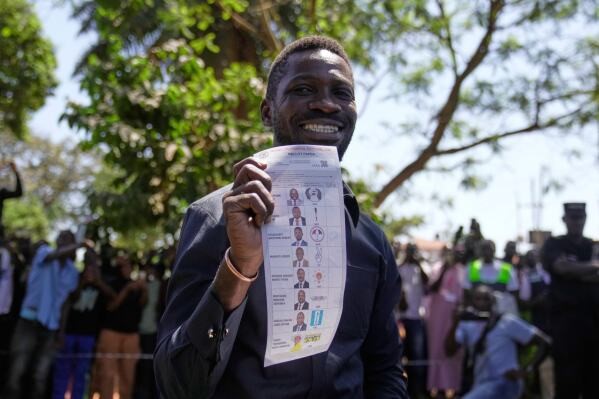
This dominance is not limited to the presidential race. The parliamentary results mirror the presidential outcome, confirming the NRM’s structural control over the political landscape. The NRM secured 355 seats in Parliament, a clear majority that translates to over 71% of the total seats. The NUP, by contrast, managed only 50 seats. This disparity proves that the NRM’s victory was not a fluke but a reflection of its deep, pervasive, and geographically diverse support base.
For the NUP to have won, they would have needed to fundamentally alter the political map, not just win the capital. They failed to penetrate the NRM’s rural fortresses and could not match the NRM’s ability to mobilize voters across the country. The numbers are unequivocal: the NRM’s dominance was too broad, too deep, and too structurally entrenched for the NUP to overcome in 2026. The defeat was, in every sense, inevitable.