



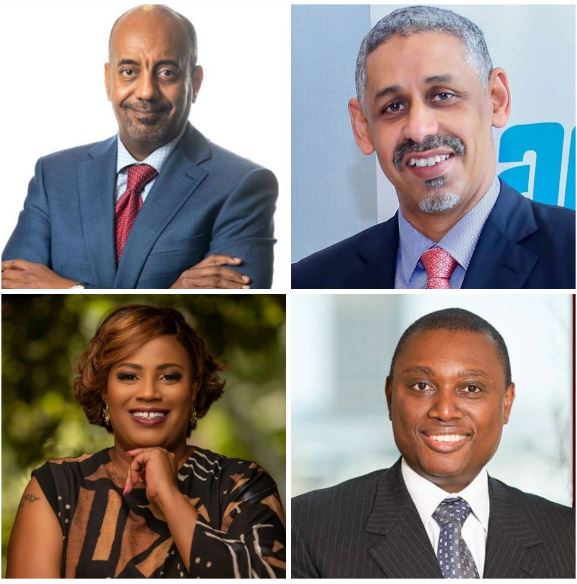

Across the African continent, a new era of Economic Sovereignty is being led by an elite cadre of banking executives. As Africa shifts toward the African Continental Free Trade Area (AfCFTA) and navigates complex digital transformations, these CEOs are reimagining what a bank can be, shifting from mere vaults for cash to engines of industrialisation and innovation. Below are the key banking leaders currently reshaping Africa’s economic trajectory in 2026.
Admassu Tadesse (TDB Group)
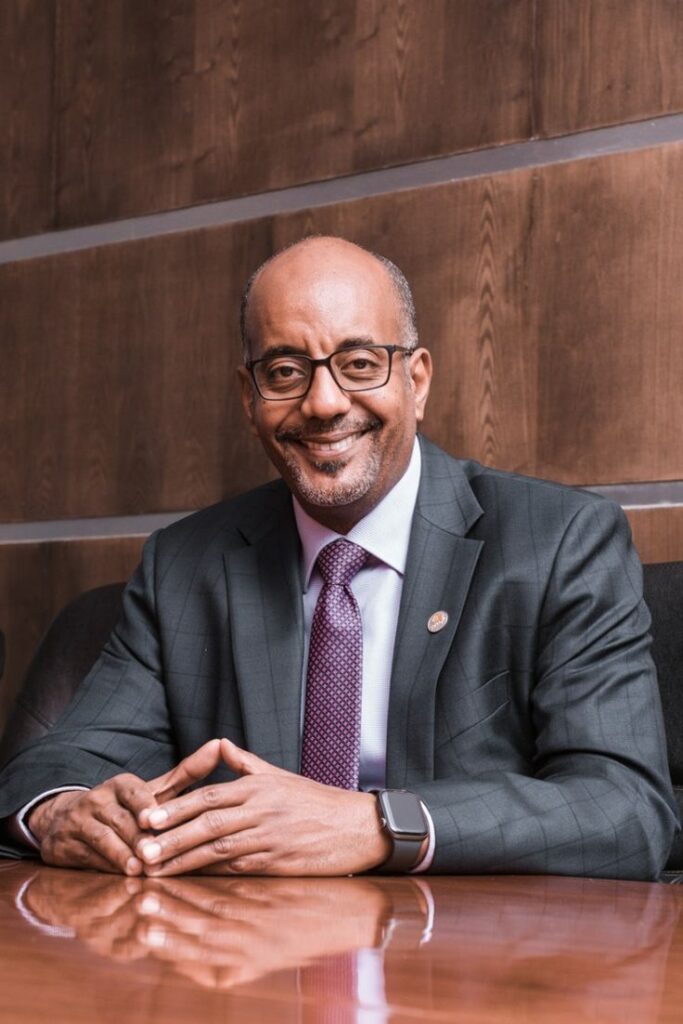
As President of the Trade and Development Bank (TDB) Group and Managing Director, Tadesse has transformed TDB into one of Africa’s most successful investment-grade multilateral development banks.
He has spearheaded the financing of massive industrial projects and regional trade corridors. TDB recently marked its 40th anniversary at a function held in Kampala, at which Tadesse announced a balance sheet exceeding US$10 billion.
As we kick off 2026, Tadesse is pushing a bold agenda to triple the bank’s balance sheet, focusing on economic diversification and cross-border trade within the COMESA region and beyond.
Under his leadership, TDB has injected nearly US$1 billion into priority sectors like agribusiness and infrastructure in Uganda alone.
Dr. Sidi Ould Tah (African Development Bank)

In a historic move in 2025, Dr. Sidi Ould Tah was elected President of the African Development Bank Group, securing over 76% of the vote. He previously led the Arab Bank for Economic Development in Africa (BADEA).
He is a champion of South-South cooperation, bridging Arab capital with African development needs. At BADEA, he increased the bank’s capital from US$5 billion to US$20 billion.
His ‘New Era’ at the AfDB focuses on mobilising US$400 billion per year for African infrastructure and industrialising local raw materials on African soil.
He is currently leading the replenishment of the African Development Fund (ADF) to support fragile states and youth employment.
Sim Tshabalala (Standard Bank Group)

As the head of Africa’s largest lender by assets, Tshabalala oversees a footprint spanning 20 countries, Uganda inclusive.
Under his leadership, Standard Bank has moved beyond traditional retail into high-stakes infrastructure and energy financing.
He has positioned Standard Bank as the primary intermediary for China-Africa trade, facilitating billions in cross-border investment.
He is also highly focused on platform banking and integrating financial services with digital marketplaces for SMEs.
Nana Gecaga (KCB Group)

In this 2026 landscape, leadership at KCB continues to drive East African integration. KCB has become the ‘Regional Goliath’, aggressively expanding into the DR Congo and South Sudan, thanks to Gecaga’s exemplary leadership.
The CEO’s focus is on the East African Community (EAC) as a single economic bloc.
He has been instrumental in bridging the gap between the informal ‘Matatu’ economy and formal credit.
Gecaga is also credited for utilising mobile-first lending to drive financial inclusion for millions in Central and East Africa.
Ade Ayeyemi (Ecobank)

Ecobank remains the most ‘truly Pan-African’ financial institution, and its leadership has been instrumental in the rollout of the Pan-African Payment and Settlement System (PAPSS).
Ayeyemi’s leadership at Ecobank has, over time, eliminated the need for third-party currencies (like the USD or Euro) for intra-African trade.
This has been pivotal in directly lowering the cost of doing business across 33 African markets where Ecobank operates.
Dr. James Mwangi (Equity Group Holdings)

Mwangi is often cited as the father of ‘Inclusive Banking’. His ‘Africa Recovery and Resilience Plan’ is a US$6 billion private sector-led initiative targeting 5 million SMEs.
He is hailed for having created a resilient supply chain for African food security by lending to smallholder farmers and agro-processors through Ecobank.
He is also credited with having transformed Equity Bank from a micro-finance entity into a systemic regional powerhouse.
The New Frontier
What is important to note is that the CEOs of these banks are no longer just ‘money managers’; they are diplomats, tech innovators, and architects of a self-sustaining African economy.
By leveraging technology and cross-border partnerships, they are ensuring that Africa’s growth is not just a trend but a structural reality.