



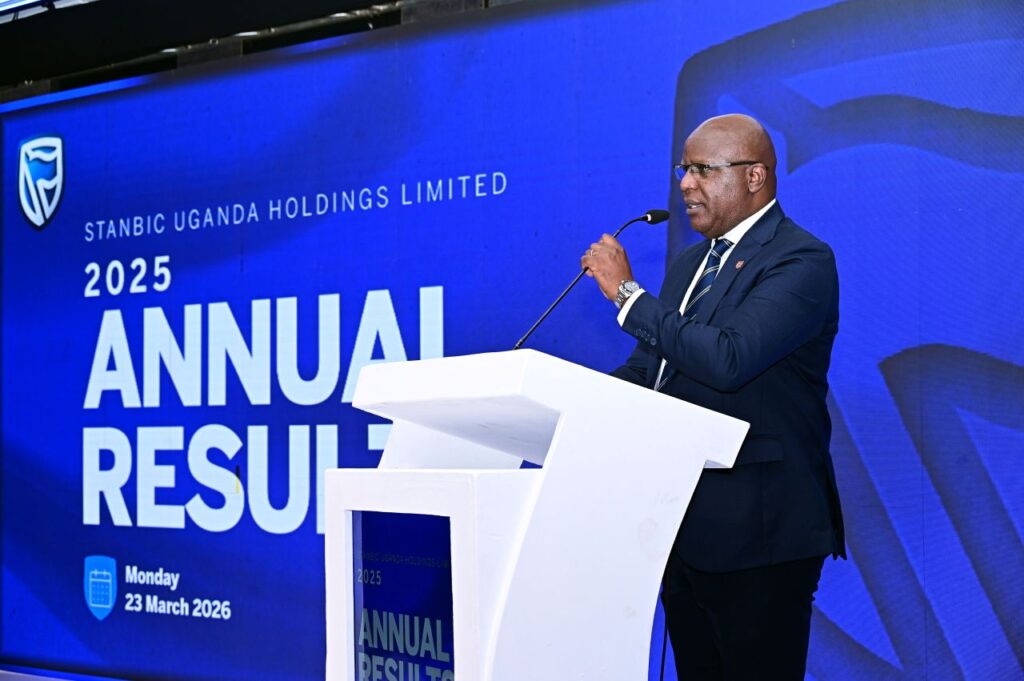

Stanbic Uganda Holdings Limited yesterday reported a strong financial performance for the year ended December 31, 2025, posting net profit of UGX 591 billion, representing a 23.6% increase from the previous year, and declaring UGX 360 billion in dividends to shareholders, reinforcing its position as one of the most profitable financial institutions in the market.
Beyond the headline numbers, the results reflect a business growing with discipline, strategic clarity, and operational control. “Our robust earnings of UGX 591 billion and a return on equity of 26.8% reflect the strength of our strategy, the resilience of our franchise, and our unwavering focus on delivering long-term shareholder value,” said Francis Karuhanga, Chief Executive of Stanbic Uganda Holdings Limited. A return on equity of 26.8% signals a high level of efficiency in capital deployment, positioning the Group among the strongest performers in the sector. Revenue grew by 11% to UGX 1.4 trillion, while the cost-to-income ratio improved to 47.1%, indicating that growth has been achieved alongside disciplined cost management and operational efficiency.
The Group’s performance was anchored by Stanbic Bank Uganda, its core subsidiary. In his first year as Chief Executive, Mumba Kalifungwa oversaw growth in both customer deposits and lending, reinforcing confidence in the bank’s stability and service offering. “This performance reflects the collective effort of our people, the trust of our clients, and the strength of our partnerships. I am encouraged by the momentum we have built and confident in our ability to sustain it,” he said.
Customer deposits increased by 13% to UGX 8.0 trillion, while loans and advances rose by 16.4% to UGX 5.1 trillion, reflecting sustained demand for credit and the bank’s continued role in supporting economic activity across key sectors. These indicators point to a financial institution that is steadily deepening its relevance within the broader economy.
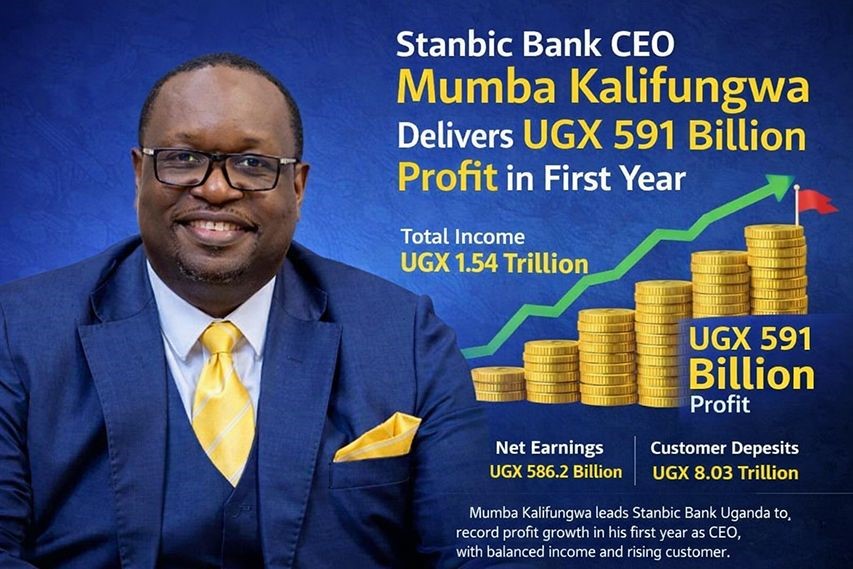
The strength of Stanbic’s performance is further underpinned by its risk profile. The non-performing loan ratio stood at 1.7%, significantly below internal thresholds, highlighting a high-quality loan book and disciplined credit management. Chief Financial Officer Ronald Makata noted that the bank’s balance sheet strength and risk management continue to position it for sustainable growth in an evolving operating environment.
Liquidity levels remain robust, with a liquidity coverage ratio of 354%, providing substantial capacity to absorb shocks, support large-scale financing requirements, and respond to changing market conditions. Capital adequacy also remained strong at 23%, nearly double regulatory requirements, reinforcing the Group’s resilience and readiness for future growth opportunities.
From an external perspective, such performance is often reflective of broader macroeconomic conditions. According to a Kampala-based financial analyst, strong profitability combined with low non-performing loans and high capital buffers typically signals underlying stability within the economy. In this context, Stanbic’s results point not only to institutional strength but also to improving confidence across key sectors, supported by a stabilizing macroeconomic environment.
As Uganda moves toward a new phase of economic expansion, including anticipated oil production and increased infrastructure investment, financial institutions are expected to play a critical role in allocating capital and supporting growth. Stanbic’s strategic direction, articulated through its positive impact agenda, reflects this broader role, with a focus on financial inclusion, enterprise development, infrastructure financing, and climate resilience. For Mumba Kalifungwa, this underscores the bank’s commitment to driving Uganda’s growth in a manner that is inclusive, sustainable, and far-reaching.
Investor confidence continues to reflect this positioning, with the Group’s share price rising by 89% over the past three years to close at UGX 60 as of December 2025, highlighting sustained market trust and strong earnings momentum.
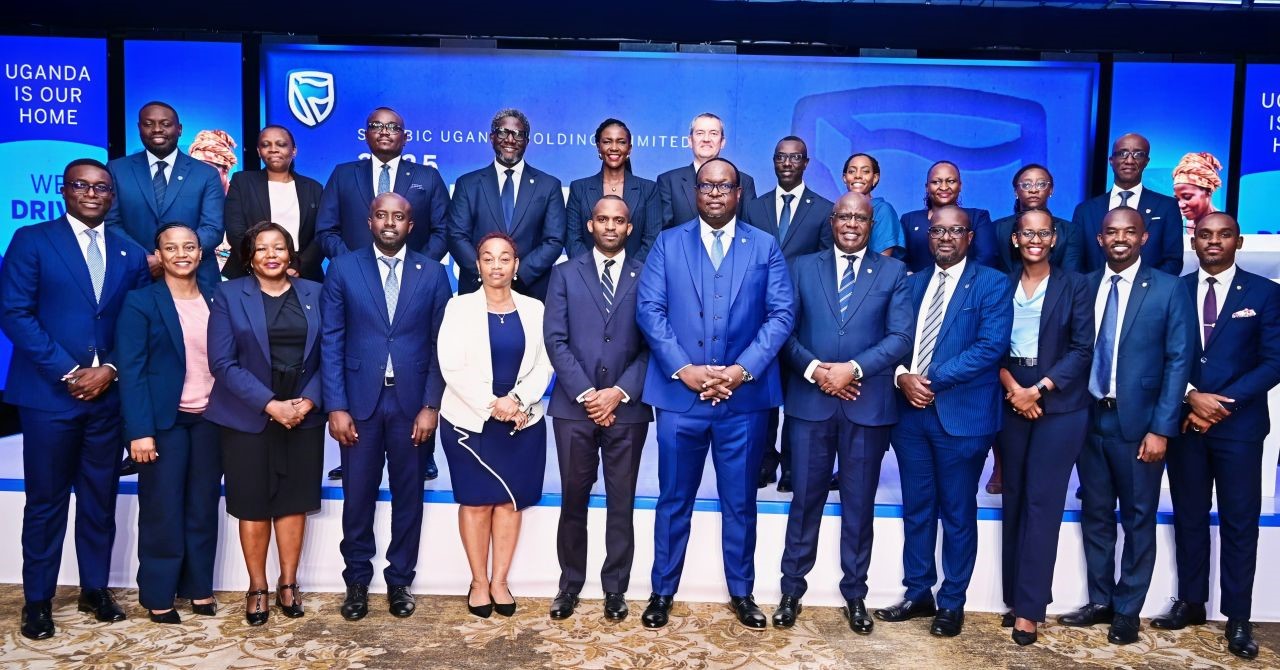
Stanbic’s 2025 results demonstrate not only strong financial performance but also the discipline underpinning that performance. In an evolving economic environment, such discipline positions the institution to sustain growth, manage risk effectively, and play a central role in Uganda’s ongoing socio-economic transformation.