



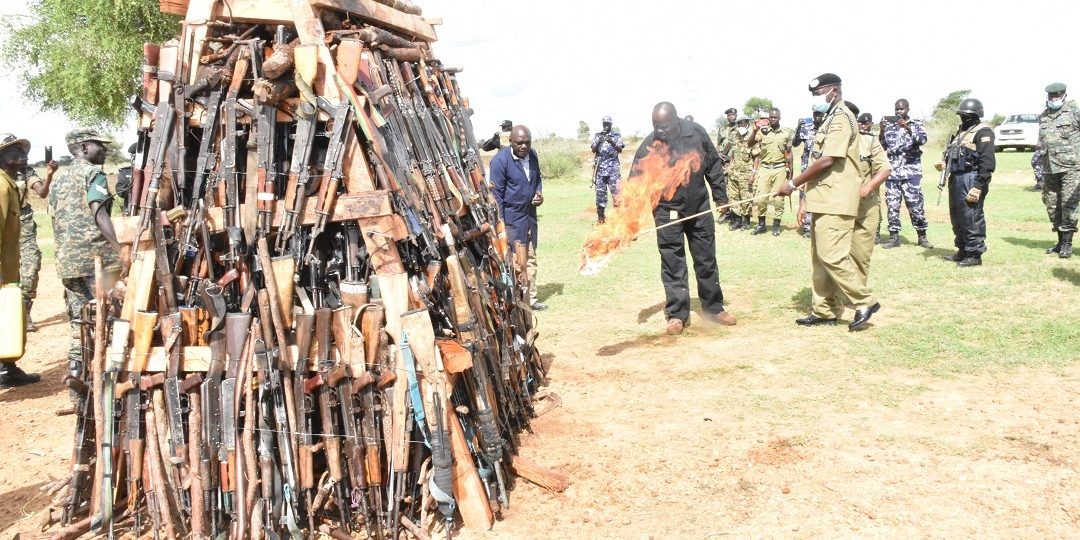

President Yoweri Kaguta Museveni has shed light on the long, complicated, and often painful journey toward securing lasting peace in the Karamoja sub-region, describing the process as one marked by resistance, internal betrayal, and a determined moral commitment to save lives.
While addressing residents at Lomukura Primary School Playground in Kotido Town Council on Monday, October 27, 2025, the President likened the delicate handling of security to managing fire in a home.
“Fire is very important, we need it for many things like cooking, but it must be kept in the fireplace,” he said. “If you take hot charcoal where it doesn’t belong, you burn the house.”
Museveni used this analogy to justify the disarmament campaign under the Usalama Kwa Wote (Peace for All) operation, which faced fierce resistance from armed groups who argued that guns were necessary for protection against cross-border raiders from the Topotha, Pokot, Turkana, and even militants from Somalia.
“Some people were saying we can’t remove guns from Karamoja because of the Topotha, Pokot, Turkana, Somalia and that we had to maintain a balance of terror,” the President noted. “But I told them, I want to go to heaven. If I allow you to stay with guns and kill one another, what will I tell God? Bring the guns; I will defend you and deal with whoever attacks.”
President Museveni also disclosed internal sabotage during the disarmament effort, revealing a criminal racket within the army that profited from cattle theft. “Within the army, there was a criminal racket. The ones who were stealing cows and selling them for business,” he said. “The cows would be stolen here and taken to Kalerwe market in Kampala and sold cheaply. Some Karachunas wanted to surrender but certain army elements stopped them because they were doing business.”
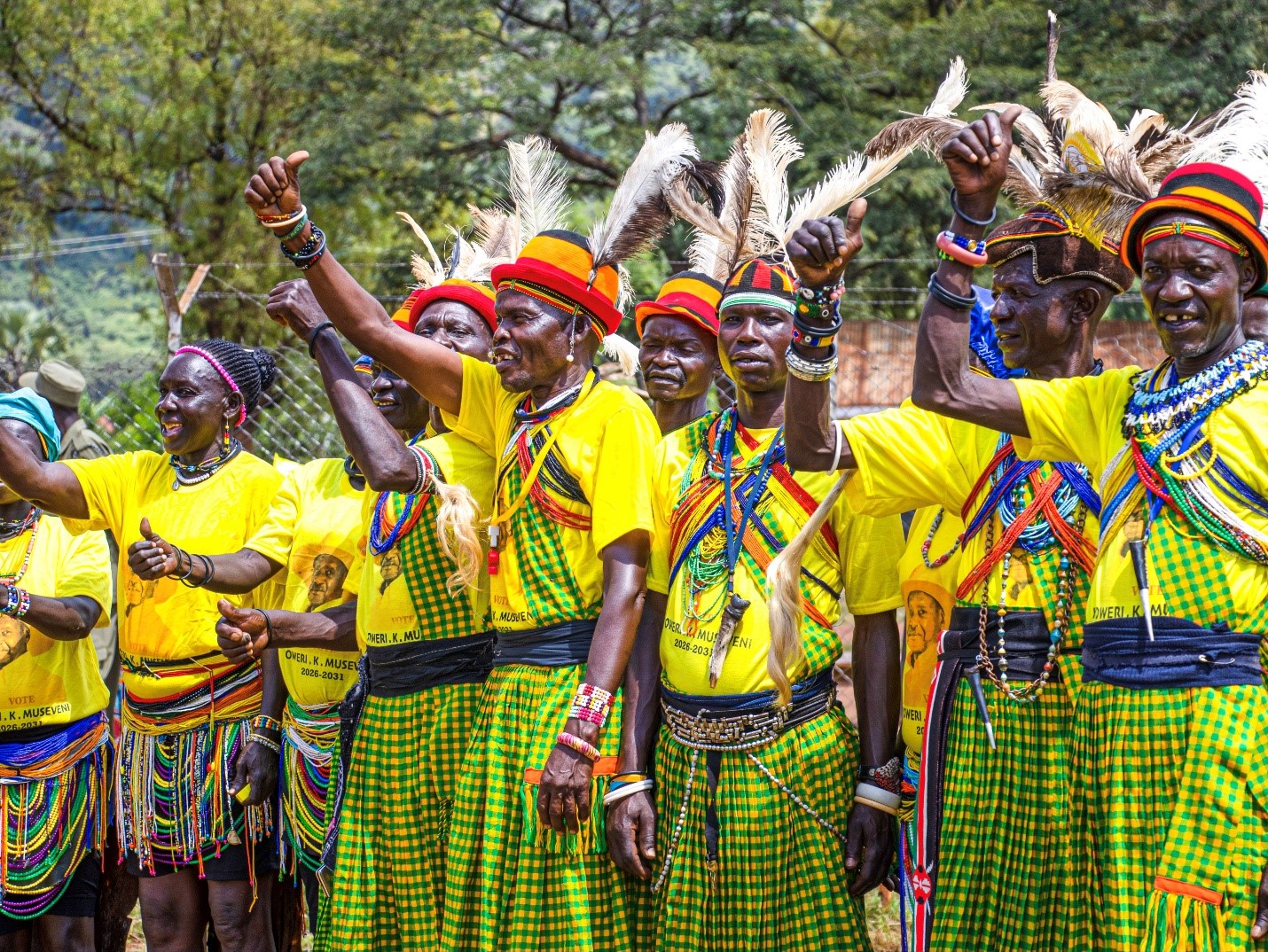
He noted that despite such challenges, sincere cooperation from sections of the Karachunas and community peace groups ultimately supported the government’s efforts to silence the guns and stabilize the region.
With the guns down, Karamoja has experienced significant development gains investments in electricity, improved road networks, health facilities, and safe water sources.
“We have been able to bring electricity all the way from Soroti which wasn’t easy,” the President said. “We didn’t have money that time and had to use prioritization. You must do things one by one, not everything at once.”
Museveni projected that the peace dividend will turn Karamoja into an industrial hub, noting that private and foreign investors are preparing to establish a cement factory to serve Uganda and neighboring markets.
Despite the infrastructure progress, he warned communities against relying solely on government development programs without embracing personal wealth creation.
“Do not deceive yourselves by talking of electricity and tarmacked roads without wealth,” he cautioned. “Even in Kampala with a lot of tarmac and electricity, there is poverty when people don’t listen and use development to create wealth for themselves.”
President Museveni thanked all groups that supported peace efforts in Karamoja, noting that the end of gun violence has benefited not only the sub-region but the nation as a whole. The people of Karamoja now approach the 2026 elections with renewed hope, security, and expanding economic opportunities.