



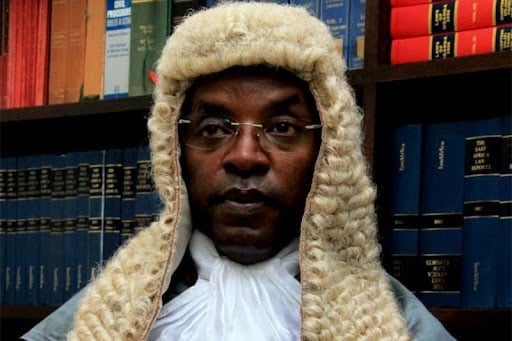

President Yoweri Kaguta Museveni has appointed Hon. Justice Flavian Zeija as the Chief Justice of the Republic of Uganda.
The appointment was made in exercise of the powers vested in the President under Article 142(1) of the 1995 Constitution, and on the advice of the Judicial Service Commission.
Justice Zeija’s name was formally submitted to the Parliament of Uganda for approval, which Parliament granted in accordance with the Constitution, paving the way for his appointment to the country’s highest judicial office.
Justice Zeija takes over leadership of the Judiciary at a critical time, assuming responsibility for overseeing the administration of justice and presiding over the Supreme Court, Uganda’s highest court.
Chief Justice Alfonse Chigamoy Owiny-Dollo officially left office on Sunday, January 18, 2026, when he reached the mandatory retirement age of 70 under the Constitution. He formally handed over the office to Deputy Chief Justice Dr. Zeija at a ceremony the following day, Monday, January 19, 2026
At the ceremony marking his retirement and the transfer of office to Dr. Zeija, Owiny-Dollo’s remarks included symbols of continuity and confidence in his successor notably in the way the handover was conducted and in how the instruments of office were entrusted to Zeija. During the ceremony, the Constitution, the Laws of Uganda, the Administration of the Judiciary Act, and the official court seal , symbols of the Chief Justice’s authority were presented to Zeija, underlining the formal and orderly transition of leadership.
Hon. Justice Dr. Flavian Zeija, brings to the country’s top judicial office a long career spanning legal practice, academia, judicial administration, and reform-oriented leadership.
Justice Zeija, born on February 18, 1969, is a trained advocate of the High Court of Uganda with a strong academic and professional background in law and public administration. He holds a Bachelor of Laws (LLB) and a Master of Laws (LLM) from Makerere University, a Doctor of Philosophy (PhD) in Law from the University of Dar es Salaam, and an MBA from Uganda Martyrs University. He also undertook legal training at the Law Development Centre.
Before joining the Bench, Justice Zeija practiced law in private practice after being enrolled as an advocate in 1998. He later became a Managing Partner at Zeija, Mukasa & Company Advocates. His career also included senior legal and management roles in the financial sector, having served as Legal Counsel at FINCA Uganda and as Manager Legal and Recovery at Tropical Africa Bank.
Justice Zeija also distinguished himself in academia, where he lectured law at Makerere University, Makerere University Business School, and Uganda Christian University. At MUBS, he was the founding Head of the Department of Business Law, contributing to the training of future legal practitioners and business professionals.
His judicial career began in 2016 when he was appointed a Judge of the High Court of Uganda. He later served as Resident Judge of the Mbarara High Court Circuit, one of the busiest judicial circuits in the country.
In December 2019, Justice Zeija was appointed Principal Judge, placing him in charge of the administration of the High Court and Magistrates Courts nationwide. During his tenure, he was credited with strengthening case management systems, supervising judicial officers, and spearheading initiatives aimed at reducing case backlog and improving court efficiency.
In February 2025, President Yoweri Kaguta Museveni appointed Justice Zeija as Deputy Chief Justice, a position in which he assisted in overseeing the Supreme Court and the overall administration of the Judiciary.
The Chief Justice is the highest judicial officer in the country, leading the Judiciary and presiding over the Supreme Court. They guide the administration of all courts, ensure that justice is delivered fairly and without interference, and uphold the independence of the judicial system. The Chief Justice also supervises judicial conduct, oversees court operations, and represents the Judiciary in official and constitutional matters.
According to the Judiciary Annual Performance Report FY 2024/2025 (released September 2025), the Judiciary had 190,973 cases pending across all courts. Of these, 46,181 cases were classified as backlog , meaning they had been pending beyond prescribed timelines ,giving a backlog rate of about 24.2%.
As of late 2025, the Court of Appeal had around 13,474 cases pending. Supreme Court had about 900 pending cases at that time.
Judges and judicial leaders have acknowledged that case backlogs remain a key challenge for timely justice, particularly with criminal and gender-based violence (GBV) cases contributing significantly to the workload.
The Judiciary has implemented reforms including digital performance tools and alternative dispute resolution (ADR) initiatives to reduce backlog and improve efficiency.
Broader national data suggests the average time from filing to disposal has been reducing, with one report indicating around 891 days (about 2½ years) as the average disposal time in recent years (down from over three years previously).
Meanwhile , staffing levels have been highlighted as a factor affecting case disposal. For example, data around January 2025 recorded about 707 judicial officers in the system dealing with the caseload.