



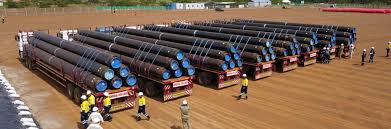

Peninah Aheebwa, Director of Economic and National Content Monitoring at the Petroleum Authority of Uganda (PAU), has revealed that the compensation of communities affected by the East African Crude Oil Pipeline (EACOP) project is now 98 percent complete, a development that brings Uganda closer to achieving first oil by the end of July 2026.
If the milestone is met as scheduled, it will mark a historic transition for Uganda from oil testing to commercial production and export, a step that promises to significantly boost the country’s economy while setting a benchmark for responsible energy development in the region.
Aheebwa shared the update while appearing before the Public Accounts Committee (Central Government), following concerns raised by Hon. Joseph Ssewungu (MP, Kalungu West County) about delays in compensating affected residents.
“Some people have been raising issues, claiming they have not yet been compensated. We have seen what happens when communities feel neglected, like vandalism in Nigeria’s oil sector. We must avoid such situations here,” Ssewungu said.
Responding, Aheebwa assured MPs that all compensations have been conducted in line with national regulations and IFC standards, internationally recognized guidelines for managing social and environmental risks in private sector projects.
“Everyone has been compensated to the best of their satisfaction. The process is closely monitored by the project’s lenders, and nothing unsatisfactory is permitted,” she said.
Progress on Oil Projects
According to Aheebwa, Uganda is making significant headway on its flagship projects:
Tilenga project: Planned 170 wells, 198 drilled
Kingfisher project: Planned 19 wells, 21 drilled
Central processing facilities and feeder lines completion: Tilenga – 67%; Kingfisher – 77%; EACOP – 81%
“We are increasing field operations to three shifts of eight hours each on Tilenga to ensure we meet the end-of-July target. Our teams are fully committed to keeping pace with milestones,” she added.
MP Hon. Basil Bataringaya (NRM, Kashari North County) questioned the recoverable costs owed by the Petroleum Authority, citing delays in auditing expenditures. Aheebwa noted that close to US$12.3 billion has been invested in the sector to date.
For EACOP, costs will be recovered through a US$12.77 per barrel tariff, with US$3.5 billion already invested. She referenced a 2021 Auditor General report showing that of US$3.4 billion claimed by oil companies including TotalEnergies EP Uganda, CNOOC Uganda Limited, Uganda National Oil Company, and China Oilfield Services Limited Uganda, US$2.9 billion (87%) was approved for recovery and US$439 million (13%) disallowed.
“The total investment of US$12.3 billion reflects spending up to 2025, with some figures not yet covered by the audit. Nevertheless, accountability and monitoring remain stringent,” Aheebwa emphasized.