



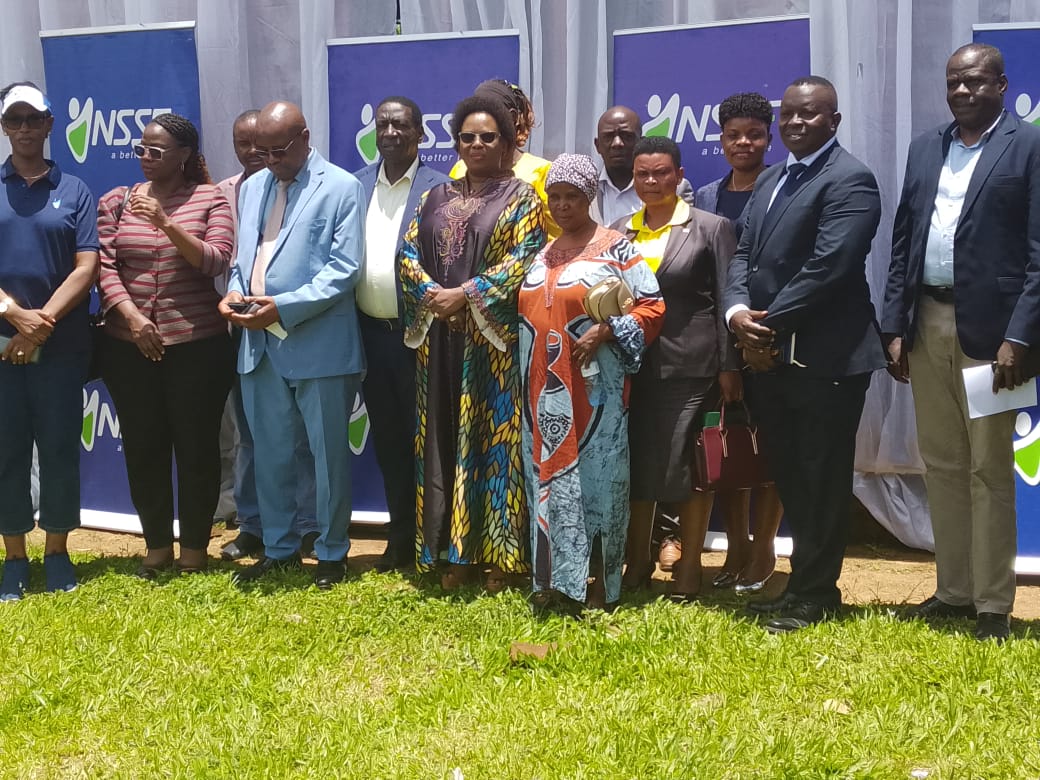

The National Social Security Fund has launched the countrywide livelihood program starting with Busale in Kayunga District to expand social security coverage for Uganda’s informal sector. The programme was officially launched by the Minister of Gender, Labour and Social Development, Betty Amongi alongside State Minister for Planning, Amos Lugoloobi, the NSSF Managing Director Patrick Ayota and the Board of directors of NSSF David Ogong with one voice of strengthening productivity, boost incomes and creating a practical path for the informal sector, the discipline to save and secure their future.
NSSF has a mandate of extending social security beyond formal into communities where real economic activities take place especially in the informal sector by enabling individuals to produce, earn and grow savings by integrating communities into a broader system of growth, productivity and financial resilience. The fund is supporting organized groups by enhancing their productive capacity through equipment provision and training to increase their saving capacity and consistency.
While launching the programme at Busale Technical Institute, the Gender Minister, Betty Amongi applauded the leadership of the institute for establishing a vocational training facility that is equipping young people with practical skills and providing a strong foundation for partnerships with NSSF and also the government commitment to extend social security to the informal sector where majority of Ugandans get their livelihoods. “The programme is a deliberate effort to address key challenges faced by the informal workers including limited access to affordable financing and modern equipment which constrain productivity and competitiveness”, said Betty Amongi.
” The introduction of shared production facilities is intended to enable artisans to improve output, access markets more easily and generate sustainable incomes while encouraging a savings culture through NSSF, Amongi added.
The countrywide livelihood programme will be rolled out in other parts of the country such as Lira, Sheema and Mitooma by providing shared production equipment ranging from sewing machines and fish processing units to concrete block machines and coffee processing equipment managed by the local communities.