



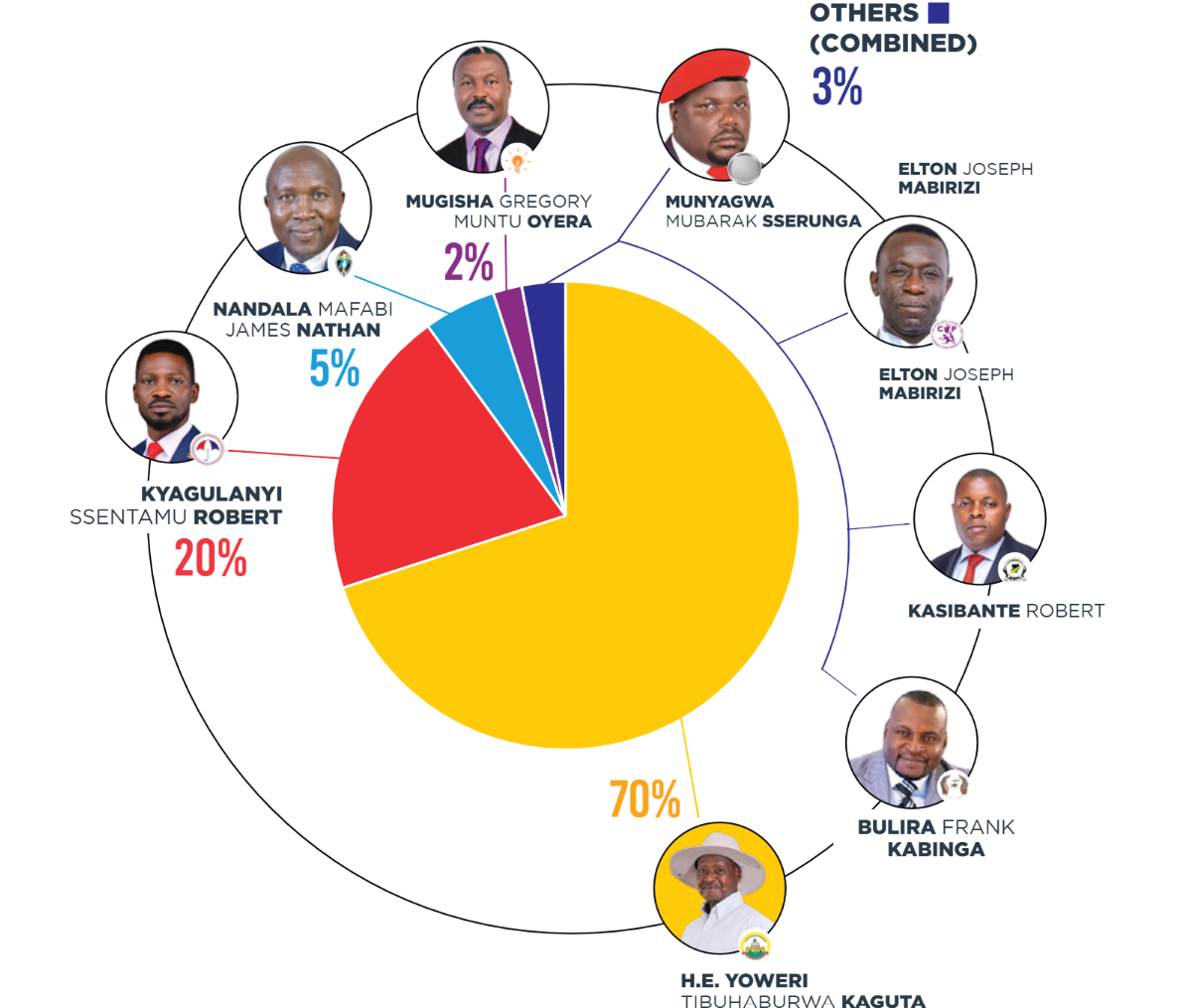

When the Pulse256 Youth Insights Network released its nationwide opinion poll this October, the numbers spoke louder than any slogan: President Yoweri Kaguta Museveni stands at 70%, followed by Robert Kyagulanyi at 20%. The rest of the candidates together struggle to raise 10%. These are not just statistics they are a reflection of Uganda’s political reality, a reality that cannot be wished away by hashtags or emotional outbursts.
Ugandans are not blind. They have seen the roads, the electricity, the parish funds, and the peace that many nations in the region still envy. From tarmacked highways stretching across the country to the thousands of Parish Development Model (PDM) SACCOs empowering households, the NRM’s development footprint is visible in every corner of Uganda.
Over the past decade, Museveni’s government has rolled out programs that touch the heart of rural livelihoods: PDM, Emyooga, Youth Skilling Hubs, and Industrial Parks all backed by steady economic growth and macro-stability. Uganda’s GDP has nearly doubled since 2019, electricity coverage now reaches three-quarters of all sub-counties, and the national airline flies to 17 international destinations. These are not promises; they are results.
For the opposition, especially the National Unity Platform, the story is different. Their support remains largely urban, emotional, and reactive. According to the PYIN report, NUP’s backing is strongest in Kampala and Wakiso a narrow demographic corridor driven by protest energy rather than policy grounding. Rural Uganda, which forms over 70% of the electorate, is firmly behind the NRM.
The poll shows that in rural areas, 76% of voters intend to support the ruling party, compared to only 16% for NUP. This gap is not about propaganda; it’s about lived experience. When a mother in Kibuku sees roads being built and parish funds reaching her SACCO, she doesn’t need a manifesto rally to tell her who is working for her future.
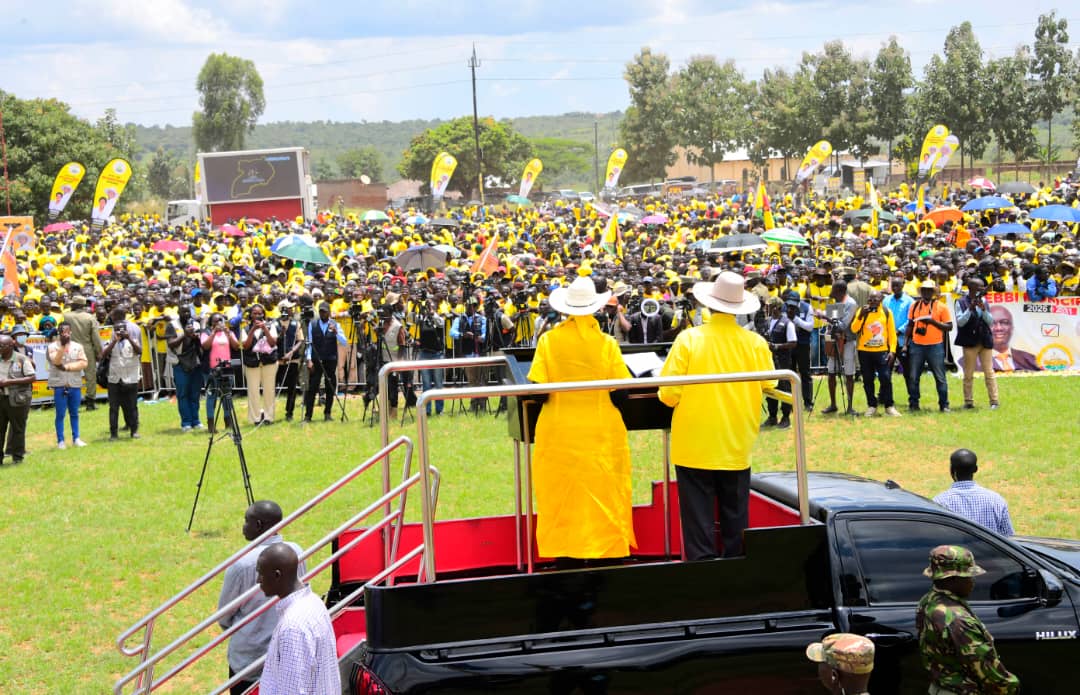
Ugandans have tasted peace for over two decades. They know the cost of war, the price of instability, and the value of leadership that delivers predictability. The same report underscores a widespread sentiment; 72% of respondents express trust in Museveni’s leadership for maintaining peace and livelihoods.
That trust cannot be substituted with social-media noise or empty rhetoric. As one respondent from Gulu put it plainly, “The youth in town want change, but here we want stability because life is improving slowly.” That voice captures the national mood a cautious optimism anchored in progress, not chaos.
The opposition can comfort itself with online praise and imported slogans, but elections are won on the ground, not on Twitter. The idea that Ugandans would trade two decades of stability, infrastructure, and growth for a “hateful drug abuser” image is simply delusional. Voters know that governance requires more than slogans it requires discipline, credibility, and continuity.
Uganda’s democracy may still be young, but its people are wiser than some assume. They have seen nations collapse under populist experiments. They have lived through the dark days of insecurity and now cherish the peace they have built.
If the elections were held today, as the PYIN report projects, Museveni would win by a landslide not because of manipulation, but because of performance. The numbers are not manufactured; they are measured. The President’s advantage is not accidental; it is earned through decades of consistency, resilience, and delivery.
Uganda is not ready to gamble its achievements on emotional experiments. The 2026 election, if current trends continue, will not be a contest of personalities but a referendum on stability versus uncertainty. And in that choice, Ugandans have already made up their minds.