



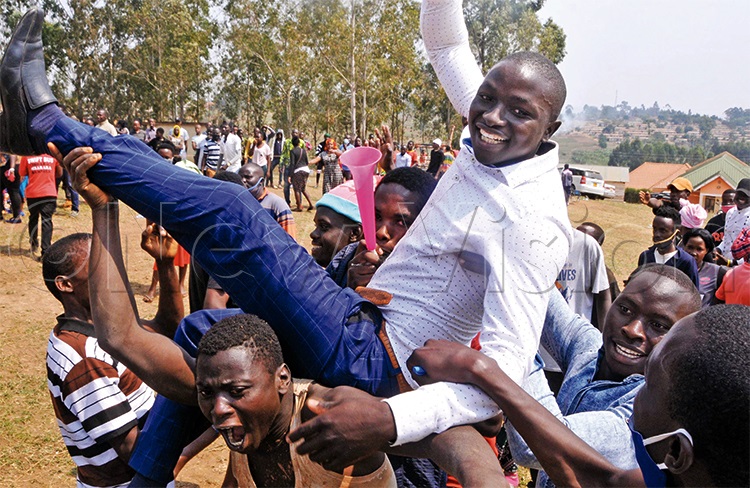

Have you ever wondered what happens when a political party wins not just elections, but the trust of an entire generation? Or when the elders who witnessed a nation’s turbulent past quietly endorse its present direction? Uganda’s recent Special Interest Group (SIG) elections for youth and elderly leaders offered startling revelations in that regard as the results did not just hint at a landslide victory for the ruling party, but also a possible blueprint for the upcoming 2026 general elections.
In June 2025, Uganda’s Electoral Commission launched its first-ever Special Interest Group elections, marking the official start of the 2025/26 general election roadmap and sending political shockwaves through the nation’s power corridors. On the 16th June 2025, elderly citizens aged 60 and above turned out at village polling stations to elect their local representatives. Just three days later, on June 19th June 2025, the country’s youth, aged 18-30, followed suit, making their voices heard at the polls. These two age brackets, representing wisdom and the future respectively, delivered a resounding verdict…NRM, still.
And while Uganda’s opposition, most notably the National Unity Platform (NUP), dominated social media and made waves with hashtags like #PeoplePowerOurPower, #ProtestVote, and #NUPEverywhere, and creating an illusion of a nation where they seemed unstoppable, it was the ruling party that commanded the village halls where real votes are cast and counted. Online, the country appeared red, but to quote some NRM youth, “ku ground biralamuko”- on the ground, the reality was different. Uganda was, in fact, painted yellow.
Across Uganda’s villages, the consistency of the NRM’s dominance was nothing short of staggering. In Kisoro District alone, the party clinched 3,305 out of 3,573 youth positions, a near-clean sweep. In Kassanda, the results were even more symbolic with NRM securing 3,073 of 4,109 seats, delivering a stinging and humiliating blow to NUP’s national youth secretary, Frank Kabuye, in his own sub-county. Perhaps most striking still, was the outcome in Kawempe Division, long seen as an NUP urban stronghold, where NRM crushed the opposition, winning 1,060 positions compared to NUP’s painful 20.
But this was more than just a victory for the yellow party. It was a generational handshake between those shaping Uganda’s tomorrow and those who vividly remember its yesterday. With approximately 77% of Uganda’s population under the age of 30, these results signal more than tactical success. They reflect the NRM’s enduring grip on the future and its calculated investment in the hearts, hopes, and ambitions of Uganda’s youth.
A quick glance at the data reveals what Uganda truly is. A nation of the young. According to official figures from the Uganda Bureau of Statistics, over 22.7% of the population falls between the ages of 18 and 30 accounting for roughly 10.4 million people. On the other hand, the elderly account for just over 5%, or about 2.2 million citizens. But these are not just demographic figures, they are political foundations of the country and in these recent elections, both age blocks shifted decisively in the same direction. That of the movement bus.
In district after district, from Mbarara, Jinja, Luweero, Masaka, and beyond, NRM-backed candidates emerged victorious. In Jinja City, for example, the ruling party’s youth slate claimed 85 percent of available village posts, a figure confirmed by multiple local observers as an emphatic illustration of organizational muscle by the ruling party. In Mbarara, a solitary NUP challenger, Nickson Niwamanya, was overwhelmed by a 13-to-1 margin by Alex Nduhura of NRM. In the words of one NRM youth online, “NUP failed to mobilize.”
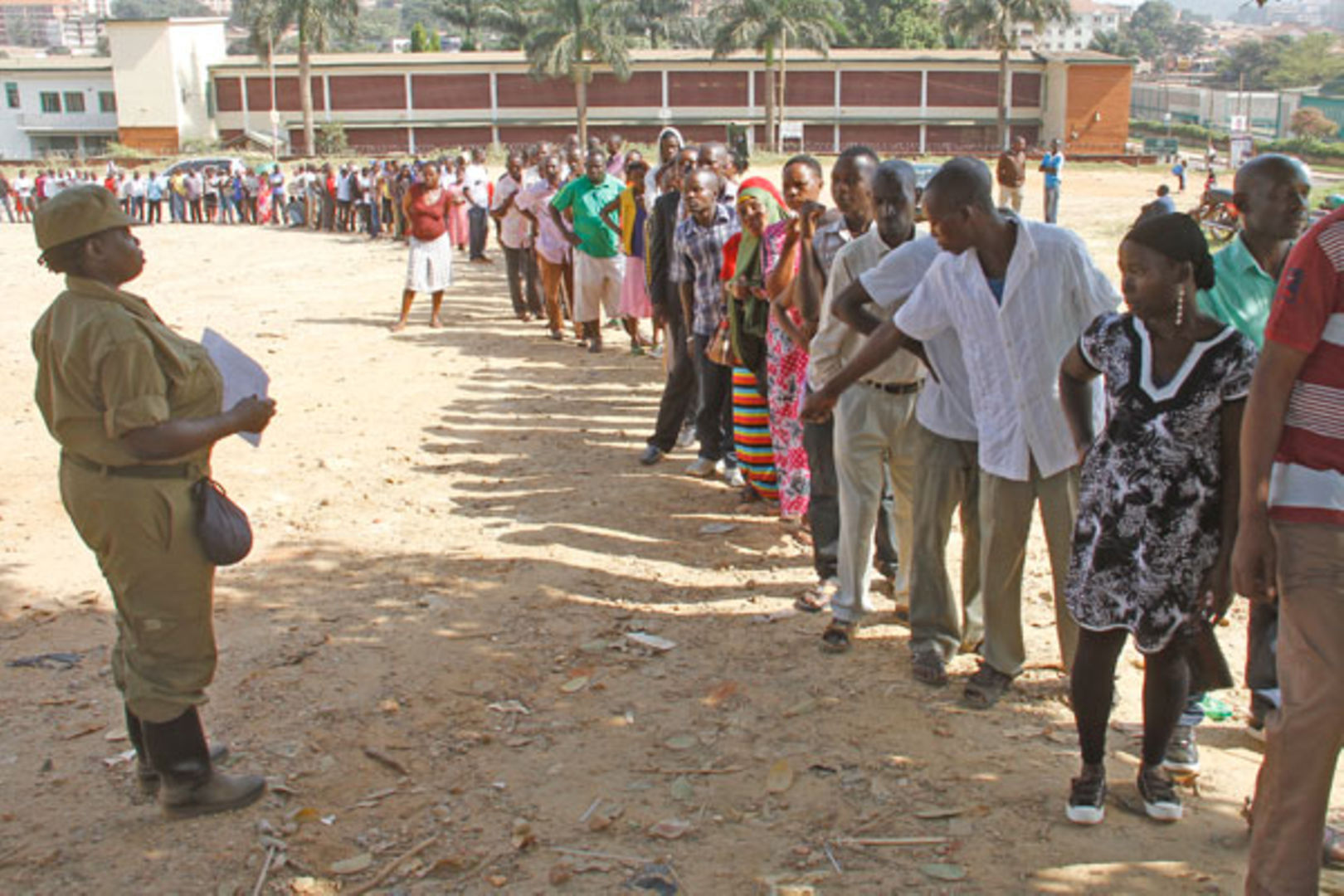
Across villages, many opposition candidates failed to even appear for nomination or polling. In some areas, they did not field candidates at all. “This brings out the exact meaning of silent majority.. Nup supporters are few but noise makers” remarked Grace Antonio, an avid NRM youth supporter on X, formerly Twitter”
Frustration boiled over when NUP treasurer Benjamin Katana denounced the SIG elections as “a ritual… largely run by security agencies,” accusing the ruling party of weaponizing local structures to guarantee victory. Veteran MP Ibrahim Ssemujju Nganda went further, dismissing the whole exercise as “useless” and pointing out that he never once met his youth council during his previous term in Parliament.
Furthermore, some opposition members pointed out their discrepancies with the voting. “It is disappointing that the names of some youth residing in this area were missing on the voters’ register, yet non residents are there. We do not know the intention behind it,” said Mityana Municipality Mayor, Mr. Faustine Mukambwe, who also doubles as the NUP chairperson in the area. It should be pointed out, however, that many of these claims were never backed up with evidence and ended at passionate but blunt accusations towards the commission.
However, dismissing a process does not erase its outcome. These elections were not just symbolic, they were structural. Village-level victories now feed upward into parish, sub-county, district, and national SIG councils. They form the electoral college that will later vote for the five SIG representatives in Parliament. In short, the groundwork has been laid by the ruling party in a journey to the national elections and could see their already strong political position get even stronger.
Mr. Gyaviira Lubowa Ssebina, a NUP leader in Masaka City, claimed that the whole exercise had been riddled with unprecedented electoral malpractices. He said they were appalled by the conduct of the Electoral Commission officials, accusing them of systematically blocking duly nominated NUP candidates from contesting, in what he described as clear evidence of bias.
However, NRM representatives countered that argument. For instance, Mr. Abaas Yasid Iga, the NRM youth spokesperson for Kalungu District, noted that several NUP-affiliated youth in Bukulula had not participated in the nomination process for various positions, yet unexpectedly turned up in large numbers on polling day insisting on being allowed to contest. “These are the people who wanted to cause chaos, but police intervened and dispersed them,” he pointed out.

While the youth vote is a clear pointer to Uganda’s future, the elderly vote carries with it the weight of memory and wisdom. One could argue that youth might be an easy target to convince and sway, however, when it comes to the elders, these are citizens who lived through the turbulence of Idi Amin’s dictatorship, the chaos of the Obote years, and the violence of the multiple civil wars and coups in this country’s history.
They remember what national collapse looks like, and what slow, painful recovery requires. Their political endorsement is not made lightly. Their vote suggests a deliberate and well thought through reckoning with Uganda’s past. The pre-NRA turmoil versus post-NRM governance, and a conscious choice to entrust the country’s trajectory to what they perceive as systematic “steady progress.” Their vote in these elections points to a foundational victory for the NRM that is unlikely to be shaken in the upcoming national elections.
This landslide didn’t just fall from the sky, of course. It was earned, brick by brick through years of grassroots engagement and deliberate policy. Take the Parish Development Model for instance. Over UGX 1.06 trillion has been invested across 10,594 parishes, fueling youth-focused initiatives, from skilling programs and agribusiness grants to seed capital that is transforming subsistence into enterprise. The Social Assistance Grant for Empowerment (SAGE) cash-transfer scheme has offered a lifeline to thousands of vulnerable elders, turning dignity into monthly deposits.
Meanwhile, the Community Health Extension Workers initiative has helped cut maternal mortality by 34% since 2011, quietly saving lives where hashtags, banters and slogans often fail to reach. Each of these programs became more than policy, they were walking endorsements at the polling stations. Tangible proof, village after village, that the ruling party doesn’t just promise, it delivers.
The Electoral Commission praised the whole process of elections as calm, disciplined, and widely participated across Uganda with the spokesperson, Julius Mucunguzi, saying the exercise ended well despite a few pockets of disruptions, especially in urban areas.
The SIG elections showed what’s real, and what’s virtual. It exposed the gap between social media virality and political reality. Opposition in the country continues to trend online. But elections aren’t won on hashtags.
“The outcome of the 19th June 2025 youth elections has exposed liars and proven how strong the NRM is.” said President Yoweri Kaguta Museveni addressing the public at an event.
If these elections are anything to go by, the NRM now commands both ends of Uganda’s political spectrum, the trust of those who remember where the country has come from, and the energy of those who will decide where it goes next. And in a country where nearly 75% of the population is under 30, that’s not just advantageous, it’s decisive.