





A fresh political debate has emerged over the state of Uganda’s multiparty, especially opposition politics, pitting ideology and conviction against money and convenience.
This follows strong remarks by the Deputy Speaker of Parliament, Thomas Tayebwa, in response to criticism from National Unity Platform leader Robert Kyagulanyi, popularly known as Bobi Wine.
Tayebwa dismissed claims that the ruling National Resistance Movement (NRM) is luring opposition members using money, insisting that those crossing to the ruling party are doing so out of conviction and disappointment with opposition leadership rather than inducements.
Responding to the NUP boss via his official X platform, the Deputy Speaker explained that contrary to what the NUP camp is engaged in, buying support and making empty promises, the NRM is only selling its ideology and enlightening people, who international willingly ditch the opposition.
Tayebwa said : “tens of official NUP parliamentary flag bearers and leaders have withdrawn from the race or crossed to NRM.”
He mentioned the latest group of more than 250 NUP leaders from Kyenjojo, Bundibugyo and Bunyangabo districts, led by three parliamentary candidates and several local government flag bearers, who crossed to NRM on December 24.
Further describing the opposition party’s lack of a clear agenda for the future of the country.
“The reality is that people are approaching us on their own. There is no need to pay anyone. These are people who feel misled and abandoned after being promised things that were never fulfilled.”he wrote
He also pushed back against claims that opposition figures were promised Shs50million to take up party flags, saying such accusations only reflect deeper internal problems within the opposition.
“These are people you lied to, promised what you knew you could not fulfill but expected them to remain in your camp. They tell me you promised each one of them 50M to take your flag only to be abandoned along the way. Politics is about engaging and we shall continue to do that with those opposed to NRM including you and your close confidants. And we don’t need to buy anyone, we only need to debunk the lies spread about our government, party and our candidate who has sacrificed all he could so that you enjoy this beautiful country. ” He stated
The Deputy Speaker urged opposition leaders to avoid branding all defectors as “sellouts,” saying such language disrespects citizens who once supported them.
“People must be respected. Labelling everyone who leaves as a sellout is unfortunate. There was and there is no need to pay any of these people. They’re approaching us themselves and more are coming.” he said
Tayebwa also challenged opposition leaders to reflect on their conduct and rhetoric, questioning how they would govern if they already use hostile language while still out of power.
“Be exemplary and use an acceptable language. Why would someone be labelled cold blooded because of talking to your supporters? If this is how you behave without authority, what happens when you are given full power?” he asked.
This is not the first time that the NRM has registered massive cross overs of NUP supporters and Parliamentary candidates who have since withdrawn from the race, within this political season.
Recently at the Nakasero State House, another set of eight opposition MP candidates including seven from the NUP party threw their weight behind President Museveni, the NRM presidential candidate and also relinquished their slots to the NRM flag bearers.
As announced by the deputy Speaker Speaker, the defectors included Binomugisha Godfrey, the NUP parliamentary candidate for Bushenyi–Ishaka, Kabugho Macklin, an NUP candidate for Busongola South in Kasese District, Twine John, NUP candidate for Ntoroko County, Ariho Phiona, a Democratic Front parliamentary candidate for Ndolwa East. Others included Amin Kanu, NUP candidate for Lower Madi County in Madi-Okollo District, Aciru Gloria, NUP woman parliamentary candidate for Madi-Okollo District, Kamalad Gard, NUP candidate for Ruhama; and Kojo Sam from Bunyangabu, also a former NUP MP flagbearer.
The Electoral Commission has also disqualified a significant number of NUP MP flagbearers based on various irregularities.
Some of their disgruntled members and aspirants also switched parties and decided to come as independents on grounds that the opposition party’s EMC was allegedly selling out slots, and not free and fair or even transparent in the vetting process.
Some members who crossed to the newly formed DF include Mathias Mpuuga,Dr Abed Bwanika,Michael Kakembo,Juliet Kakande Nakabuye.
Other significant members like Medard Ssegona decided to run as independents after the party frustrated his efforts to return as the Busiro East MP aspirants. The NUP candidate Walukkagga Mathias has recently been disqualified for lacking requisite qualifications.
In addition to the ongoing defections and EC disqualification, the party failed to field flag bearers in over 77 constituencies.
With growing allegations that some individuals were promised money to contest for political positions, questions are increasingly being raised about whether the National Unity Platform (NUP) has built a base of genuine cadres driven by ideology, or merely attracted individuals motivated by financial expectations.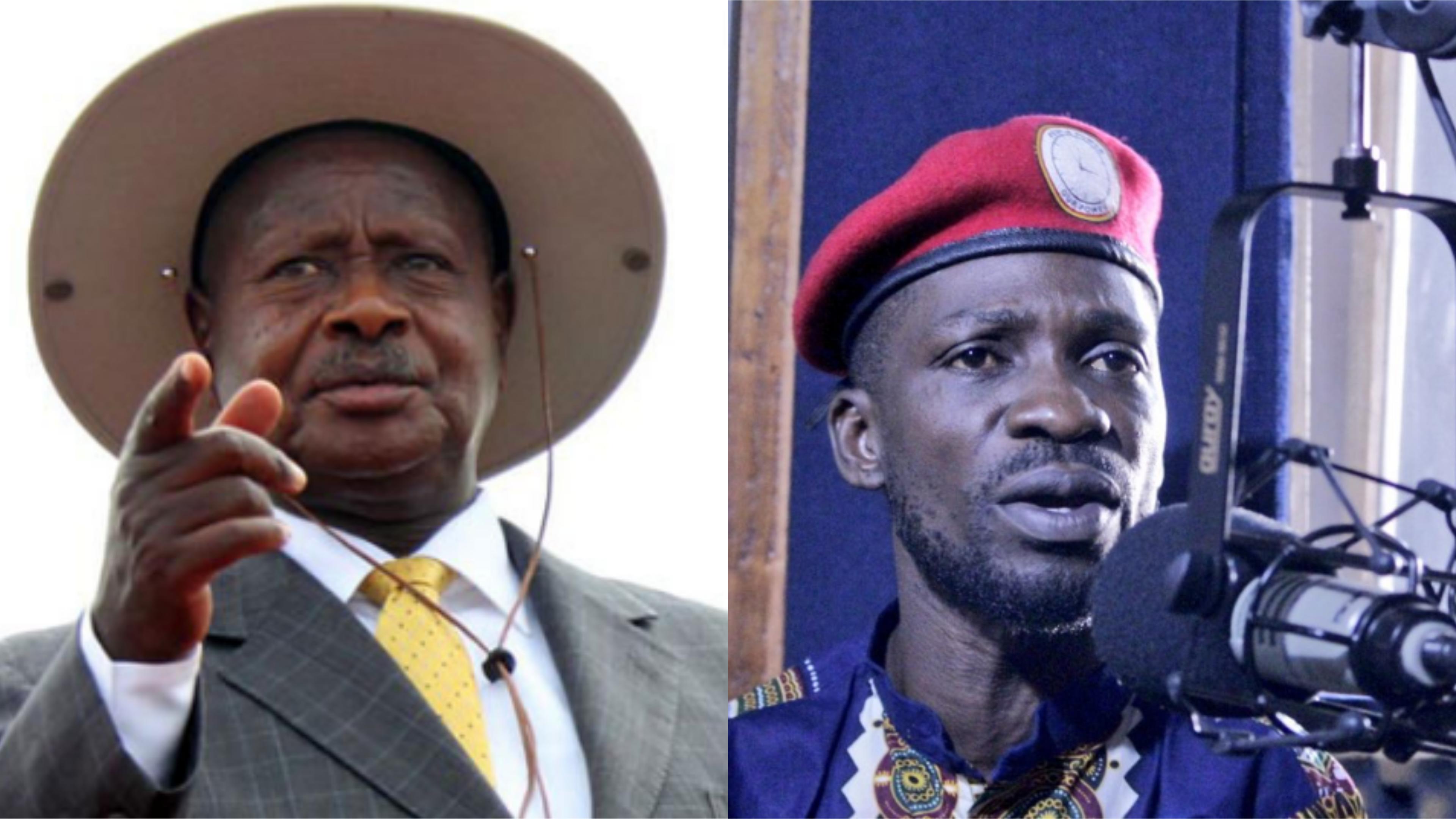
If those representing the party neither fully believe in nor clearly understand what it stands for, then serious questions arise about the party’s campaign strategy and internal political education. A political organisation can only effectively mobilise and sustain support when its candidates and structures are anchored in shared values, policy positions and ideological conviction.
The recent wave of defections has further exposed what appears to be a missing link between leadership and grassroots mobilisation. It has reignited debate on whether policy-based and ideology-driven politics are being replaced by transactional arrangements, where loyalty depends on perceived material benefit rather than belief in a long-term vision.
If allegations of money being offered for party slots are indeed true, they raise fundamental concerns about internal party coherence, credibility and sustainability. Such claims challenge the very foundation of ideological politics and invite broader reflection on whether our opposition politics is struggling to transition from protest mobilisation to structured, policy-oriented political organisation.