



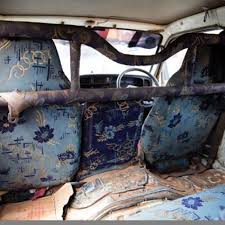

Passengers in Kampala and across Uganda are set to see far‑reaching changes in the public transport sector after the government launched an intensified crackdown on old, poorly maintained and mechanically unsafe taxis.
The measures already being enforced aim to restore order to the chaos that has long characterized taxi operations, improve commuter safety and reduce the nation’s high toll of road traffic accidents.
The directive comes from Fred Byamukama, State Minister for Works and Transport, who confirmed that authorities have moved beyond planning and are now actively enforcing mandatory vehicle inspections and banning mechanically unfit taxis from operating.
“Public safety is paramount, we don’t expect any old taxis in Kampala. If they have failed to present their vehicles for inspection and certification, they must not be on our roads.” he said
The Ministry of Works and Transport has issued a ban on dangerous mechanically conditioned (DMC) taxis, vehicles that fail to meet minimum roadworthiness standards from Kampala and its suburbs. The ban took immediate effect and will be reinforced jointly with the Uganda Police Force and Kampala Capital City Authority(KCCA) which has been directed to impound non‑compliant vehicles found operating on city roads.
Byamukama says that some taxis operating in the city are so worn out that operators hold broken parts together using glue and ropes.
He further noted that affected vehicles will be impounded and the owners ordered to either sell them off as scrap or repair.
Under the new enforcement regime, all public service vehicles including taxis and buses must undergo inspection at certified vehicle inspection centres and obtain a roadworthiness certificate before they can operate legally. The government has also taken over the coordination of mandatory motor vehicle inspection services , previously outsourced to strengthen oversight and tighten enforcement.
In addition to the taxi crackdown, authorities have set a 60‑day compliance deadline for buses plying major northern and eastern routes, requiring them to complete inspection and display valid certification stickers by June 8, 2026. Officials have warned that vehicles failing to comply will be removed from service and penalties imposed.
Byamukama insists that the enforcement drive is not limited to Kampala, noting that rural routes with high accident rates are also being targeted. “It is our mandate as government to put measures that help reduce road accidents,” he said, calling on operators to maintain discipline on the road.
The crackdown on unsafe vehicles is part of a broader strategy to organise and modernise Uganda’s public transport system. Long criticised for its informal structure, the taxi sector will soon be reorganised so that drivers operate only under registered associations or Savings and Credit Cooperative Organisations (SACCOs), instead of individually. Government officials say this will make it easier to enforce standards, introduce scheduled routes and timetables, and help drivers access credit to replace old vehicles with safer models.
State Minister Byamukama reiterated that operating as individuals may no longer be permitted under the new policy, in line with practices in neighbouring countries where organised associations improve regulation and accountability. He cited examples where association‑based systems help standardise operations and reduce cut‑throat competition at taxi stages.
Uganda continues to grapple with persistently high road traffic deaths, with authorities attributing a significant share of crashes to mechanical failures, reckless driving and poor vehicle maintenance. Government enforcement of inspections and bans on unsafe taxis is part of a push to break this cycle and make travel more reliable and safe.
In related efforts, the Ministry of Works and Transport and the Uganda Police are piloting smart traffic enforcement technologies, including electronic penalty systems and traffic monitoring tools, to detect speeding and other violations, a measure intended to complement vehicle inspections with better behavioural enforcement on the roads.
The reforms have been met with mixed reactions from taxi drivers and industry leaders.
John Kiggundu, a taxi operator in Kampala, acknowledged the need for safety but raised concerns about the pace of implementation.
“We support safety, but phasing out old taxis without providing alternatives will put many of us out of work,” he said. “The government must provide structured support and financial backing to help us modernise the fleet.”
Industry representatives have criticised the government for proceeding without adequate consultation.
Mustapha Mayambala, chairperson of the Uganda Transport Drivers and Allied Workers’ Union, said taxi operators were not sufficiently engaged before the new rules were announced. “You cannot just call a press conference without involving us. Let the ministry sit with stakeholders and agree on the way forward,” he said.
Others within the sector, while agreeing with the need for reform, called for gradual implementation to allow drivers time to adapt and avoid sudden job losses.