




Uganda is losing staggering amounts of revenue from its mineral wealth, with a new report from the Auditor General, Edward Okwakol, revealing a Shs11 trillion loss from black market gold exports. This massive financial haemorrhage is directly undermining the government’s economic goals outlined in the National Development Plan (NDP) III, which emphasises sustainable mineral development as a key driver of growth.
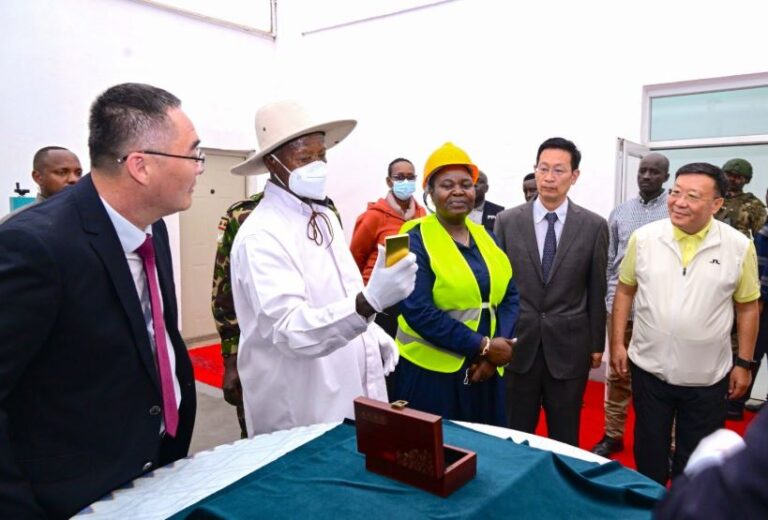
Gold is Uganda’s single largest export earner, making it a critical pillar of the country’s economy. Actually, President Yoweri Museveni is cognizant of this fact and very supportive of the sub-sector to the extent that he recently officiated over the opening of Wagagai Gold Mining Company in Busia District.
But while gold is a huge source of foreign exchange, its contribution to the national treasury through taxes and royalties has been inconsistent and significantly undermined by illicit activities. For several years, gold has consistently been Uganda’s top export, surpassing traditional commodities like coffee and fish.
In the 12 months leading up to June 2025, Uganda’s gold exports peaked at US$4.21 billion (approximately Shs14.7 trillion), a figure that represents almost 40% of the country’s total export earnings. In 2024 alone, Uganda earned approximately US$3.4 billion (equivalent to over Shs11.9 trillion) from gold exports, accounting for about 37% of the total export revenue. This has a major positive effect on Uganda’s balance of payments.
However, despite its immense export value, gold’s contribution to the government’s direct revenue (treasury) is often significantly lower than its potential due to several factors, with illicit trade being a top concern. A significant amount of gold is exported through the black market without the necessary permits, leading to a substantial loss of revenue.
The Auditor General’s review of the subsector exposed significant institutional inadequacies that are facilitating this illicit trade and denying the government and local communities vital revenue. According to the AG’s 2023/2024 report, gold exports valued at an astonishing USD 3.014 billion (approximately Shs11 trillion) were made without the necessary export permits from the Ministry of Energy and Mineral Development, which calls for the attention of Ministers Ruth Nanakabirwa and her deputy, Phiona Nyamutoro, the State Minister for Minerals.

This blatant disregard for regulatory requirements, as stipulated in Section 149 of the Mining and Minerals Act, has led to the loss of government revenue. For instance, the report reveals that unpaid export levies alone have accumulated to a staggering Shs68.842 billion.
However, the problem extends beyond export fees. The Auditor General found that Shs439 billion in mineral rent fees from exploration and mining companies remained outstanding as of June 30, 2024. This non-compliance is a direct violation of Section 50(1.b) of the Mining and Minerals Act.
The failure to collect and distribute royalties is also a major concern. The Mineral Royalties’ Sharing Fund had a balance of Shs7.05 billion, yet only Shs3.14 billion (45%) was distributed to beneficiaries, leaving a balance of Shs3.91 billion undistributed.
This, according to the Auditor General, is particularly damaging to local communities, as the law requires royalties to be shared with Central Government (70%), Local Governments (15%), Sub-Counties/Town Councils (10%), and landowners (5%). These systemic failures are attributed to inadequate law enforcement and poor collaboration among key players in the mineral sector.
The Auditor General has since made several key recommendations to the Accounting Officer, Eng. Irene Batebe, as the Permanent Secretary of the Ministry of Energy and Mineral Development, to address these issues, some of which include: Strengthening collaboration with the Uganda Revenue Authority (URA) to enhance the monitoring and enforcement of export permits.
Implementing a follow-up mechanism to track outstanding mineral rent fees and enforce penalties for non-compliant license holders. Resolving bottlenecks to ensure that royalties are distributed to the intended beneficiaries.
The report serves as a critical wake-up call, highlighting that without a strengthened regulatory framework and strict enforcement, Uganda’s immense mineral wealth will continue to be a missed opportunity, with illicit black market exports denying the government the vital revenue needed to finance national development programmes and improve the lives of its citizens.