




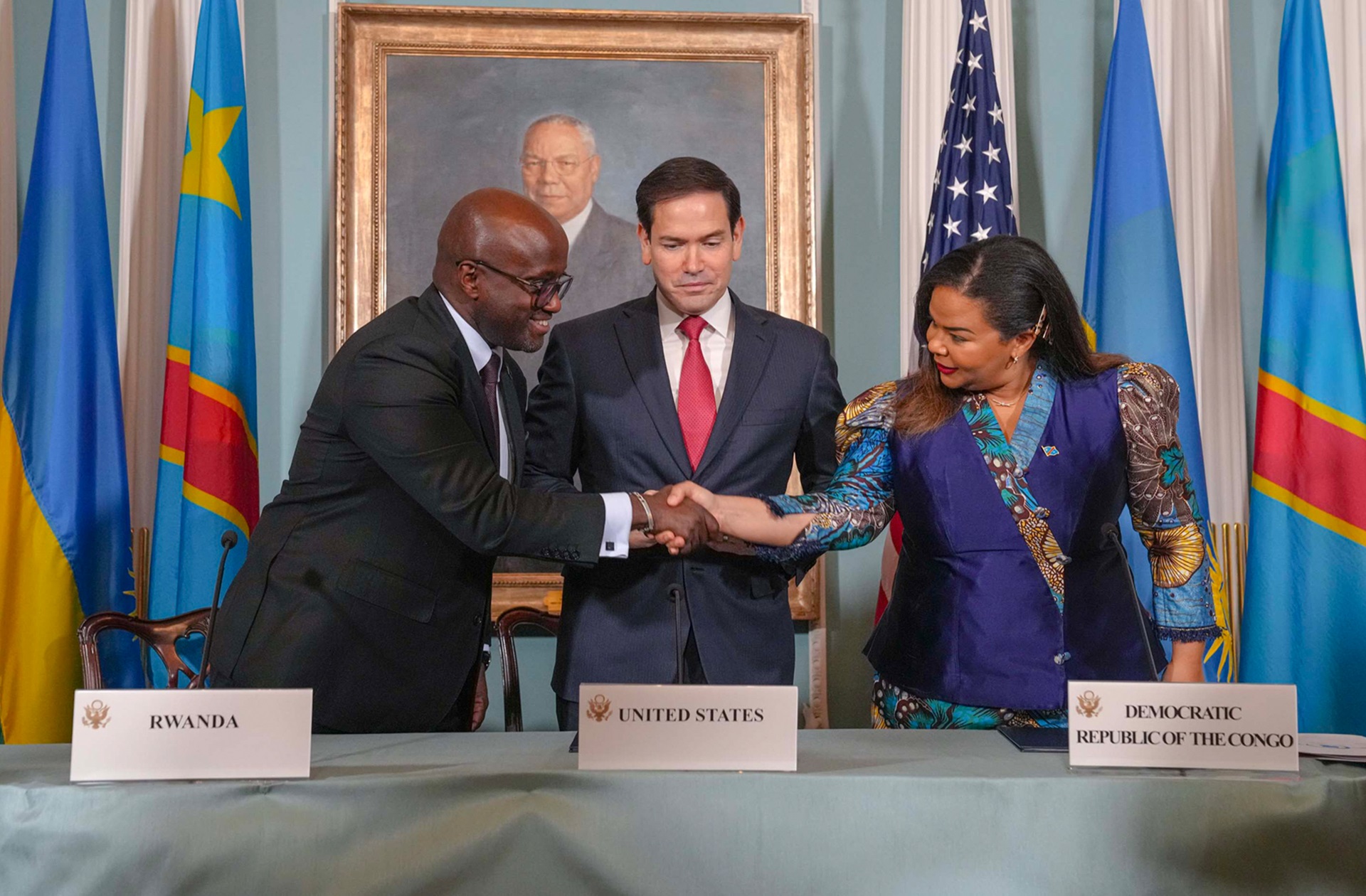
The signing of a comprehensive peace agreement between the Democratic Republic of the Congo (DRC) and the Republic of Rwanda in Washington D.C June 27, 2025, marks a potentially pivotal moment for the Great Lakes region. After decades of fraught relations, punctuated by proxy conflicts, humanitarian crises, and a deep-seated mistrust, this accord signals a renewed commitment to a political resolution.
From a conflict resolution scholar’s perspective, the true substance of this agreement lies “beyond the handshake,” demanding a critical unpacking of its promises and pitfalls. We must examine the complex tapestry of promising “bulges” – innovative and necessary steps forward – alongside inherent “hollows” – significant challenges and historical precedents that could undermine its long-term success.
There are many promising strengths of this agreement that form glimmers of a New Era, because several elements within this agreement stand out as genuine advancements that address the core drivers of past instability:
- Direct Bilateral Security Mechanism (JSCM):Perhaps the most significant prominence is the establishment of a Joint Security Coordination Mechanism (JSCM). Previous attempts at regional security have often faltered due to a lack of direct, sustained bilateral engagement. The JSCM’s mandate to “identify, assess, and locate the FDLR and affiliated groups” for neutralization, coupled with intelligence and information exchanges, indicates a pragmatic, operational shift. This direct line of communication and coordination between two historically antagonistic security establishments is crucial for building confidence and de-escalating potential flashpoints.
- Explicit Prohibition of State Support to Armed Groups: The agreement’s unequivocal commitment to “immediately and unconditionally cease any state support to non-state armed groups” strikes at the heart of the region’s enduring proxy dynamics. Accusations of state sponsorship have long fueled cycles of violence. A genuine adherence to this provision, verifiable through the JSCM and potentially international observers, could fundamentally alter the conflict landscape.
- Targeted FDLR Neutralization (CONOPS): The emphasis on operationalizing the Harmonized Plan for the Neutralization of the FDLR directly addresses Rwanda’s primary security grievance. By placing the onus on the FARDC to neutralize the FDLR while the RDF concurrently disengages defensive measures, the agreement outlines a quid pro quo that, if effectively implemented, could remove a significant historical casus belli for Rwandan involvement in eastern DRC.
- International Sponsorship and Oversight: The presence of the United States and Qatar as witnesses and invited observers to the Joint Oversight Committee (JOC) adds a critical layer of international legitimacy and potential leverage. This external involvement can provide mediation capabilities, apply diplomatic pressure when necessary, and help hold both parties accountable, thereby mitigating the risk of unilateral actions or backsliding.
- Integration of Economic Development: The phased regional economic integration framework is a forward-thinking “bulge.” By linking security to shared economic prosperity, particularly around critical mineral supply chains, the agreement creates positive incentives for cooperation. This acknowledges that stability is not solely a military endeavor but also requires addressing the economic grievances and illicit networks that often fuel conflict. It offers a potential pathway to transform extractive industries from drivers of conflict into engines of shared development.
There equally, enduring Challenges and Skepticisms in this agreement, despite these promising elements, there are deep-seated challenges and historical patterns that could impede the agreement’s success:
- The Chasm of Distrust: Decades of mutual suspicion, accusations, and military skirmishes have created a profound lack of trust between the two nations. While the agreement lays out mechanisms, overcoming this ingrained distrust, especially at operational levels within their respective security forces, will be an immense undertaking. Words on paper are one thing; consistent, good-faith execution in the field is another.
- Complexity of Non-State Armed Groups: The agreement is between states, but the conflict in eastern DRC involves a bewildering array of non-state armed groups, driven by a complex mix of local grievances, identity politics, and economic interests, far beyond just the FDLR and M23. While the agreement addresses state support, the independent dynamics and motivations of these groups, their command structures, and their often opportunistic alliances present a persistent gap that a bilateral state agreement can only partially address. The “conditional integration” of combatants into FARDC and PNC is a particularly sensitive and historically problematic area, often leading to re-fragmentation and renewed conflict if not managed with extreme rigor and transparency.
- Ambitious Timelines and Verification: The CONOPS outlines an ambitious three-month timeline for the “neutralization of the FDLR and lifting of Rwanda’s defensive measures.” Given the dense, rugged terrain of eastern DRC and the historical resilience of armed groups, achieving definitive “neutralization” is a monumental task. The effectiveness of the “Ad Hoc Verification Mechanism” (Appendix A) will be paramount, but rigorous, independent, and sustained verification on the ground is notoriously difficult and resource-intensive.
- Structural Weaknesses in Eastern DRC Governance: Beyond the interstate dynamics, the agreement cannot fully address the pervasive governance deficit, weak state institutions, land disputes, and inter-communal tensions that are the true bedrock of instability in eastern DRC. These internal gaps provide fertile ground for armed groups to operate and recruit, regardless of external state support. Without robust, parallel internal reforms in the DRC, the region remains vulnerable to renewed conflict.
- Funding Sustainability: The CONOPS states that “Each country finances its own activities” for logistical support. While this promotes ownership, the economic realities of both nations, particularly the DRC, may pose a significant challenge in sustaining the necessary operational intensity for long-term enforcement and demobilization efforts. External financial support will likely be critical.
- Past Failures and Fatigues: The Great Lakes region has a history dotted with numerous peace agreements and regional initiatives that have ultimately faltered. This history breeds a degree of “peace process fatigue” among the population and some international actors. Overcoming this skepticism and demonstrating tangible, irreversible progress will be vital for building public confidence and maintaining international engagement.
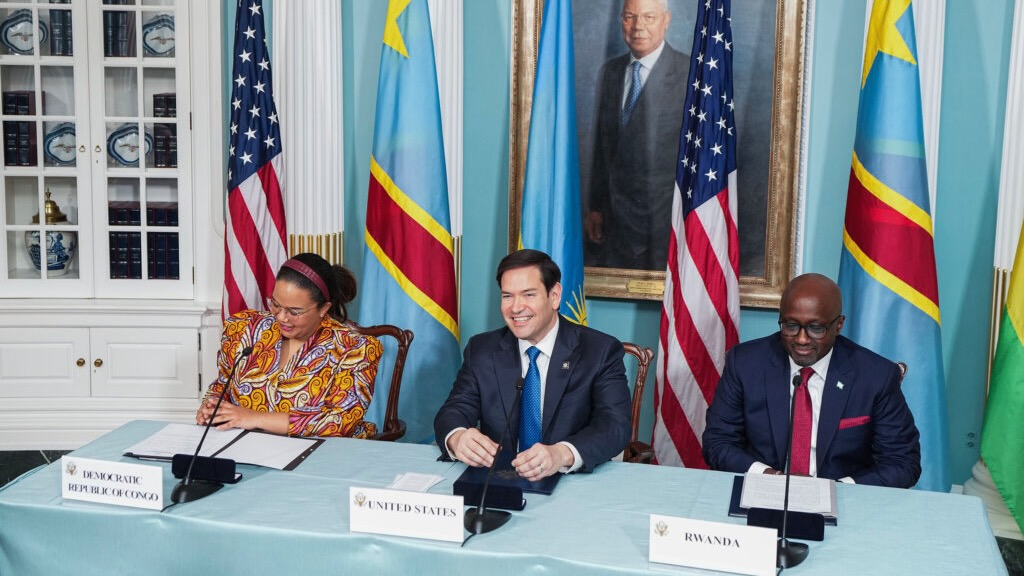
When such gaps and challenges are cautiously addressed, this agreement represents a significant geopolitical rebalancing. The strong involvement of the United States, alongside the African Union and Qatar, signals a renewed international commitment to de-escalating one of Africa’s most intractable conflicts. It underscores the recognition that stability in the Great Lakes is crucial for broader African security and resource dynamics.
However, the path from signing to sustainable peace is long and fraught with peril. The promises of this agreement offer a blueprint for progress, rooted in direct engagement and mutual security interests. But the gaps and challenges demand constant vigilance, robust international support, and, most importantly, sustained political will from Kinshasa and Kigali. The true test of this agreement will lie not in the diplomatic fanfare of Washington D.C., but in the arduous, day-to-day operationalization of its provisions on the ground in eastern DRC, where decades of mistrust and violence have etched deep scars. Only consistent action, coupled with transparent accountability, can begin to fill these hollows and truly usher in a new era of stability for the Great Lakes.