



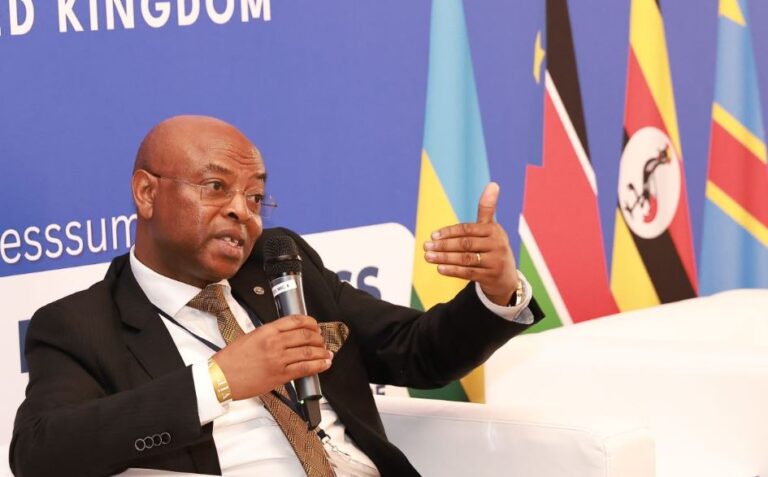

In a high-level address at the 15th UK-Africa Business Summit, in London, Deputy Governor of the Bank of Uganda, Prof. Augustus Nuwagaba, laid out a clear and strategic roadmap to position Uganda as a prime destination for global private capital.
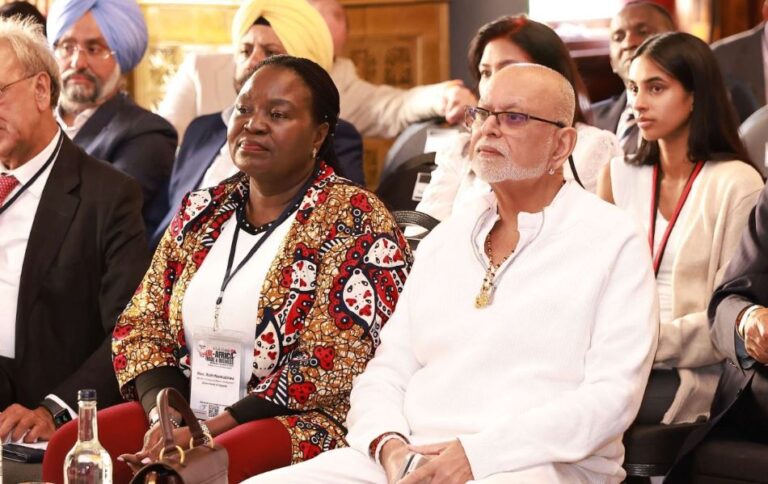
The Ugandan delegation at the Summit also included, Hon. Ruth Nankabirwa, the Minister of Energy and Mineral Development, Dr. Sudhir Ruperelia, the Chairman of Ruparelia Group of Companies, Col. Edith Nakalema from State House Investor Protection Unit, among others.
Speaking on the Bank’s role in driving financial modernisation and managing macroeconomic risk, he underscored that attracting and sustaining foreign investment requires a holistic approach that goes beyond fiscal incentives to include regulatory reform, ethical standards, and a commitment to green growth. “Uganda has strategic investment opportunities in sectors such as oil, agro-industry, infrastructure, and climate-aligned initiatives, all backed by policy stability and institutional reform,” Prof. Nuwagaba said.
Prof. Nuwagaba highlighted several key sectors as fertile ground for private capital. These areas, he noted, are not only critical for national development but also offer high-potential returns for investors. The core strategic investment opportunities include:
Oil and Gas: He noted that this sector, which is a cornerstone of Uganda’s economic future, presents significant opportunities for investment in its upstream and midstream value chains.
Agro-industry: Prof. Nuwagaba explained that leveraging Uganda’s agricultural potential, investments in processing, value addition, and modern farming techniques are crucial for enhancing productivity and export capacity.
Infrastructure: He highlighted the urgent need to develop reliable economic infrastructure, stressing that it is paramount to lowering operational costs for businesses and improving connectivity across the country.
Climate-Aligned Initiatives: Recognising the global shift towards sustainability, the Deputy Governor emphasised the need to attract capital for renewable energy, sustainable manufacturing and agriculture, plus other green projects.
A central theme of the Deputy Governor’s speech was the urgent need for comprehensive reforms to create a more favourable investment climate. He explained a two-pronged strategy focusing on both fiscal and regulatory changes:
Nuwagaba stressed the importance of reducing harmful taxes and simplifying the tax payment process to lower the burden on investors. He also advocated for offering targeted tax incentives to strategic sectors to encourage investment where it is most needed.
The Deputy Governor called for the reduction of bureaucratic red tape and the minimising of the delays in licensing and permit issuance. “The Bank of Uganda is in support of the establishment of a one-stop center for investors, facilitated by the Uganda Investment Authority (UIA), as a critical step forward,” he said. Additionally, he advocated for the liberalisation of capital and financial accounts to allow the free movement of private capital and for permitting foreign ownership in key strategic sectors.
In a nod to the growing importance of sustainable investment, Prof. Nuwagaba emphasised the need to incorporate ESG (Environmental, Social, and Governance) standards into Uganda’s investment framework. He argued that offering green investment incentives would attract responsible investors who align with sustainability norms, particularly in the agriculture, manufacturing, and renewable energy sectors.
Furthermore, he also highlighted the importance of promoting transparency and fair competition to combat monopolistic practices and unethical business behavior. This focus on ethical and sustainable governance is crucial for building a resilient, diversified, and internationally credible economy.
The Deputy Governor’s speech laid out a comprehensive blueprint, showing a clear understanding that attracting quality private capital requires not just promising returns but also a stable, transparent, and forward-thinking institutional framework.
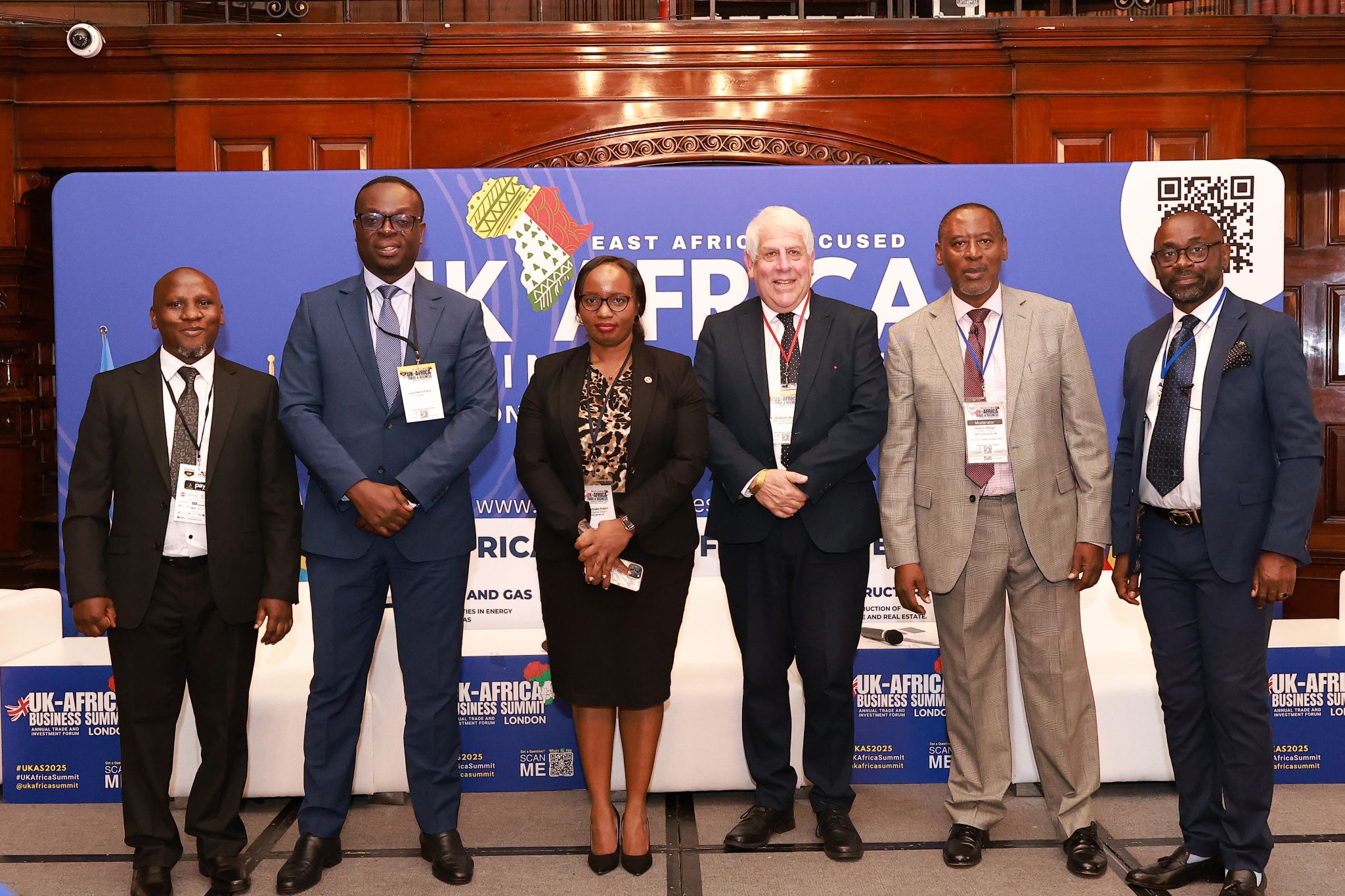
Represented by the Director, Corporate Banking, Irene Mutyaba Kabiri, Absa Bank Uganda demonstrated how their Pan-African platform and international offices can catalyse foreign direct investment and deepen capital flows into key sectors like infrastructure, agriculture, and manufacturing. The Bank used the same opportunity to launch their Diaspora Banking proposition that gives Ugandans abroad access to affordable, world-class banking to invest back home.