



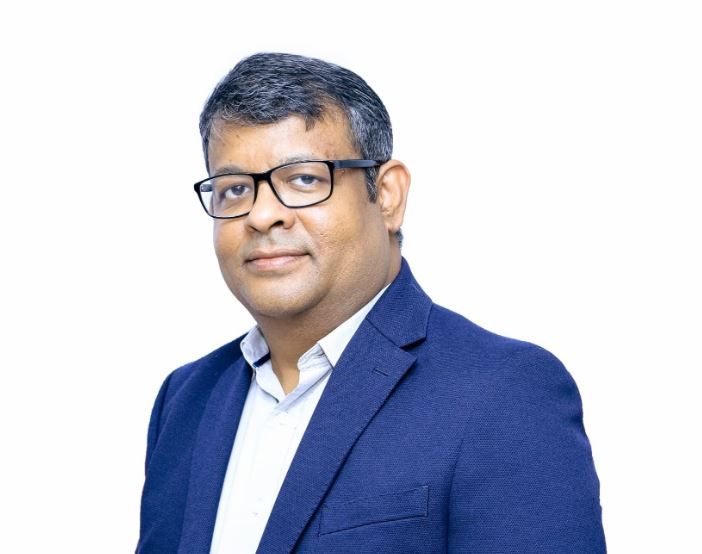

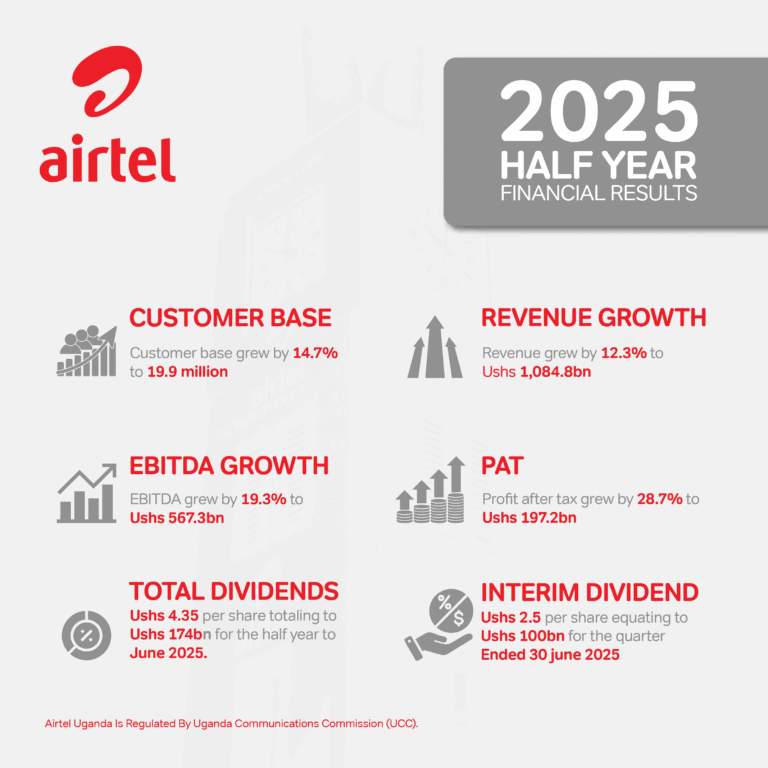
Airtel Uganda, under the leadership of Soumendra Sahu as Chief Executive Director, has delivered a stellar performance, posting a 28.7% jump in Profit After Tax (PAT) for the first half of 2025. The company’s impressive financial results, with profits reaching Shs 197.2 billion, are a clear indication of a successful strategic pivot from voice to data.
According to David Birungi, the Public Relations Manager, Airtel Uganda, this growth not only solidifies Airtel’s resilience but also puts it in a strong position to challenge its competitors for market dominance in Uganda’s evolving telecom landscape.
Airtel’s Data-Driven Success
The financial report indicates that the numbers tell a compelling story of transformation. While voice revenues fell by 2%, a reflection of the global trend of declining voice use and a cut in interconnect rates, data revenues surged by over 30%.
This phenomenal growth cemented data as Airtel’s primary growth engine, helping total revenues climb to Shs1.08 trillion. The company’s focus on cost efficiency was also evident, with operating expenses increasing by only 5.5%, which helped lift its (Earnings Before Interest, Taxes, Depreciation, and Amortisation) EBITDA by 19.3% and its EBITDA margin to 52.3%.
For shareholders, the performance is a cause for celebration. The Board declared an interim dividend of Shs174 billion, a 31.8% increase on the previous year. This news is particularly welcome for institutional investors like the National Social Security Fund (NSSF), which holds a significant stake in listed telecom companies and relies on their strong performance to provide a return on investment for its members.
The Battle for Market Share
Airtel’s strong results indicate that the telecom is not just growing but is also actively closing the gap with its competitors. MTN, while still the market leader, also reported a 14% increase in service revenue for the same period.
However, Airtel’s independent sources suggest that its growth has allowed it to inch in on the industry revenue and market share by between 1-3% respectively.
While both companies are investing heavily in network infrastructure, Airtel’s Shs87.8 billion in capital expenditure ensured 100% 4G coverage. The pace and strategic impact of Airtel’s data-driven growth are making it a formidable competitor.
The telecom’s ability to drive profitability even as a key legacy revenue stream declines highlights a successful adaptation to market dynamics. This sets the stage for a more intense battle for dominance as both companies vie to expand their 5G and fibre infrastructure in the lucrative urban markets.