



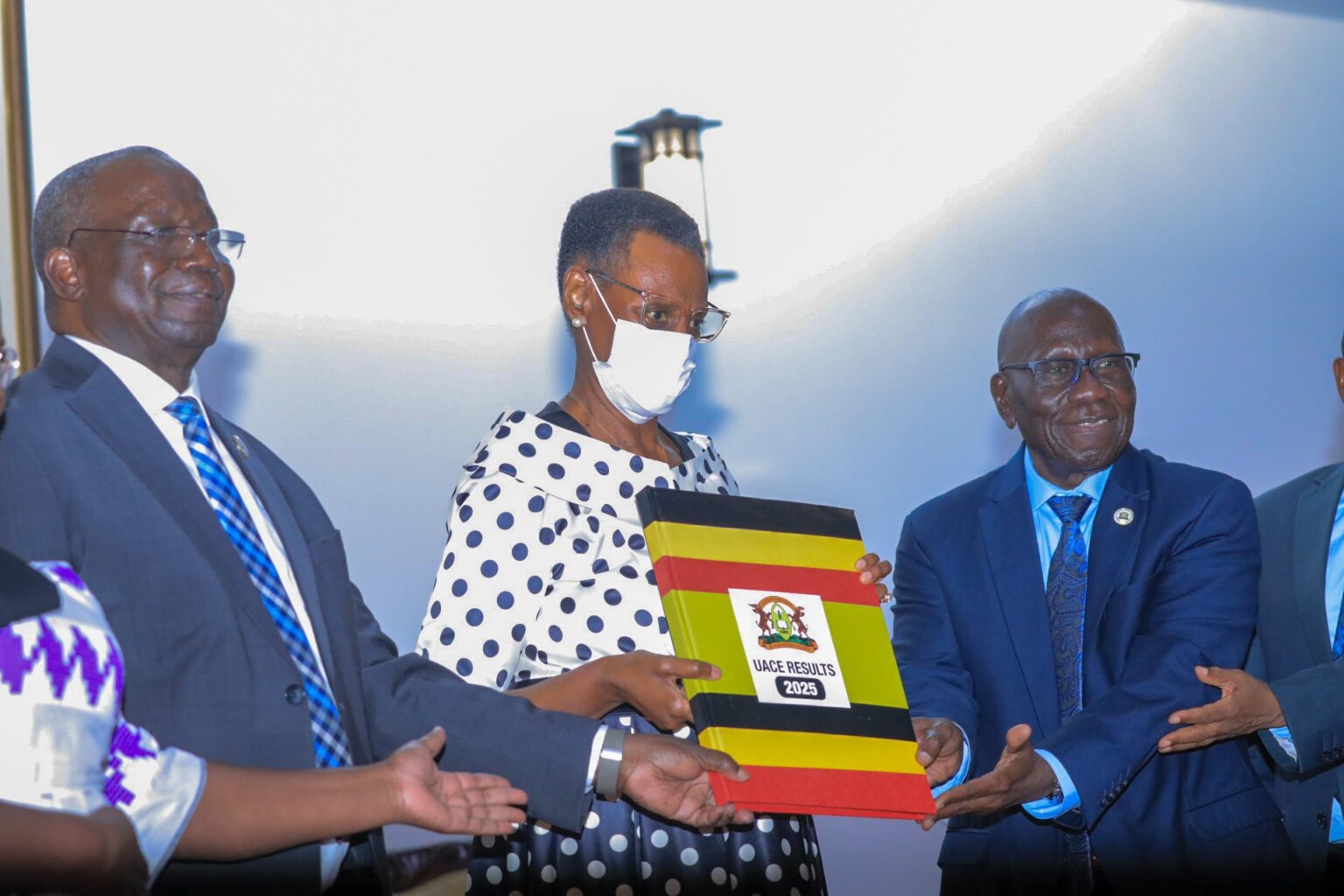

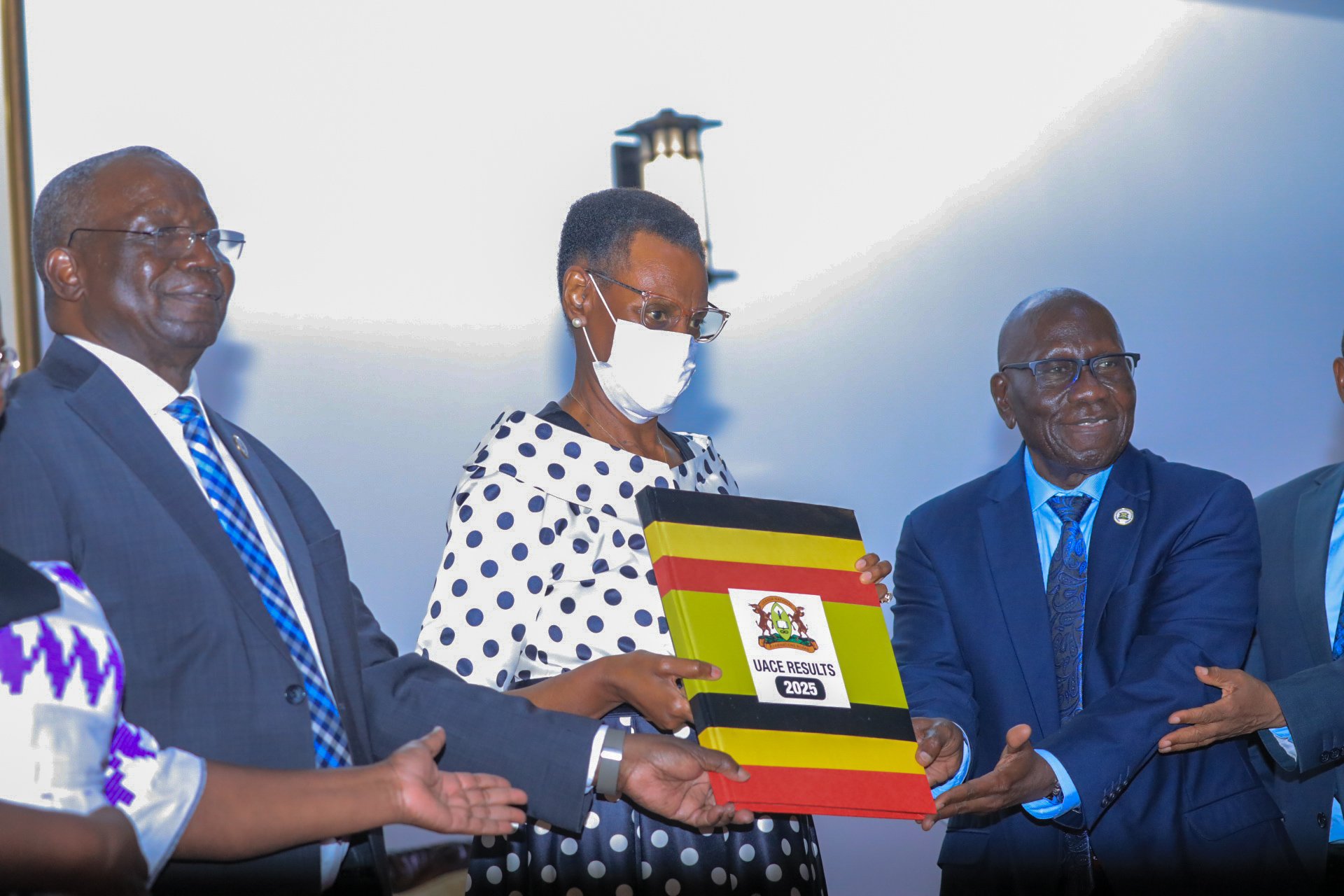
The Uganda National Examinations Board (UNEB) has officially released the 2025 Uganda Advanced Certificate of Education (UACE) results, reporting a historic increase in registered candidates, improved overall performance, and notable achievements among female learners.
The results were read out by the UNEB ED, Dan Odongo in the presence of the Minister for Education Janet Kataha Museveni, who officially flagged on the release.
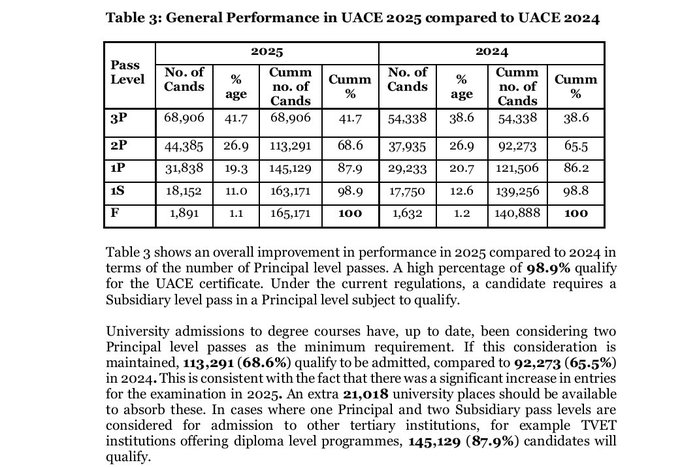
According to Odongo, the overall performance improved, with 68,906 candidates achieving three Principal passes, 44,385 attaining two Principal passes, 31,838 scoring one Principal pass, and 18,152 reaching one Subsidiary pass, resulting in 98.9% of candidates qualifying for the UACE certificate. Comparatively, 113,291 candidates met the two Principal pass requirement for university admission, up from 92,273 in 2024, while 145,129 candidates would qualify for diploma or TVET programmes requiring one Principal and two Subsidiary passes, reflecting both the increased candidature and growing access to higher education.
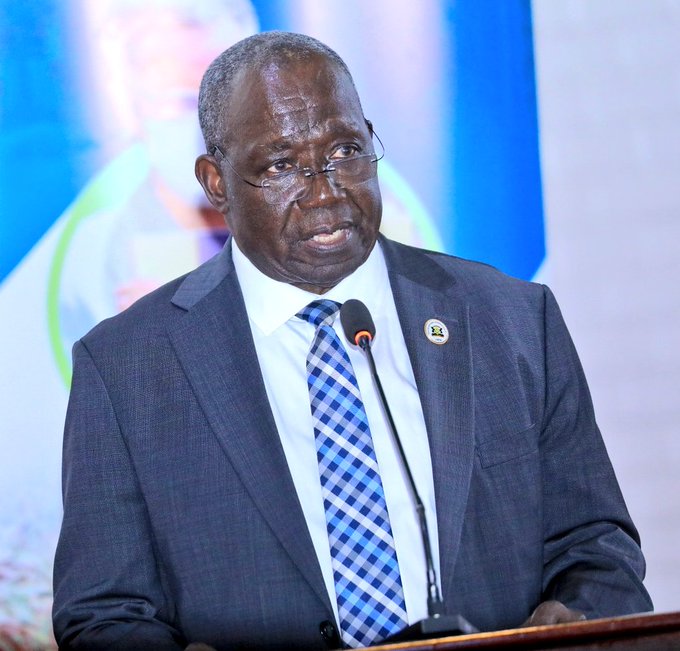
Odongo reveals that female candidates performed proportionally better than males at upper Principal levels, with 44.6% achieving three Principal passes compared to 39.5% of males, 28.2% attaining two Principal passes versus 25.8% of males, and lower percentages at 1P and 1S levels, as well as a reduced failure rate of 0.8% among females compared to 1.4% among males. Large entry subjects, including General Paper, Subsidiary Mathematics, and Subsidiary ICT, showed strong female performance in pass percentages, while males recorded higher numbers of top A grades in Mathematics and Sciences, highlighting the persistent gender gap in enrolment and achievement in STEM subjects.
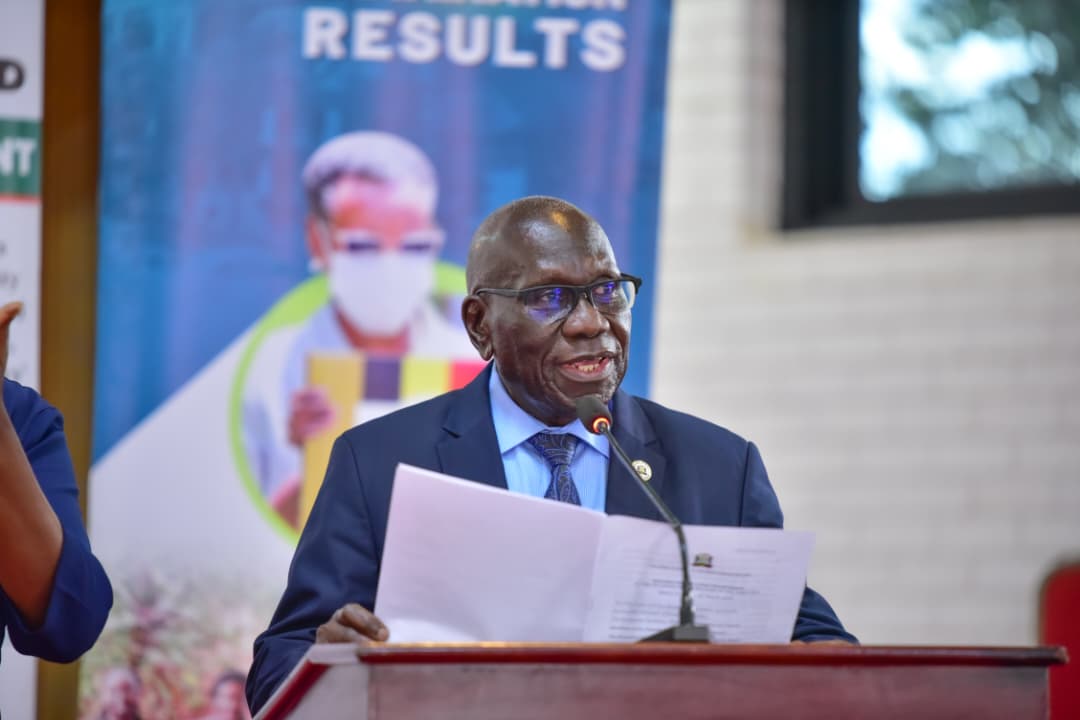
In detailed subject analysis, Odongo noted marked improvements in Mathematics, Chemistry, Agriculture, Geography, Economics, Biology, and Literature in English, while performance in Entrepreneurship Education, Christian Religious Education, Fine Art, and Physics declined.
In Humanities subjects, candidates struggled with poor interpretation of questions, inadequate analytical and evaluative skills, and a failure to apply concepts to practical situations. In History, candidates demonstrated weak logical flow, limited use of relevant examples, and poor evaluative reasoning. In Religious Education, connecting scriptural teachings to everyday life proved challenging.
Geography candidates were hindered by poor data analysis, difficulty interpreting fieldwork findings, and errors in sketch mapping. Language subjects, including local languages, continued to reveal gaps in grammar, coherent translation, and cultural literacy.
In Sciences, inadequate practical exposure affected the interpretation of experiments, presentation of data, and construction of graphs with correct scales, while teachers’ omission of certain topics, such as in Physical Chemistry, further impacted performance.
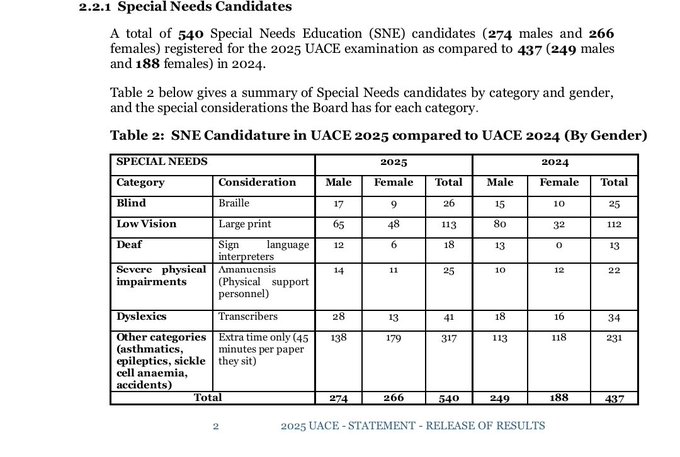
He further revealed that special needs candidates performed commendably, with 268 attaining three Principal passes, 109 achieving two Principal passes, 92 reaching one Principal pass, and 57 achieving Subsidiary passes, while only 12 failed. The majority, 58.7%, fell into the “Others” category requiring only extra time.

According to Odongo, among prison inmates, 31 candidates obtained three Principal passes, 15 scored two Principal passes, 16 reached one Principal pass, four achieved Subsidiary passes, and two failed, reflecting the effectiveness of targeted support and a high completion rate.
The Uneb ED revealed that malpractice incidents were minimal, involving only 351 candidates across 47 centres, representing 0.2% of the total candidature, mainly related to receiving assistance during Science practicals, possessing unauthorized materials, and impersonation. He noted that investigations are ongoing, with results withheld pending completion, and UNEB plans to start hearing cases from the 16th of March, 2026.
Odongo, informed all stakeholders that results can be accessed via school portals, SMS using MTN and Airtel by sending UACE followed by the full index number to 6600, or collected in hardcopy from UNEB Kyambogo offices. Heads of centres are required to verify and submit queries electronically within 21 working days to ensure timely certificate printing.
The examinations, conducted between 10th November and 5th December 2025 under the theme “Embracing security and holistic assessment of learners in a dynamic environment,” saw 166,400 candidates registered, marking a 17.2% rise from 141,996 in 2024, with 72,764 females representing 43.7% of candidates and 93,636 males accounting for 56.3%. The number of examination centres increased by 197, reaching 2,452, and ultimately 165,172 candidates sat the exams, reflecting a 0.7% absenteeism, the lowest in five years, compared to 0.8% in 2024 and 1.4% in 2022.
The UPOLET programme recorded 42,327 registered candidates, representing 25.4% of the total, with 26,247 males and 15,733 females, while Special Needs Education (SNE) candidates rose to 540 from 437 the previous year, including students who were blind, low vision, deaf, physically handicapped, dyslexic, or with other conditions such as asthma, epilepsy, or sickle cell anaemia, all receiving tailored support, ranging from Braille materials, large print, sign language interpreters, extra time, and transcription assistance. The examination also included 70 inmates from Uganda Government Upper Prison, Luzira, of whom 68 sat, with the majority, 94.1%, being male.