



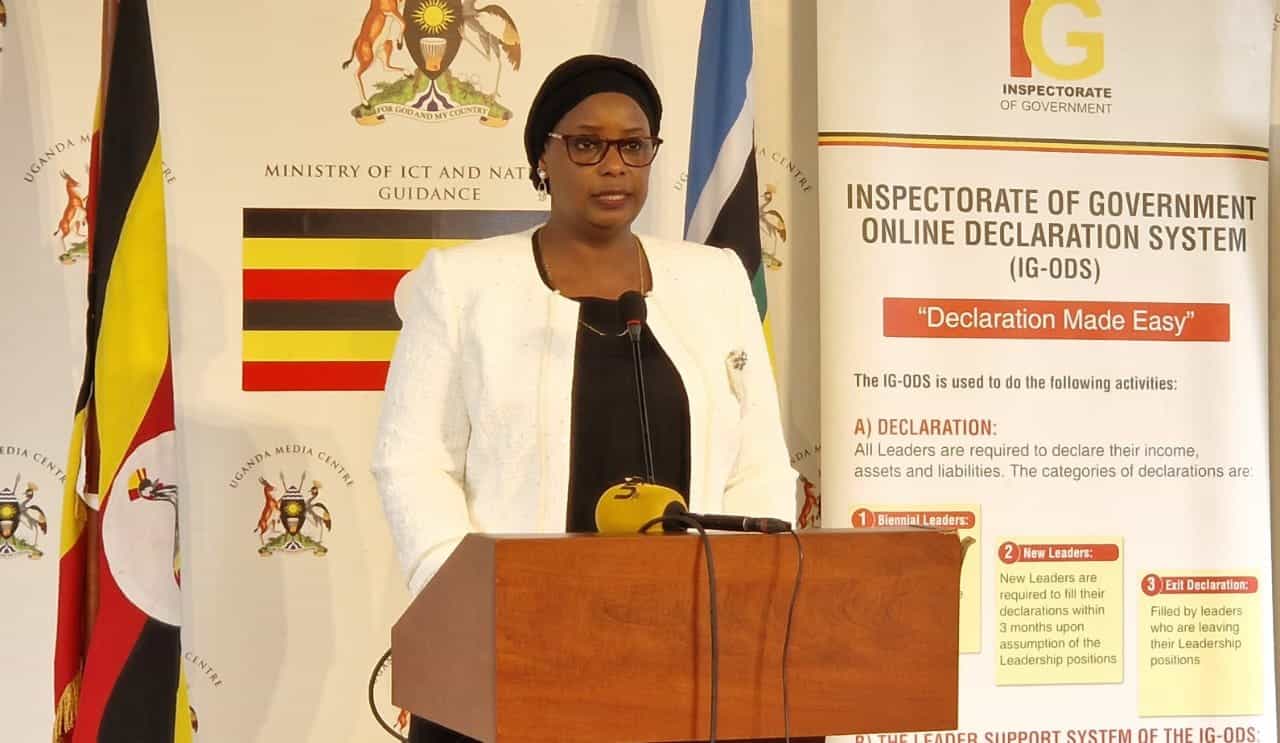

The Inspectorate of Government has reaffirmed its commitment to combating corruption and maladministration in the public sector and to fully executing its constitutional mandate in the country.
Addressing the media in Kampala while highlighting some of the achievements and challenges within her first 100 days in office, the Inspector General of Government, Lady Justice Aisha Naluzze Batala, said the institution has made notable progress in handling corruption-related cases and improving accountability in public service.
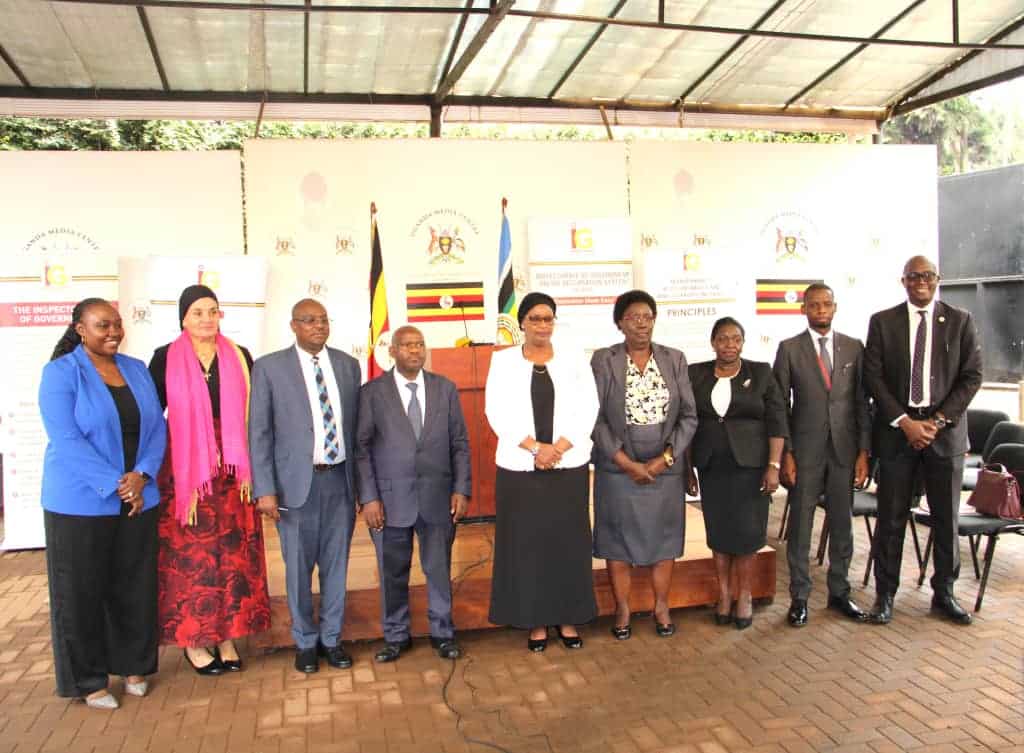
Lady Justice Naluzze revealed that from July to December 2025, the Inspectorate registered a total of 1,516 complaints from the public, out of which 1,151 cases were sanctioned after undergoing preliminary assessments. She explained that these complaints covered a wide range of governance and service delivery issues reported by citizens across the country.
According to the IGG, a total of 308 corruption cases and 330 Ombudsman matters were thoroughly investigated and concluded during the same period. Among the cases handled were 14 high-profile corruption investigations involving senior public officials and significant public resources.
She further noted that the Inspectorate successfully recovered 2,021,869,076 Uganda shillings that had been misappropriated from public funds. In addition, 844,122,884 Uganda shillings was paid to public officials who had previously been denied or experienced delays in receiving their salaries, gratuities, and pension benefits.
The IGG also reported that the institution concluded 246 breach-of-code investigations involving public officers who were found to have violated the leadership code of conduct. These investigations form part of the Inspectorate’s broader mandate of ensuring integrity and ethical behavior among public officials.
Lady Justice Naluzze added that her office strengthened leadership oversight through a series of monitoring visits to the Inspectorate of Government regional offices in Kabale, Mbarara and Masaka. The visits were aimed at assessing operational conditions and evaluating the effectiveness of service delivery at regional levels.
During these visits, the IGG also conducted spot checks at Kabale Regional Referral Hospital, Mbarara Regional Referral Hospital, and Masaka Regional Referral Hospital to assess how public resources are being utilized and to ensure that government facilities maintain accountability and efficiency in service delivery.
Despite these achievements, Lady Justice Naluzze acknowledged that the Inspectorate continues to face critical challenges that affect the full realization of the priorities she set out to achieve during her tenure.
She explained that corruption in the country is no longer predominantly petty in nature but is increasingly becoming complex, organized, and sophisticated.
According to the IGG, some corruption networks have grown into well-structured syndicates that are harder to detect and dismantle.
She also noted with concern that in certain instances corruption has become normalized within some sections of society and is sometimes even glorified, a trend she warned undermines national efforts to promote integrity and accountability in public service.
However, the IGG emphasized that the Inspectorate is ready and determined to address these emerging challenges through strengthened investigations, enhanced oversight mechanisms, and continued collaboration with other government agencies and the public.
Relatedly, Lady Justice Naluzze reminded all public officers across the country to prepare to declare their incomes, assets, and liabilities to the Inspectorate of Government beginning on April 1 this year, in line with the requirements of the leadership code. She stressed that the declaration exercise is an important tool in promoting transparency, preventing illicit enrichment, and strengthening accountability among public officials.