



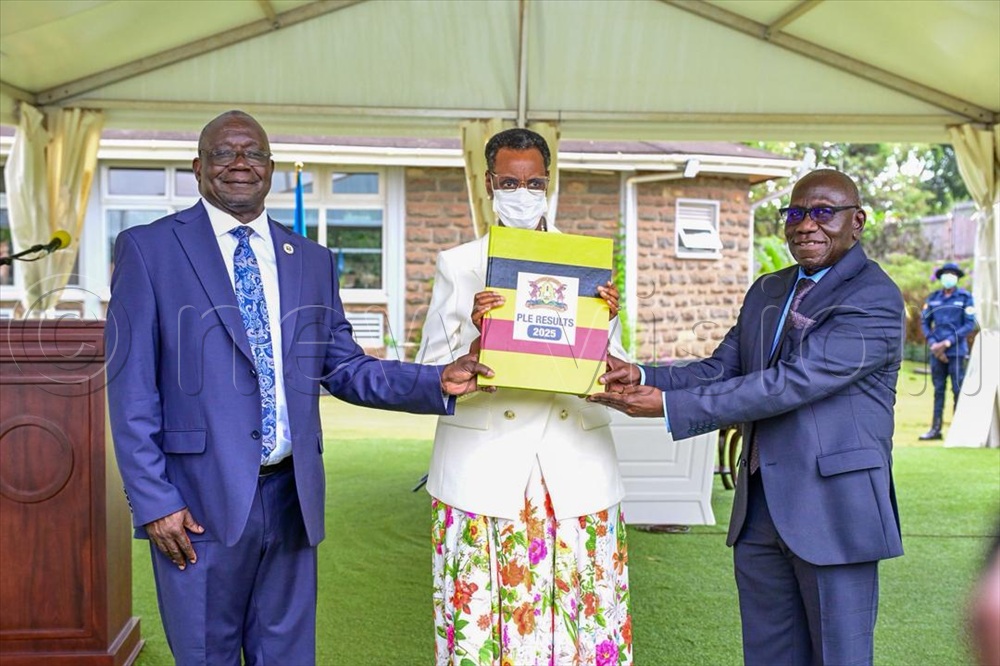

Uganda’s education system continues to demonstrate readiness and planning as the number of learners completing primary education increases steadily across the country.
A total of 817,883 candidates registered for the 2025 Primary Leaving Examination, representing an increase of 20,439 candidates compared to 2024. Of those registered, 807,313 candidates sat the examination, while absenteeism remained low at 1.3 percent. These figures reflect sustained access to primary education and improved retention through the completion of the primary cycle.
The majority of candidates, 522,036, were beneficiaries of the Universal Primary Education programme, highlighting the continued importance of free primary education in expanding opportunities for children across Uganda. The growing number of learners completing Primary Seven has been anticipated through deliberate government planning at post primary level.
To absorb the rising PLE cohorts, government has expanded secondary school infrastructure, particularly in underserved and rural areas. Since 2019, 204 new seed secondary schools have been completed and operationalized, with an additional 55 schools at various stages of construction. These investments have reduced congestion in existing schools and brought secondary education closer to learners’ communities.
Beyond the traditional academic pathway, education choices after PLE have broadened significantly. Learners now have access to skills based progression through community polytechnics, following the enactment of the Technical and Vocational Education and Training Act 2025. Government currently operates 42 community polytechnics, alongside about 100 privately owned institutions, offering three year training programmes that culminate in certification equivalent to completion of O Level.
These multiple pathways ensure that learners with different abilities and interests are accommodated within the education system, reinforcing the message that education is not limited to academic routes alone. Learners who do not immediately transition to secondary or vocational education are also encouraged to repeat Primary Seven in order to obtain certification of basic competencies.
Performance trends further strengthen confidence in system capacity. In 2025, 91,990 candidates passed in Division One, an increase of 7,689 compared to the previous year. In absolute numbers, 7,503 more candidates passed PLE than in 2024, indicating that rising enrolment is being matched by improved outcomes.
Inclusive education remains a key focus. In 2025, 3,636 learners with special educational needs were registered for PLE, while prison based learners also continued to participate in the examination. These developments reflect a system that is expanding access while maintaining inclusivity.
With rising completion rates, expanded infrastructure, diversified post PLE pathways and low absenteeism, government has expressed confidence in the education system’s capacity to accommodate growing learner numbers. The continued alignment of policy, planning and investment is positioning Uganda’s education sector to support smooth learner transition and sustained national development.