



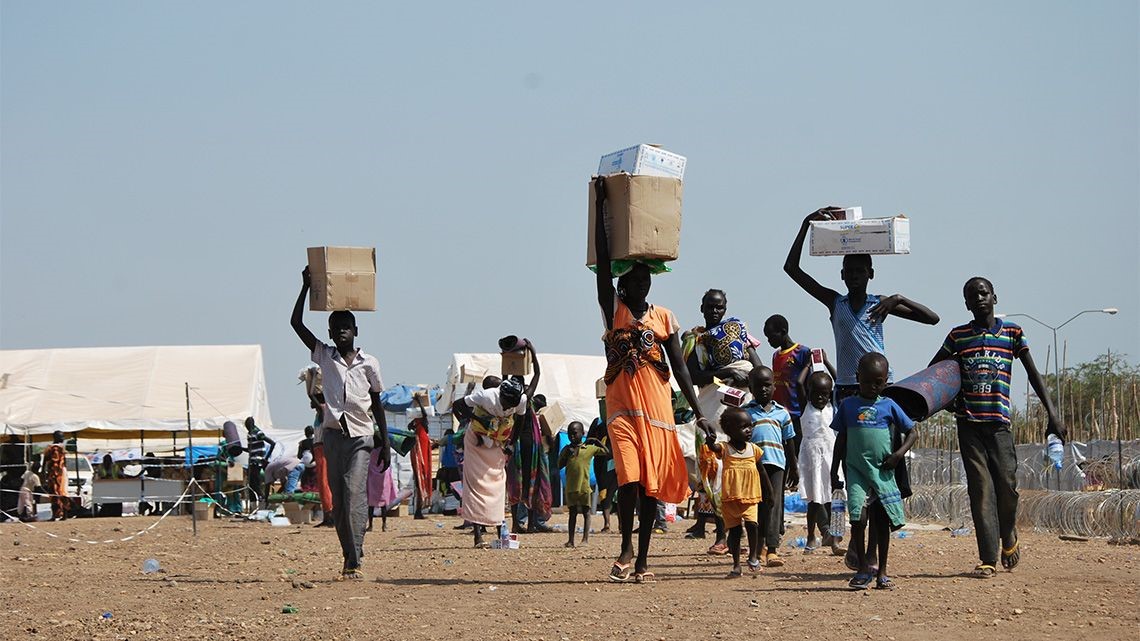

Late last year, I travelled to Sudan, a country ravaged by nearly three years of brutal conflict. What I witnessed, both as a person and as an international development professional, was unimaginable.
Sudan faces unimaginable suffering, with over 150,000 people killed, 12 million displaced, and the world’s largest displacement crisis. 25 million struggle to find food (according to the UN), and healthcare systems have collapsed. In all this, women and girls bear the brunt of the conflict, targeted with sexual violence as a weapon of war.
But statistics cannot capture what I saw on the ground. Women and girls bear the worst of this conflict, targeted with sexual violence as a weapon of war. Entire communities are trapped without food, water, or medical care. Healthcare workers are trying to save lives with no medicine, no supplies, and no hope of resupply.
Just across the region in the Eastern Democratic Republic of Congo, violence has surged dramatically in recent days. The M23 offensive has forced mass displacement, with desperate civilians fleeing to Burundi and Rwanda. The UN describes this as “a complex security and humanitarian crisis with incalculable regional consequences.” Civilians, many of whom are already displaced multiple times, are forced to flee again as displacement camps are dismantled and cities fall.
Behind every statistic in these two countries is a mother who cannot feed her children. A family fleeing their home for the third, fourth, or fifth time. A girl facing sexual violence. A child recruited as a soldier. Healthcare workers are desperately trying to save lives without medicine or equipment. These are not just humanitarian crises. They are wholesale assaults on human dignity happening right now in 2026.
The AU, EAC, SADC, and IGAD must move beyond statements to enforcement. Peacekeeping mandates must prioritize civilian protection, not just monitoring violations as they happen.
Warring parties in Sudan and all actors in the DRC are obstructing aid delivery to millions in desperate need. As an international development professional, we need to see unimpeded humanitarian corridors to civilians affected by the conflict.
These conflicts are fueled by competition for resources, external actors providing weapons and support, and decades of unresolved grievances. Sustainable peace requires addressing these drivers, not just negotiating temporary ceasefires that collapse within weeks.
We always speak of “African solutions to African problems.” 2026 must be the year we demonstrate what that means: coordinated regional action backed by global support, not international indifference disguised as respect for sovereignty.
The Author is the Resident Country Director, Ethiopia. International Republican Institute.