



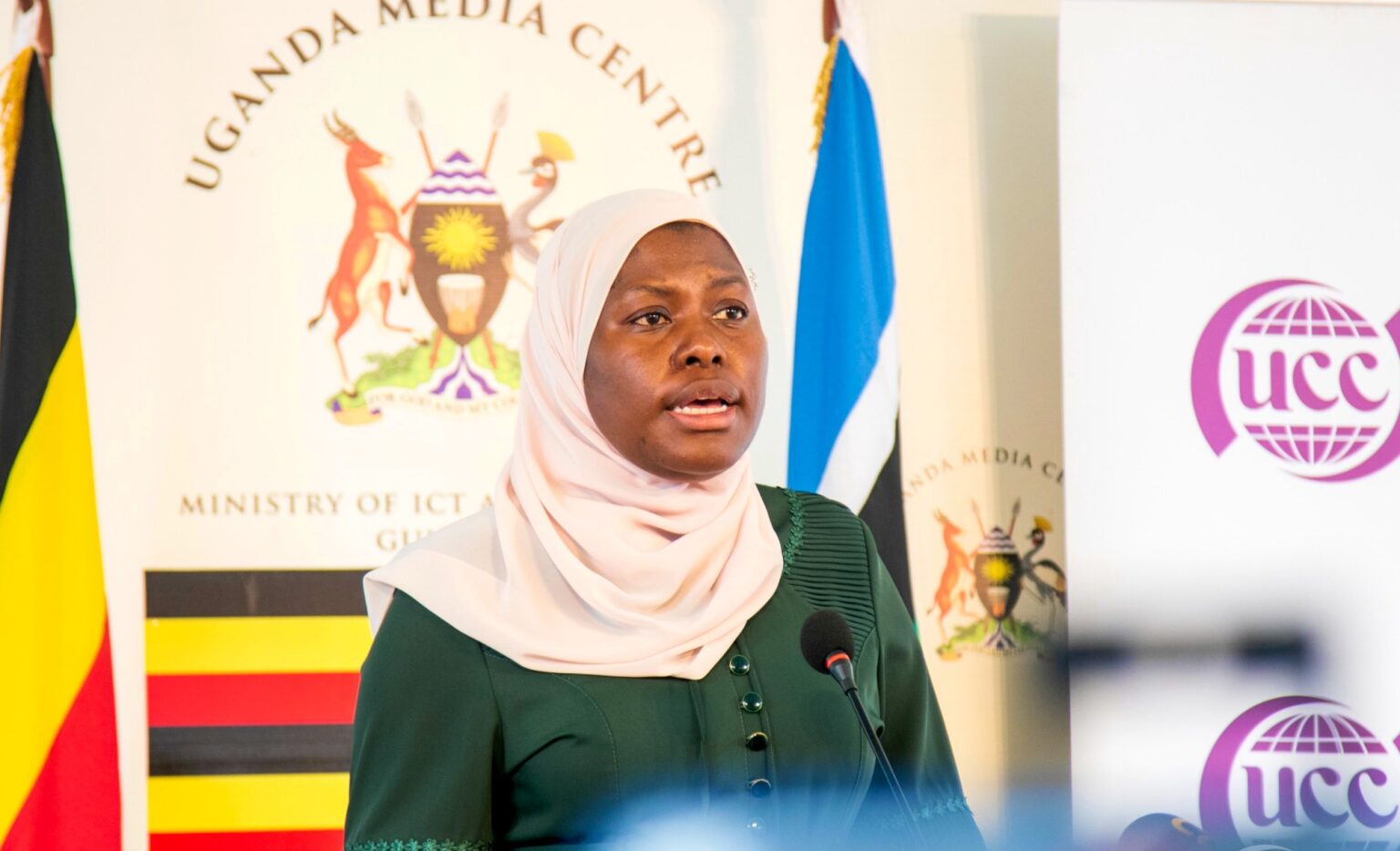

Amid growing public debate and online speculation ahead of Uganda’s elections, the Permanent Secretary at the Ministry of ICT and National Guidance addressed the press at the Uganda Media Centre, to clarify Government’s position on internet access, media regulation, and the use of digital platforms during the election period.
As Uganda heads into a critical electoral phase, rumours about planned internet shutdowns, media restrictions, and online surveillance have resurfaced, raising concern among citizens, journalists, and businesses that depend on uninterrupted digital services. In an exclusive interview following the press briefing, the Permanent Secretary explained the legal framework governing communications, reaffirmed Government’s commitment to access to information and responsible ICT use, and called for calm, verification, and professionalism in both traditional and digital media.
There are widespread claims that Government plans to switch off the internet during the elections. Is this true?
No, that is not true. Government has not announced, issued, or implemented any decision to switch off the internet during the election period. “There is no directive, no license condition, and no emergency order under the Uganda Communications Act, 2013, to disrupt internet services during the elections,” the Permanent Secretary said.
She explained that the regulation of communications services is legally vested in the Uganda Communications Commission, which operates independently and strictly within the law. “Government remains committed to access to information, digital inclusion, and the responsible use of ICTs throughout the electoral process,” she added.
Can you guarantee that the internet will remain on throughout polling and the announcement of results?
Government policy supports connectivity and uninterrupted access to communications services. As of now, there is no lawful process, directive, or regulatory action to shut down the internet. “Any limitation on communications services can only arise within the law, and only under very specific circumstances, such as a constitutionally declared state of emergency,” she explained.
Even then, such action would require formal procedures under the Uganda Communications Act. “Our focus is responsible use of digital platforms, not restricting access,” the PS emphasised.
Why do rumours about internet shutdowns keep resurfacing every election cycle?
Elections naturally generate heightened emotions, speculation, and misinformation. Unfortunately, some actors deliberately circulate rumours to create fear, uncertainty, or mistrust in public institutions. “That is exactly why we continue to engage openly with the media and the public, to clarify facts and encourage reliance on official and verified sources rather than speculation,” she said.
Some critics argue that regulation is being used to silence critical media voices. How do you respond?
That perception is incorrect. Regulation is not intended to silence journalism or suppress criticism. “Critical reporting is lawful and protected. What the law does not protect is incitement, hate speech, or deliberate misinformation that threatens peace and public order,” the Permanent Secretary stated.
She noted that Uganda’s communications laws recognise freedom of expression and editorial independence as pillars of democracy, while also requiring professionalism and ethical standards.
What actions will be taken against media houses or individuals who violate election guidelines?
All actions are taken strictly in accordance with the law, not arbitrarily. “The law provides a clear, graduated framework. It is not political, and it is not selective,” she said. Under the Uganda Communications Act, the Uganda Communications Commission may:
- Issue warnings and corrective directives,
- Impose administrative sanctions, including suspension or revocation of licences in cases of serious or repeated violations,
- Investigate complaints and enforce broadcasting standards.
Where conduct amounts to a criminal offence, law-enforcement agencies may take over.
Does monitoring online content amount to surveillance of citizens?
No. There is a clear legal distinction between monitoring publicly available content and surveillance of private communications. “Monitoring focuses on content that is already in the public domain. It is about compliance with the law, not spying on citizens,” she clarified.
Any interception of private communications is tightly regulated and requires lawful authority and due process.
Are social media users at risk of arrest simply for expressing political opinions?
Expressing political opinions is not a crime. Uganda’s Constitution protects freedom of expression. “People are free to express their views. The law only draws a line where expression becomes incitement to violence, sectarian hatred, or the deliberate spread of false information likely to cause public disorder,” she said.
Citizens are encouraged to exercise their freedoms responsibly, especially during the election period.
What guidance do you have for journalists covering elections in a highly competitive environment?
Journalists play a critical role in shaping public understanding during elections. “We urge journalists to verify information before publication, provide balanced and accurate coverage, and avoid sensationalism that could inflame tensions,” the Permanent Secretary said.
She added that the law both protects professional journalism and expects ethical conduct and accountability in the public interest.
Who is legally mandated to announce election results?
The declaration of election results is the exclusive mandate of the Electoral Commission, as provided under Uganda’s electoral laws. “Any premature or unofficial announcement of results by individuals, media houses, or political actors is unlawful and undermines the integrity of the electoral process,” she emphasised.
How should the public verify information during the election period?
Citizens should rely on:
- Official communications from the Electoral Commission,
- Statements from Government and regulatory authorities,
- Credible and established media houses.
“We encourage citizens to pause, verify, and cross-check information before sharing, especially content designed to provoke fear, anger, or division,” she advised.
Q: What reassurance can you give to businesses and service providers that rely on the internet?
There is no policy or directive to disrupt internet services. “The law emphasises continuity, fair access, and protection of communications infrastructure. Any action affecting services would have to follow clear legal procedures,” she said.
Businesses are advised to rely on official communication from Government and the regulator.
Finally, what is your message to Ugandans ahead of the elections?
“Elections must be peaceful, credible, and informed by truth,” she said. “I call upon all Ugandans media practitioners, digital users, political actors, and citizens to reject misinformation, use digital platforms responsibly, respect the law and one another, and contribute to national unity and stability.”
“A peaceful election is a shared national responsibility.”