



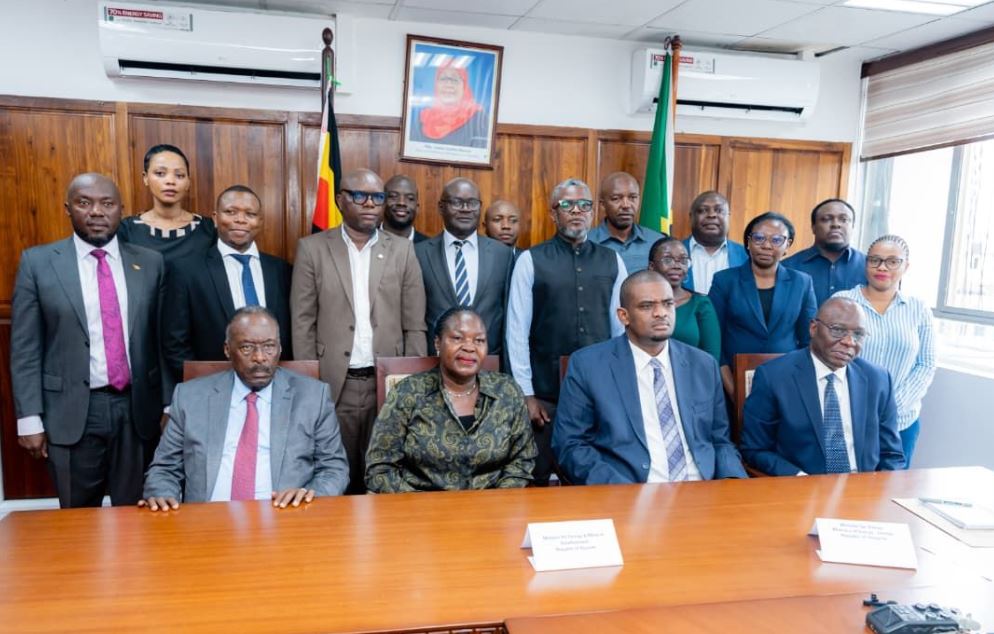

The dream of ‘First Oil’ for the East African region has moved from the horizon to the immediate foreground. In a high-level bilateral meeting held Monday morning at the Ministry of Energy in Dar es Salaam, officials confirmed that the East African Crude Oil Pipeline (EACOP) project reached a critical 79% completion rate by the end of December 2025.
The delegation, led by Uganda’s Minister of Energy and Mineral Development, Hon. Dr. Ruth Nankabirwa, and hosted by Tanzania’s Minister for Energy, Hon. Deogratius Ndejembi, reviewed the final stretch of construction for what will be the world’s longest heated crude oil pipeline.
It was agreed upon during the meeting that, with construction activities currently at peak levels, the project is officially on a countdown to two historic dates:
- July 31, 2026: Target for the official technical start-up and commissioning of the pipeline.
- October 2026: Scheduled date for the first shipment of Ugandan crude oil from the Tanga Marine Terminal to global markets.
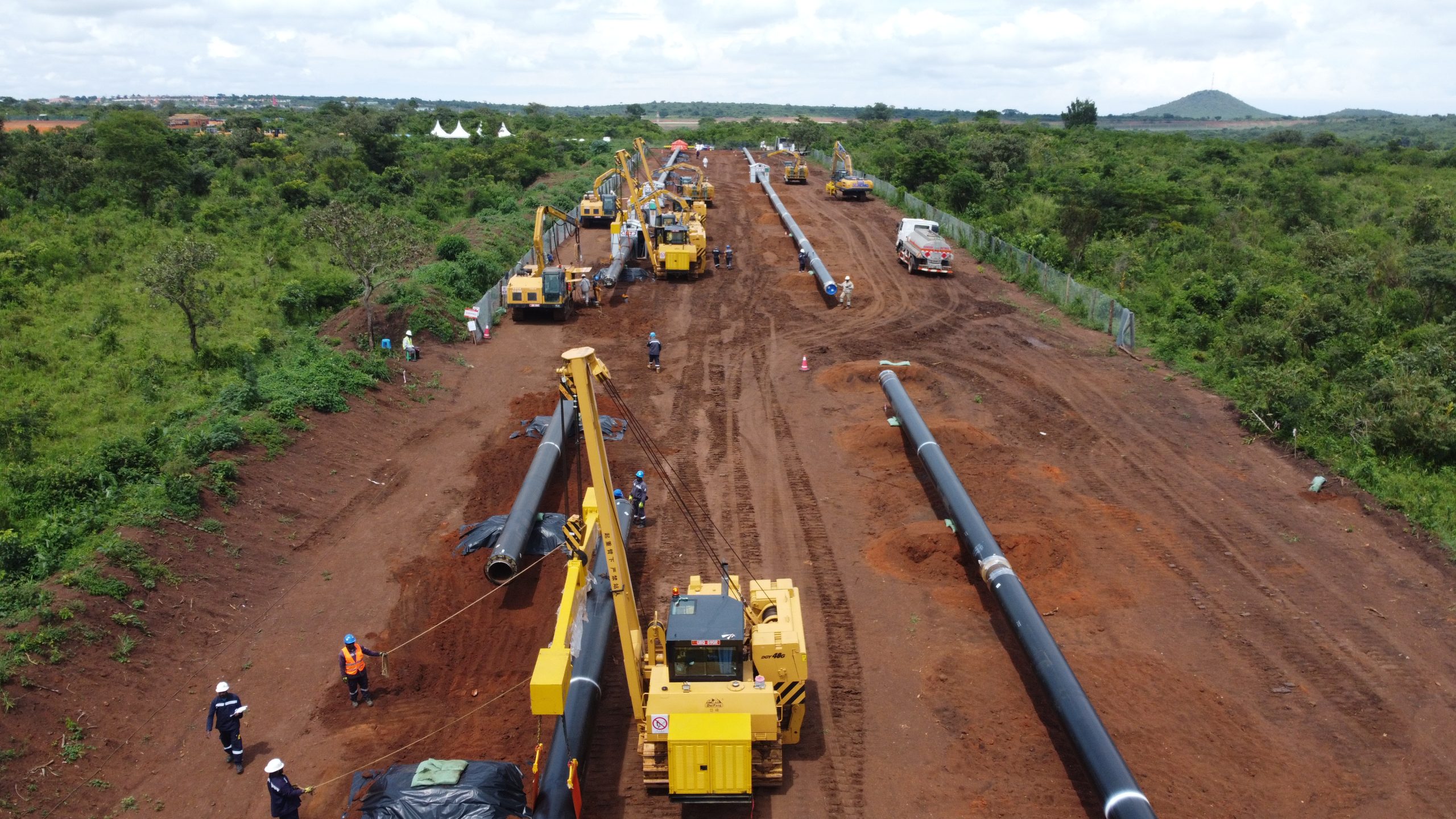
The ministers received comprehensive updates on the four critical components of the midstream project, which include:
- The Pipeline: Over 1,100 km of the 1,443 km route has already been welded, with significant progress in the thermal insulation and burial phases across both host nations.
- The Tanga Marine Terminal: Work at the Chongoleani Peninsula is nearing mechanical completion, including the storage tanks and the load-out facility designed to accommodate Suezmax tankers.
- Above-Ground Installations (AGIs): Pumping stations and pressure reduction stations are being finalised to ensure the high-viscosity waxy crude remains heated at a consistent temperature throughout its journey.
- Supporting Infrastructure: New roads, fibre-optic cables, and power lines integrated into the pipeline route are already providing secondary economic benefits to rural communities.
The success of the EACOP, a US$5 billion investment, is as much a diplomatic feat as it is an engineering one. Hon. Dr. Nankabirwa emphasised that the project stands as a monument to regional integration. “This is not just about oil; it’s about the integration of East Africa. We are building a shared future where our resources drive collective prosperity, create thousands of jobs for our youth, and enhance our standing in the global energy trade,” Hon. Dr. Nankabirwa said.
Her Tanzanian counterpart, Hon. Ndejembi, reaffirmed the full support of President Samia Suluhu Hassan’s administration, noting that the focus is now on ensuring the remaining 21% of the work is delivered safely and sustainably.
Beyond the exports, the EACOP project has already become a massive engine for Local Content and Skills Development through:
- Employment: Over 10,000 workers (nearly 90% being East African citizens) are currently engaged in construction and logistics.
- SME Participation: Hundreds of local companies have secured contracts in catering, transport, civil works, and environmental monitoring.
- Technology Transfer: The project has introduced advanced automatic welding and satellite monitoring technologies to the regional labour force.
As the meeting concluded, the shared commitment between the two countries was clear: No delays.
With the Tilenga and Kingfisher upstream projects also hitting their production thresholds, the interoperability between the wells and the pipeline is the final piece of the puzzle. Come October 2026, the “Pearl of Africa” will officially join the ranks of the world’s oil-producing nations.