





The loudest claims on social media often rely on the weakest evidence. In recent days, screenshots of voter location slips and similar-looking biodata have been circulated as supposed proof that the Electoral Commission, acting in concert with the state, has deliberately registered the same individual in multiple polling stations to facilitate multiple voting in Uganda’s upcoming elections.
Such conclusions collapse under even modest scrutiny. They are not supported by how voter registration is conducted in Uganda, nor by how voting itself is verified on polling day. They also fail to withstand the Electoral Commission’s formal clarification dated 28 December 2025, which directly addressed the specific allegation in question.
According to the Commission, the cited voter location slips belong to two distinct individuals registered in different electoral areas. While the individuals share similar names and dates of birth, they are distinguishable by unique photographs captured during registration. On this basis, the Commission concluded that the claim suggesting deliberate duplicate registration is false and misleading.
This distinction is critical. Democratic debate must separate suspicion from proof. If the evidence relied upon is itself based on a misreading of voter slips, escalating it into a claim of orchestrated electoral fraud is irresponsible and corrosive to public trust.
Uganda is a society where identical names and similar demographic details are common. Cultural naming practices, population density, and historical documentation methods have produced many citizens who share the same names and dates of birth. This reality is widely acknowledged and has been publicly explained by the National Identification and Registration Authority in the past. Similar biodata does not imply identical identity.
That reality is precisely why Uganda does not rely on names or dates of birth to establish identity. Voter registration is anchored to the National Identification Number issued by NIRA, which is a unique identifier assigned to each individual during national registration. Screenshots that omit the NIN cannot establish that two entries belong to the same person. At best, they show coincidental similarities that are common in a country of Uganda’s size and naming patterns.
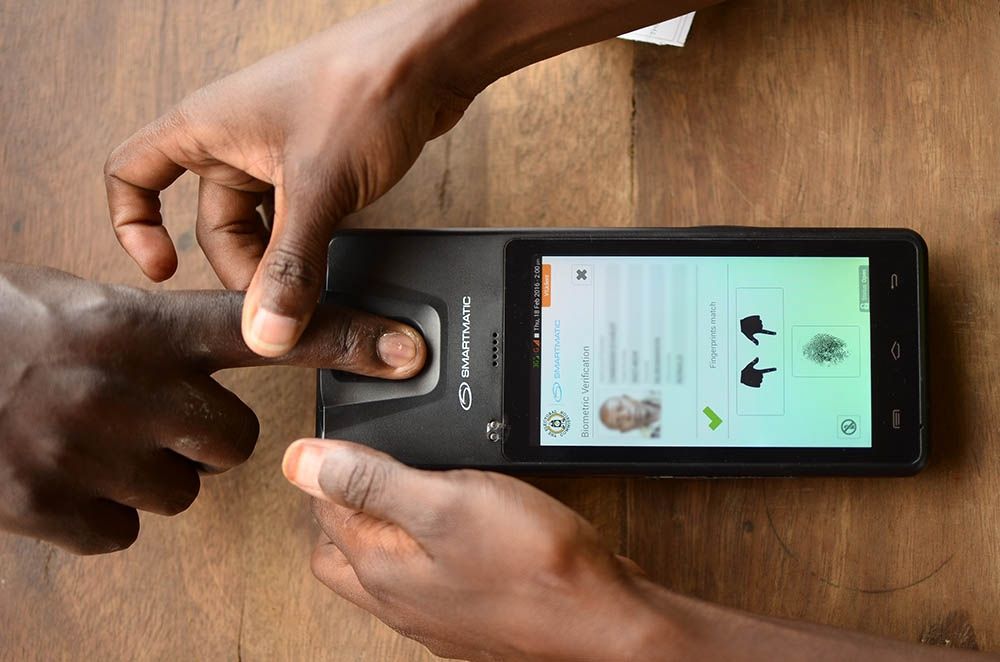
Even more importantly, elections are not determined by similarities in the register but by verification at the polling station. The Electoral Commission has confirmed that biometric voter verification will be used before a ballot is issued, relying on fingerprints or facial recognition linked to the voter’s record. Without successful biometric verification, no individual is issued a ballot paper.
Claims that someone could vote multiple times by exploiting similar register entries misunderstand how biometric systems function. Biometrics rely on unique physical characteristics, not names or dates of birth. If the same person attempted to vote more than once, the system would detect the mismatch and deny the subsequent attempt. This safeguard exists precisely to prevent the abuse being alleged.
Some critics have also demanded that the Commission publicly release voters’ photographs or personal details to “prove” its position. Such demands ignore Uganda’s data protection and privacy laws. Publishing private citizens’ biometric information to satisfy social media speculation would itself be unlawful. The Commission’s refusal to do so reflects legal compliance, not concealment.
Equally misleading is the claim that the Electoral Commission has refused to provide presidential candidates with the National Voters Register. The Commission has stated that a soft copy of the register was issued to all presidential candidates immediately after nomination, as required by law, and that hard copies are produced within the legally prescribed timeframe for use on polling day. Procedural timelines should not be misrepresented as evidence of criminal intent.
None of this is an argument against vigilance. Uganda’s electoral history makes scrutiny not only legitimate but necessary. Citizens, political actors, and observers must continue to monitor processes, test systems, and document irregularities where they genuinely occur.
However, vigilance must be disciplined. Screenshots of names and dates of birth are not evidence of electoral fraud. Allegations must be grounded in verifiable facts such as mismatched National Identification Numbers, biometric verification failures, or documented denial of lawful access to voting.
Democracy is weakened when rumor is elevated to fact and conjecture replaces evidence. If Uganda is to conduct credible elections, public discourse must be anchored in facts rather than fear, and in proof rather than presumption. Similar names may raise questions, but they are not proof of the alleged electoral fraud.