




Uganda’s ambitious goal of achieving 10-fold economic growth over the next decade, anchored in industrialisation and digital transformation, faces a severe roadblock: a massive disconnect between existing mobile infrastructure and actual usage.
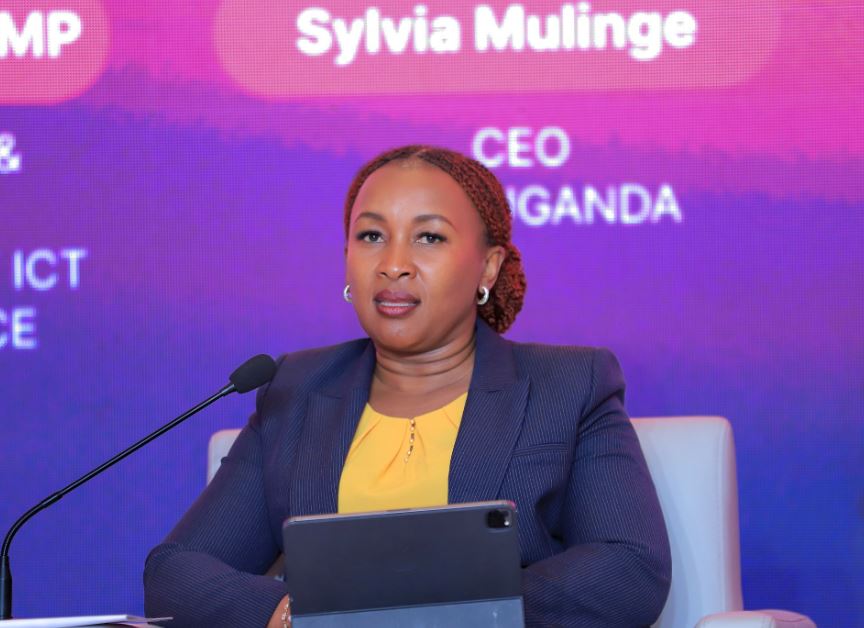
The recently launched GSMA Uganda Digital Economy Report, analysed by industry leaders among MTN Uganda Chief Executive Sylvia Mulinge, reveals a compelling paradox that threatens to stall the nation’s entire growth strategy.
According to Mulinge, while a commendable 87% of Uganda’s population is now covered by mobile broadband, only 29% are actually using the mobile internet, leaving a staggering 58% usage gap. “The infrastructure is built, but real, meaningful access remains out of reach for millions,” Mulinge asserts.
The core issue driving this 58% gap, according to Mulinge, is device affordability. The GSMA Report makes it unequivocally clear: “Without a smartphone, innovation is just potential. If a student can’t afford a device, online learning is out of reach. If a farmer doesn’t have a smartphone, agri-tech remains theoretical.”
Mulinge contends that the financial reality for millions of Ugandans directly contrasts with device costs as follows;
- Device Price: The median price of a smartphone in Uganda is over Shs200,000.
- Household Income: Many households, particularly in rural areas, earn less than Shs100,000 per month.
She contends that it is no surprise, then, that 30% of Ugandans cite handset cost as the primary reason they do not use mobile internet. This structural barrier, she argues, “is not cosmetic; it is actively holding back the entire economy.”
She notes that compared to regional peers, with Kenya’s usage rate at 39%, Ghana’s at 47%, and Nigeria’s at 44%, Uganda lags significantly in digital adoption.

For the ambitious goals of the National Development Plan IV (NDP IV) to move from theoretical aspiration to concrete reality, Mulinge insists that handsets must be treated as economic infrastructure, as vital as roads, water, and electricity. She stresses that Uganda must act decisively on four fronts:
- Urgent Tax Reform on Device Affordability: The most direct intervention, according to Mulinge, is to cut the taxes that keep smartphones out of reach. “The GSMA estimates that reducing smartphone prices to around Shs105,000 ($30) would enable millions globally, including those in Uganda, to connect. Local assembly and innovative financing models must supplement this,” she states.
- Digital Skills Go Mainstream: Access is meaningless without knowledge. Mulinge argues that Digital literacy must be a national priority, especially targeting women and rural youth. Without skills, even the most affordable smartphone remains underused.
- Prioritising Electrification: Reliable, affordable electricity is essential for running digital infrastructure and charging devices. Extending the grid and supporting off-grid renewable solutions will ensure sustainability and reduce operational costs, particularly in rural areas.
- Promoting Local Content: She reiterates that Ugandans need relevant apps, platforms, and content in their local languages that reflect their realities. Supporting local developers, creators, and entrepreneurs is thus key to making the smartphone experience useful and meaningful.
The industry is already investing heavily in infrastructure and expanding rural coverage. However, coverage without devices is like building a road no one can drive on. The conversation between the private sector and government, including recent engagements with PSST, Ramathan Ggoobi, confirms that digital connectivity must be a catalyst, not just a pillar, of the growth strategy.
As Mulinge argues, the government must cut taxes and regulators must reward real usage, not just network expansion. She also advises that the industry must drive adoption through useful innovation, and civil society must demand an inclusion that reaches every mile and every person.
The conclusion is clear: a digital economy built on exclusion cannot deliver inclusive development. If Uganda wants a 10x economy, it must close the 58% usage gap and drive digital inclusion everywhere, for everyone.