



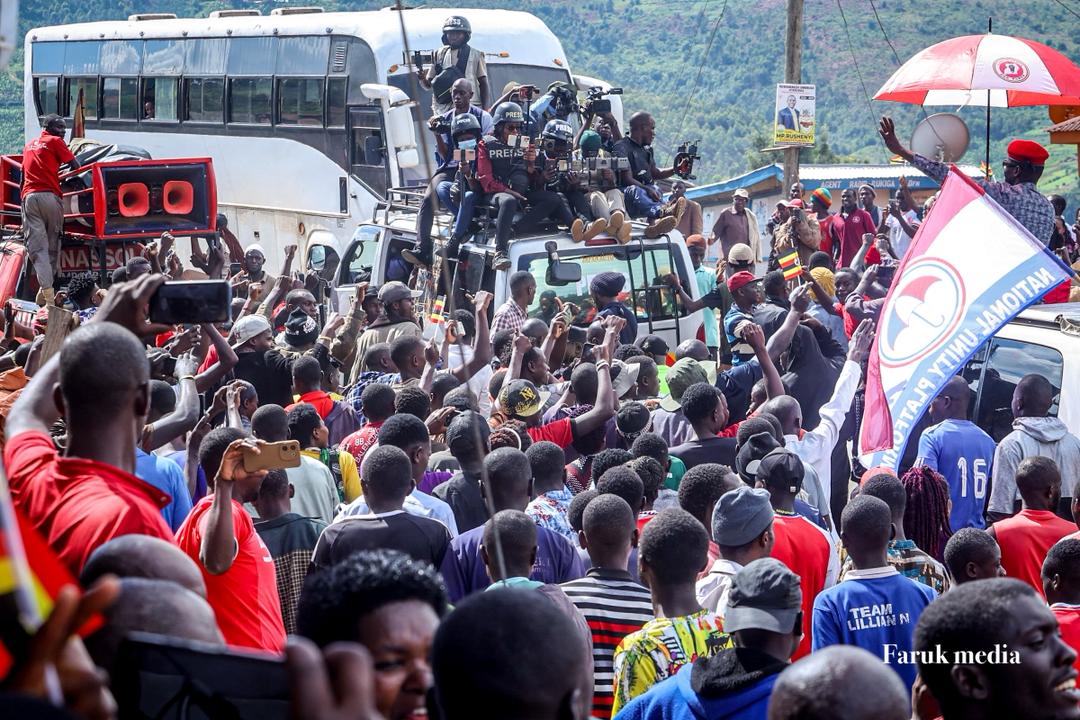

Yesterday, as I watched Robert Kyagulanyi’s rally in Rubanda District, something struck me. Television cameras were tilting awkwardly toward the green hillsides, desperately searching for something anything to fill the empty frame. The media team on the trail had been promised mammoth crowds. What they found instead was open space, scattered voices, and slogans echoing off the mountain air.
It was in that moment that it hit me: we are witnessing Uganda’s new political reality the age of artificial intelligence crowds.
While the National Resistance Movement (NRM) continues to rely on its organic roots; village structures, community mobilization, and the everyday citizenry who show up because they believe in the process, the National Unity Platform (NUP) seems to have found a new ally: technology, or more precisely, digital illusion.
Across the country, the NRM rallies look and feel unmistakably human dusty, noisy, and alive. Women in gomesi, boda riders waving flags, and farmers leaving gardens to catch a glimpse of the movement they say “never leaves anyone behind.” These are crowds with faces, not filters.
Meanwhile, in the NUP camp, things have become less about people and more about pixels. Aerial shots conveniently cropped, camera angles exaggerated, and, in some cases, videos edited using AI tools to multiply faces that were never there. What once was political mobilization has turned into digital animation.
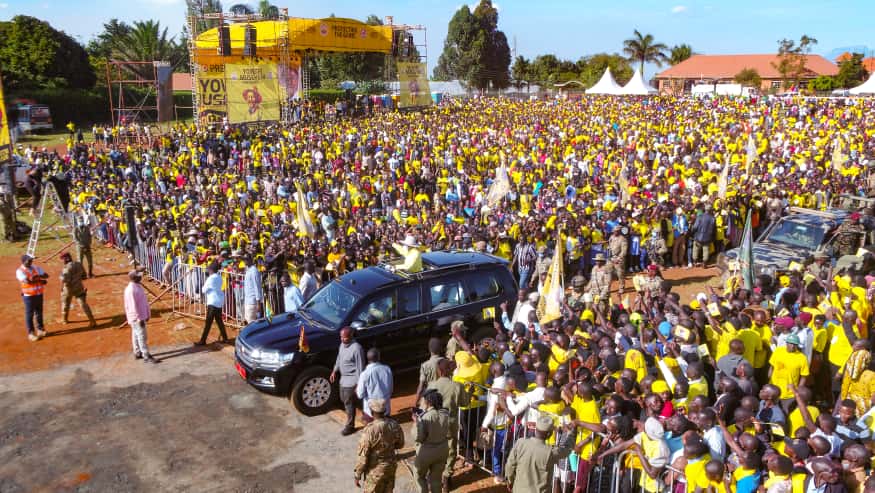
In Rubanda, when Bobi Wine’s media team realized that attendance had thinned out, the story shifted screens suddenly filled with AI-rendered crowds so convincing that even a drone might be deceived. Ironically, the only “mass gathering” visible on the ground was a small group of students sneaking a peek at the convoy.
Reports from the trail suggest that many NUP foot soldiers, struggling with financial fatigue, have resorted to unconventional survival tactics from borrowing and begging to raiding gardens all in the name of “the struggle.” Some even whisper of desperate crowdfunding from sympathizers abroad, turning activism into a kind of digital hustle economy.
But perhaps the most telling moment came in Rukungiri, where Bobi Wine reportedly pleaded with his Kampala entourage to retreat not for strategy, but for lack of facilitation money. The “movement” had literally run out of fuel, both financially and figuratively.
Political observers argue that this new form of “AI populism” is reshaping perception rather than participation. It’s a campaign of optics, not outreach. In contrast, the NRM’s continued emphasis on person-to-person engagement rallies, dialogues, and community networks remains grounded in tangible, human connection.
As Uganda moves toward another political season, the contrast couldn’t be clearer. One side builds from the soil up; the other side uploads from the cloud down.
In a world where even rallies can be photoshopped, perhaps the biggest political skill today is not mobilization but manipulation.