



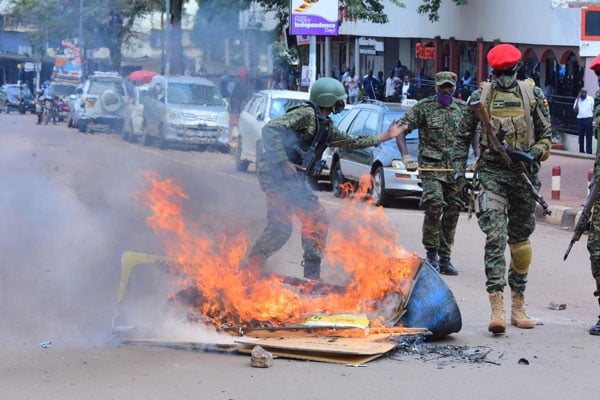

Since the start of the 2026 Uganda election campaigns, some opposition politicians have been sounding the drums of war. They are beating their chests, seemingly preparing for a confrontation with security agencies through riots and unrest.
Many of these agitators draw inspiration from recent scenes of youth rioting in Nairobi and most recently Cameroon and Dar es Salaam, hoping to import a similar wave of violence into Uganda. Their argument is simple but dangerous: if their preferred candidate is not sworn in as the next President of Uganda, chaos will erupt on the streets of Kampala, just as witnessed in parts of Kenya and Tanzania. Some have even described their participation in the 2026 general elections as a “protest vote.”
However, one thing is clear: Uganda’s security agencies will not allow the country to descend into anarchy. The Uganda People’s Defense Forces (UPDF) and sister security organs remain steadfast in their constitutional duty to preserve peace, protect lives and property, and ensure the democratic process unfolds within the law. Uganda’s painful history since independence has taught its people and leaders the high cost of political violence. It is precisely this understanding that has shaped the UPDF’s commitment to stability and national unity.
Uganda is one of the few countries in the region that deeply appreciates that peace is the foundation of development, and that violence serves only to reverse decades of hard-won progress. It is on that background that the UPDF and its leadership have insisted that they will not allow violence to creep into Uganda after elections.
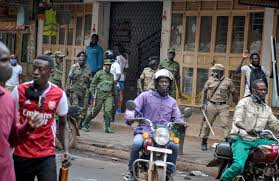
In one of his latest social media posts, Gen. Muhoozi Kainerugaba, the Chief of Defence Forces has emphasised that post-election violence will not be allowed , referring to UPDF’s ability to stop any form of civil unrest. Gen. Muhoozi, who referred to the recent youth-led protests in Kenya and election-related violence in Tanzania as a “Kenyan virus” warned Ugandans against emulating the “Kenyan virus”. He insisted that Uganda’s security infrastructure is solid enough to handle that type of violence and mercilessly. Those who have been around in Uganda for long can actually attest to Gen. Muhoozi’s assurance that the UPDF has the capacity to deal with trouble mongers during and after elections. In the 2021 general elections, for example, the UPDF decisively dealt with violence.
Apart from Gen. Muhoozi, other top guns in the UPDF, who have spoken against election related violence include President Yoweri Museveni himself and former Army Commander, Gen. Katumba Wamala. Speaking during the 27th National Prayer Breakfast at State House in October 2025, President Museveni reflected on Uganda’s turbulent history and the founding ideas of the National Resistance Movement, observing that they were established to resist violence. “That is why we called our army the National Resistance,” he said, “We didn’t want to fight. What we wanted was to send a message that we had resented violence. If they were clever, they would have negotiated with us because we were not really interested in fighting.”
Gen. Museveni also cautioned political actors against misleading youth into violence that could distabilise the country, observing that while forgiveness is virtuous, deliberate wrongdoing must be met with justice. “In spite of all those unfairness, don’t do any evil,” Museveni said, “Even if they cheat you, if you are doing the right things, God will come to your aid. You don’t have to be bitter.” Similarly, Gen. Katumba Wamala also recently advised Ugandans to use their voting rights carefully and avoid resorting to chaos as a means of settling political scores.