



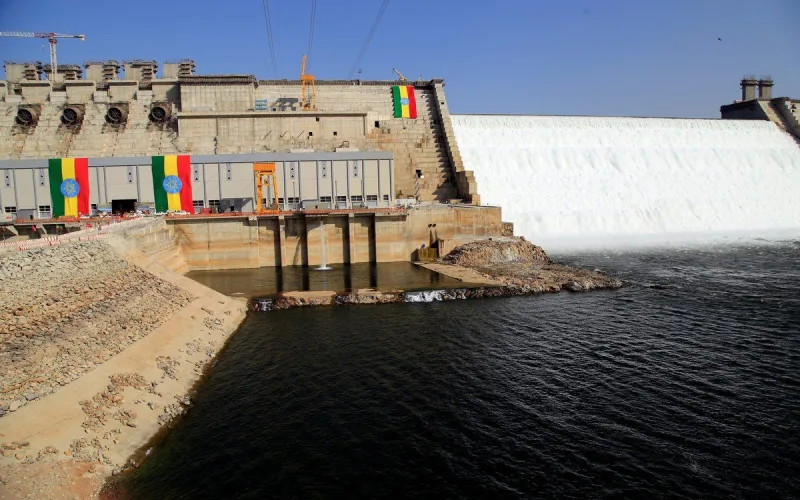

Nearly everyone says Egypt and Ethiopia are fighting over water from the Grand Ethiopian Renaissance Dam (GERD), which Addis Ababa officially inaugurated on September 9 to great fanfare. That’s the polite version.
The real could be muddier — literally. The big picture people are insisting that what Egypt fears losing isn’t just water, but the soil that the Nile carried from the Ethiopian highlands for thousands of years, laying down a fresh carpet of rich earth across the Nile Valley and Delta. Pharaohs and peasants alike depended on that rhythm: the water came, the soil came, and the desert bloomed.
The Nile has two parents. The White Nile rises from Lake Victoria, flowing out of Jinja, Uganda, drifting lazily through South Sudan, spreading wide and slow, as if unsure of its purpose. Along the way, it loses most of its soil in vast swamps like the Sudd.
The Blue Nile, by contrast, is all energy and anger — tumbling down from Ethiopia’s steep highlands, gouging hillsides and scooping up an astonishing 120 million tonnes of fertile soil every year. Contrary to what most people think, the GERD built on this Blue Nile, almost 900Km away from the main trunk of the Nile at Khartoum that flows onward to Egypt (look carefully at the maps).
But here’s the rub. More than 90% cent of the Nile’s total sediment comes from these Ethiopian Highlands — mainly through the Blue Nile and the Atbara rivers. The Blue Nile alone contributes about 70 to 75% of it. The White Nile, despite its fame, contributes less than 3%, because most of its sediment is trapped in wetlands. When the Blue Nile meets the White Nile at Khartoum, the river turns deep brown — Africa’s longest artery now thick with Ethiopia’s soil, flowing north to Egypt.
That silt built Egypt. Before modern dams, the Nile carried roughly 120 to 160 million tonnes of sediment into Egypt each year. The annual floods dropped a new layer of rich earth across the Nile Valley and Delta. That was Egypt’s natural fertiliser, replenishing its land for free. The Nile didn’t just bring water; it brought life in liquid soil form.
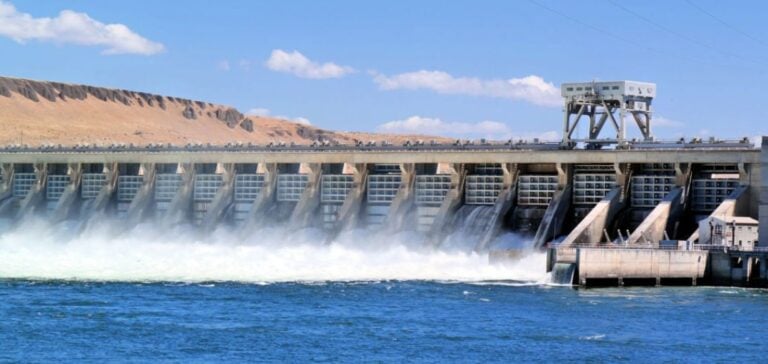
Then came the dams. The Aswan High Dam gave Egypt control of the floods, but it was also disastrous – it stopped almost all that silt. The river still flowed, but its magic was gone. The Delta began to shrink, and the coastline erode. Saltwater crept inland. Egyptian farmers had to replace nature’s gift with chemical fertilisers.
Now Ethiopia’s Grand Ethiopian Renaissance Dam(GERD), the largest dam in Africa, stands on the Blue Nile ready to trap even more of that ancient cargo of soil. Studies suggest it could hold back over 90%!!! of the sediment that once flowed downstream. For Ethiopia, that’s good news — those same sediments have long been a curse, eroding farms and choking smaller dams. Now GERD promises to hold back both the floods and the mud, fuelling Ethiopian progress and protecting its highlands.
Egypt’s unease, then, isn’t really about who gets more water. It’s about the vanishing soil — the slow fading of the river’s gift (Ethiopian soil erosion) that built its civilisation. The Nile that once gave Egypt life is now keeping Ethiopia’s soil at home. And for the first time in history, Egypt must face the desert without the brown gold that once floated faithfully down from the upstream highlands. Its natural subsidy has vanished.
Charles Onyango Obbo is a Journalist, Writer and Podcaster.