





Maternal deaths are rising for the first time in decades, and every year, children die before their fifth birthday, mostly from preventable causes. But the answer may not entirely lie in medicine — it’s also a question of money. One woman arrived at our hospital in Kampala after three days of labor. Her baby was in a breech position and already gone. Her family could not afford the $2 fare to reach us in time.
Every year, an estimated 4.8 million children die before their fifth birthday from mostly preventable causes. Many of these deaths have nothing to do with medicine — and everything to do with money. A new study from researchers at the University of California, Berkeley and Oxford University found that giving households in rural Kenya a one-time cash transfer of $1,000 rapidly cut infant mortality by 48%. That’s a staggering result — comparable to some of the most effective public health tools we have, including malaria nets and childhood immunizations. If we want to save lives, we must be willing to put cash directly into the hands of mothers.
The urgency is fierce because the crisis is worsening: maternal deaths are rising for the first time in decades, and The Lancet warns that cuts to USAID alone could result in 5 million child deaths by 2030.
As a front-line doctor in Uganda, I have looked into the eyes of mothers who lost their babies — and babies who lost their mothers — simply because they could not afford a few dollars for transport to the clinic.
I have experienced the joy of childbirth, but for every safe delivery, there was always a mother who came too late, or never at all. That’s what drove me to leave clinical medicine and focus on the root problem: poverty. I knew the solutions that worked — prenatal visits, avoiding hard labor, skilled delivery, nutritious food — but women just could not afford them.
I now work as a senior adviser at GiveDirectly, which distributes unconditional cash to families living in extreme poverty via mobile money, with no strings attached — trusting that recipients know best how to keep themselves and their families healthy.
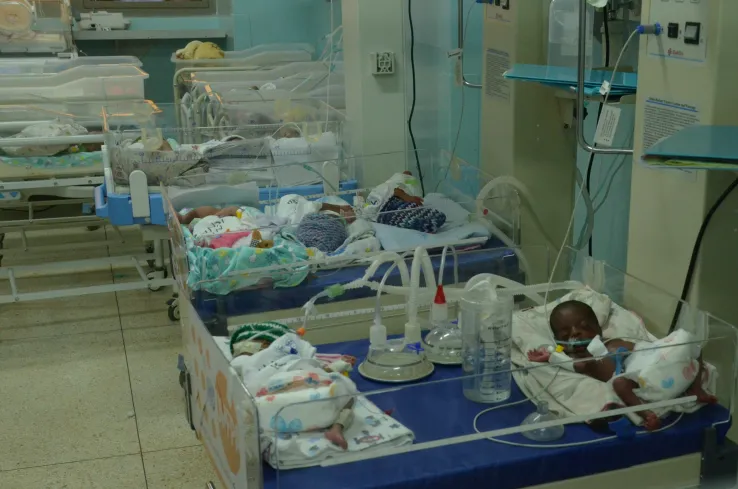
The evidence is clear: Cash can save lives. The UC Berkeley and Oxford study tracked more than 100,000 births across rural Kenya. It found the steepest drops in infant deaths when cash was delivered just before or immediately after birth, especially in communities near clinics. In those areas, women worked 51% less in their third trimester and months after birth, reducing pre-term births. Hospital deliveries rose by 45%, reducing rates of birth asphyxia. The takeaway is not that cash replaces health care. It’s that cash makes health care reachable.
Of course, cash alone won’t fix maternal and newborn mortality. But in places such as Kenya, where clinics are closing due to U.S. and U.K. aid cuts, household-level support is even more important, not less. As low-income countries step up to fund more of their own health services, giving cash to mothers in poverty is a sure way to make health investments accessible and incentivize local investment.
Moreover, long-term data dispel the myth that cash disappears quickly or gets misspent. Five plus years after receiving this one-time transfer, families in Kenya were still spending 12% more than similar households, with gains in food security, education, and income. Even nonrecipient neighbors up to a two-kilometer radius benefited as the local economy grew without triggering inflation. In fact, every $1 delivered generated $2.50 in economic activity, proof that good aid spending can ripple outward.
These are not open-ended handouts. The transfers are temporary by design, targeted to the critical months before and immediately after birth, when the risks are highest and the benefits most lasting. And despite fears, there’s no evidence that cash for families in low-income countries incentivizes them to have more children.
Cash transfers don’t replace health systems. But they can make existing ones more effective and more equitable by empowering mothers. As policymakers reassess the future of foreign aid, they should stop viewing cash as just for emergency relief and start treating it as what it is: A front-line tool for saving lives.
Dr. Miriam Laker-Oketta, senior research adviser to GiveDirectly, is a medical doctor and researcher based in Uganda.