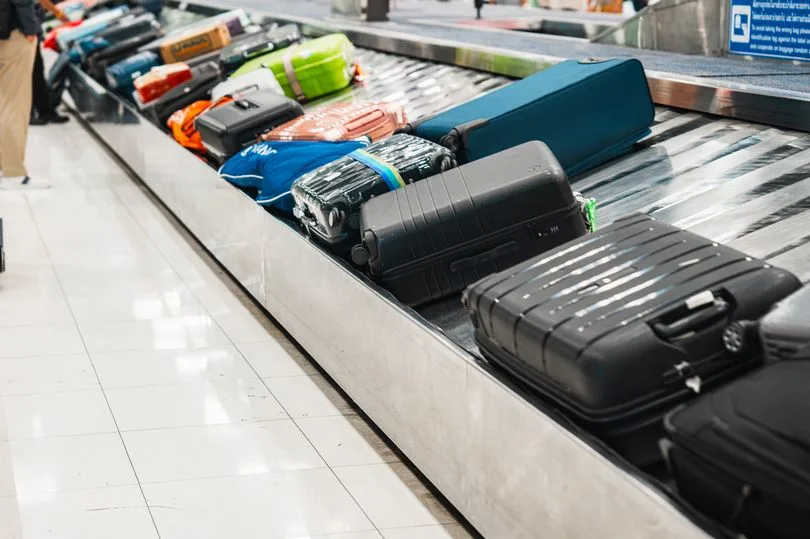
Travel Bags at a pick up point at the airport. It is advisable to always safely dispose off the tags on the bags to avoid scammers accessing vital information.
SHARE
You have survived the turbulence, the immigration queues at Entebbe International Airport, and the mini-heart attack of wondering if your suitcase actually made the trip. Finally, you spot it on the carousel, grab it, and wheel your way out. At that point, you do what most travelers do: peel off the paper baggage tag and toss it in the nearest bin. After all, you are already thinking about the taxi ride home, or that Rolex stop in Kitoro or a stop over at Café Javas at Victoria Mall before you hit the Expressway. But here is the thing: what you just threw away might be the very thing a scammer needs to cause you problems.
How the Scam Works (Without the Movie Drama)
At airports across the world, petty opportunists hang around baggage claim areas. They are not looking for your suitcase rather they are looking for what you throw away. A discarded baggage tag carries more than meets the eye. Printed there is your surname, flight details, and sometimes even booking references. Enough breadcrumbs for someone to impersonate you in the airline system.
With that info, a scammer can file a fake “lost luggage” claim in your name. Imagine someone in another city “claiming” compensation or replacement goods for your supposed missing bag — while you are happily unpacking yours at home. And if you ever lose your bag for real? Good luck convincing the airline that your claim is not just another scam attempt. It’s not one grand mafia boss pulling strings—it’s random chancers who know how to use a careless moment to their advantage.
What’s on That Little Tag, Anyway?
Most of us think it is “just a sticker with a barcode.” But baggage tags are surprisingly data-rich. Here is what is often on them:
Your Name (Surname at minimum) – clear enough for anyone to read.
Flight Number & Airline Code – reveals when and with which airline you travelled.
Date of Travel – encoded in the barcode or printed in text.
Booking Reference / PNR – that 6-character alphanumeric code (like AB12CD). With just a surname + PNR, scammers can often log into your booking online.
Airport Codes (Origin & Destination) – EBB-DXB tells them you went Entebbe → Dubai. Useful for social engineering scams.
Baggage Tracking Number – the unique 10-digit ID linked to your bag in airline systems. Perfect for fraudulent claims.
Frequent Flyer Info (sometimes) – loyalty numbers that can be stolen or resold.
The bombardier one of the fleet of the Uganda Airlines. Safety of travelers and their belongings is their number one priority.
Put together, this little tag can open doors to:
Fraudulent compensation claims.
Access to your airline booking.
Travel pattern profiling (“We saw you landed from Nairobi yesterday…”).
Even loyalty point theft.
Think of it like leaving your house keys under the doormat — convenient for you, but also convenient for thieves.
How to Outsmart the Travel Tag Thieves
Think of your baggage tag like a boarding pass or passport — small but sensitive. Here is how to stay ahead:
Keep It Until You are Home – Hold onto the tag until your bags are safe and accounted for. Tossing it at Entebbe or Dubai duty-free is asking for drama.
Destroy It Before Disposal – Tear it up, cut through the barcode, or shred it. Don’t make it easy.
Check Your Airport Selfies – That Instagram story of you smiling with your suitcase? Make sure the tag is not the star of the shot.
Look for Secure Disposal – Some international airports now have shredding bins. If you see one, use it.
Spread the Word – Your travel buddies may not know this. Share it — especially with that one friend who posts every step of their trip online.
Why You Should Care
Scams rarely start with grand cyber-attacks. They often begin with tiny pieces of data carelessly left behind. A baggage tag is no different from a hotel receipt, a Wi-Fi login slip, or a boarding pass barcode. Small scraps can add up to big problems.
For frequent flyers — whether it is a quick hop to Nairobi, a shopping spree in Dubai, or a holiday adventure in Cape Town — your details pass through multiple busy airports. Each step is a chance for your data to end up in the wrong hands. And let us be real: nothing ruins that “back from abroad” vibe like chasing an airline over a fraudulent claim in your name. Even a Rolex stop won’t sweeten that headache.
Bottom line: Don’t let a flimsy baggage tag write a bigger story than your trip itself. Keep it until you’re home, destroy it, and travel safe. Safe travels!