




The Electoral Commission – Uganda has released definitive new guidelines on the verification of academic qualifications for aspirants intending to contest in the 2025/2026 General Elections, with a firm warning: failure to comply could result in disqualification ahead of nomination.
In a statement dated July 16, 2025 and signed by Chairperson Justice Byabakama Mugenyi Simon, the Commission emphasized that, in line with Ugandan law, all aspirants must possess a minimum of an Advanced Level (A-Level) certificate or its equivalent. The rules apply to all candidates contesting for positions including President, Member of Parliament, and district or city leadership roles such as Lord Mayor.
Candidates who obtained their academic qualifications outside Uganda, or who claim to hold equivalent or non-traditional qualifications, must now undergo a strict verification process. These qualifications must be evaluated by the National Council for Higher Education (NCHE), in consultation with the Uganda National Examinations Board (UNEB). Only those who receive a certificate from NCHE confirming equivalence to Uganda’s A-Level standard will be considered eligible for nomination.
Additionally, aspirants with no formal A-Level certificate—whether obtained abroad or in Uganda—must also seek validation through NCHE. These individuals are required to obtain a certificate of equivalency, which must be submitted to the Electoral Commission – Uganda headquarters in Kampala or to the District Election Administrator (DEA) in the area of their intended candidacy.
Importantly, certificates of equivalency issued for past elections will not be valid for the 2025/2026 cycle. All candidates must secure a fresh equivalency certificate, unless they have since earned a higher academic qualification within Uganda (such as a university degree).
However, the Commission also outlined specific exemptions. Individuals who hold an A-Level certificate from Uganda, those with higher qualifications from Ugandan institutions, and those who graduated from the former University of East Africa or its constituent colleges are not required to undergo this verification process. These categories of aspirants are also exempt from submitting their academic qualifications to the Commission prior to nomination deadlines.
The Commission urged all affected aspirants to fulfill these requirements at least two months before nomination day to avoid disqualification. This deadline is crucial to ensure that all documentation is thoroughly processed and compliant with the legal framework governing national elections.
In a key clarification that brings relief to many local aspirants, the Commission confirmed that no academic verification or certification is required for candidates who earned their A-Level or higher qualifications within Uganda.

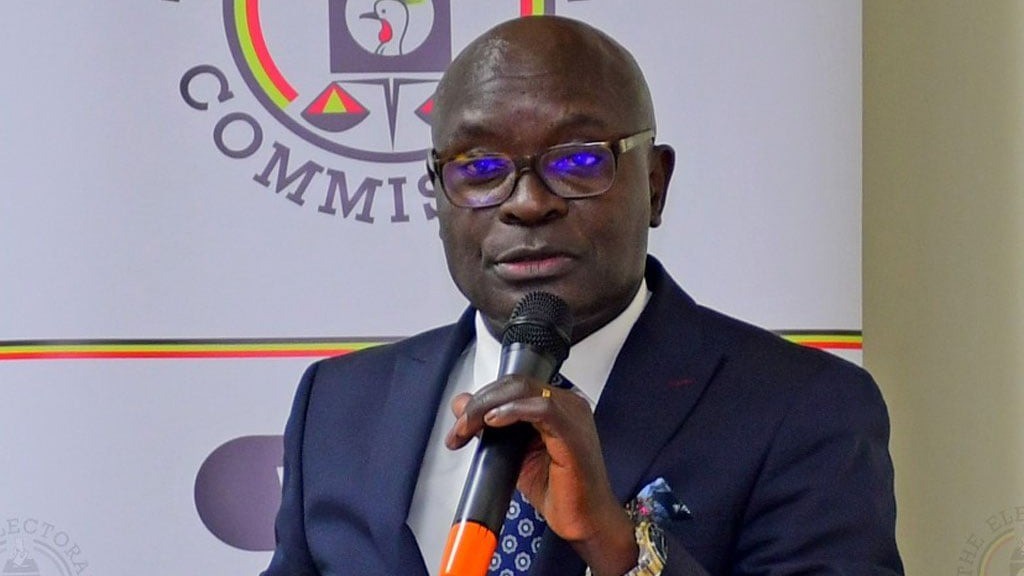
Speaking on behalf of the Commission, Public Relations Officer Mr. Julius Mucunguzi explained that such aspirants are not required to engage UNEB or NCHE for certification. Instead, they will only be expected to present their original academic documents and photocopies on nomination day. “This exemption covers holders of Ugandan A-Level certificates, university degrees from Ugandan institutions, and graduates of the former University of East Africa or its constituent colleges,” Mucunguzi said.
The Commission’s new stance appears to challenge a parallel “Political/Special Verification” process reportedly still being administered by UNEB. That process requires candidates to submit an introduction letter from their former school addressed to “The Executive Secretary of UNEB” and pay UGX 300,000 per level for verification of their UCE and UACE documents—a total of UGX 600,000.
With the Electoral Commission now asserting that such verification is unnecessary for Uganda-trained aspirants, concerns are emerging about those who may have already paid these fees under the assumption that the process was mandatory. It remains unclear whether UNEB will issue refunds to affected individuals.
With nomination period approaching, the Commission is urging all affected aspirants—particularly those with foreign or non-traditional qualifications—to initiate the verification process at least two months before nomination day to ensure timely compliance with electoral laws.
These latest guidelines aim to ensure a consistent and transparent vetting process, while eliminating confusion over academic eligibility criteria.
As political parties and independent candidates prepare for the 2026 General Elections, the Commission’s message is clear: understand the new rules, act promptly, and avoid disqualification.