




By Edrisa Ssentongo.
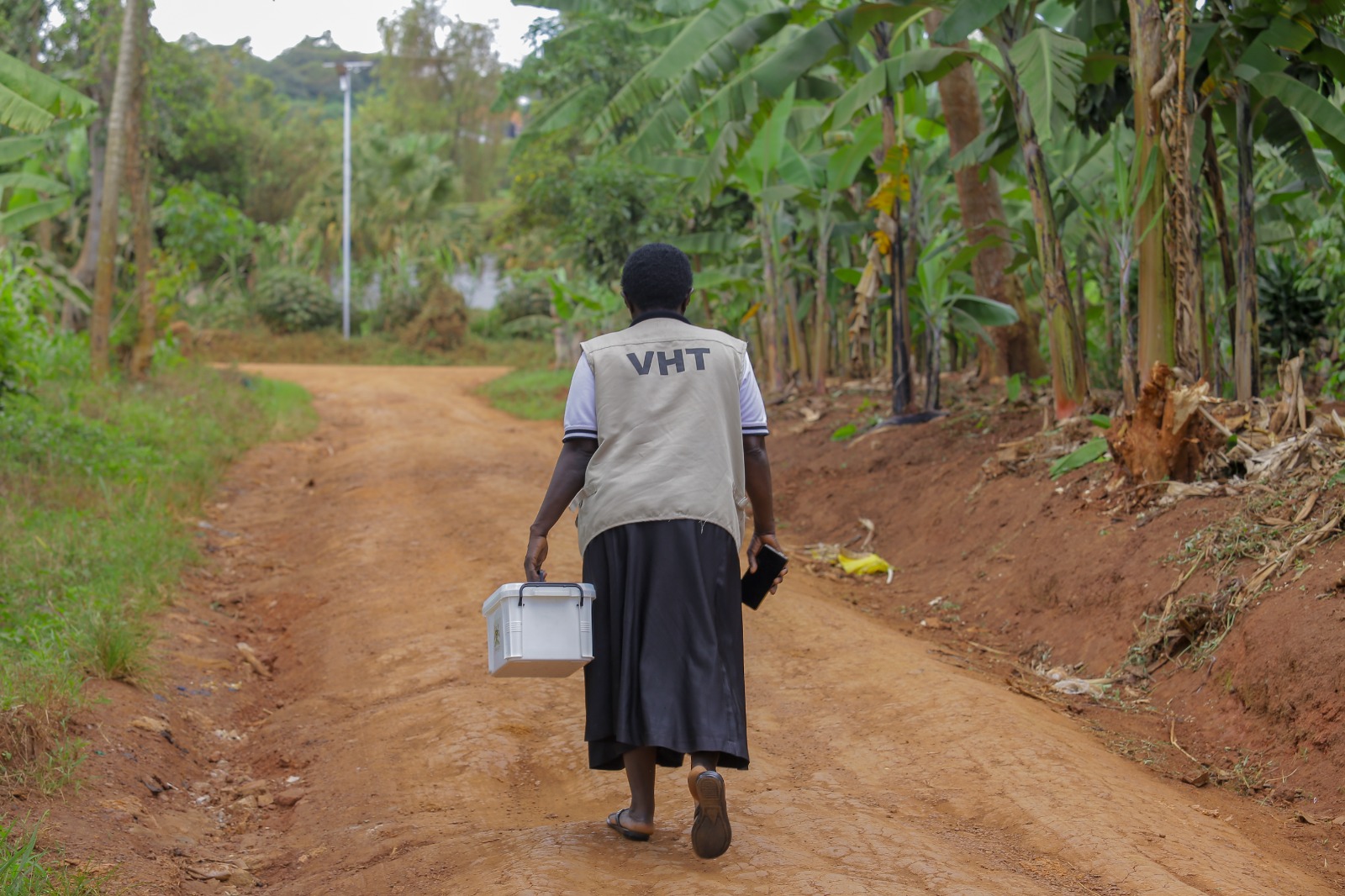
With her digital toolkit and testing kit in hand, Norah Namatovu sets off into the community, ready to respond to the call of duty.
By 7:00 a.m., Norah Namatovu is already winding her way through the dusty village footpaths of Gombe B in Bukasa Parish, Wakiso District. Armed with her smartphone, testing kits, referral forms, and deep community trust, Norah sets off on yet another day of service, a routine she has faithfully followed for over a decade as a Village Health Team (VHT) member and now as a VHT Coordinator supervising 16 others. “In this village, I’m the first responder,” she says with quiet confidence. “When someone is unwell, they don’t wait for a hospital. They call me.”
Her day begins not with a patient, but with planning, reviewing which VHTs she will meet, checking appointment schedules, syncing patient data, and confirming any follow-ups. “I always plan two days in advance,” she says. “I compare what my VHTs reported and the cases they handled, then I crosscheck with the eCHIS data on my phone. That way, when I visit, I know exactly what I’m walking into.”
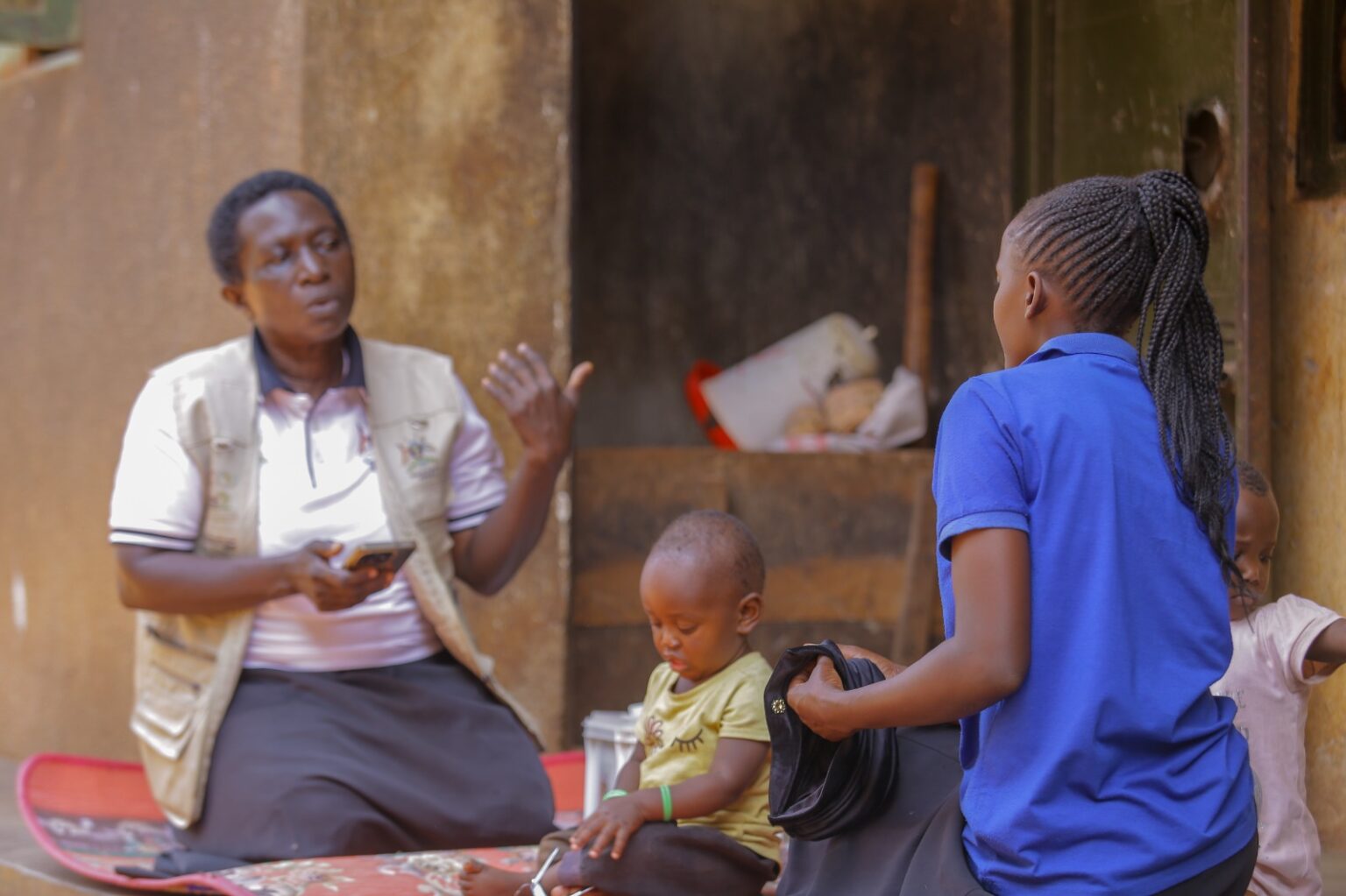
We visited at a time she was exiting a home where a toddler named Rama has been sick for two days before his parents sought help. Norah tested the child (Rama) for malaria using an MRDT kit, and it turned positive. She gave him an oral rehydration solution to stabilize him and immediately refers him to the nearest health facility. Not stopping there, she phones the health center to alert them about the incoming patient. This is one of the many different cases she handles, everyday she sets out to work. “These moments keep me going,” she says. “This is voluntary work, but seeing someone heal because I showed up, that is my reward.”
During the recent pass-out ceremony of Community Health Extension Workers (CHEWs) in the Central Region, Permanent Secretary Dr. Diana Atwiine commended the vital role played by Village Health Teams (VHTs) like Norah in supporting government efforts to extend healthcare services to households. She noted that their contributions help decongest health facilities and reduce the overall disease burden. “Even as volunteers, their role is crucial. They give what they can to improve health at the village level, and their efforts are not in vain,” Dr. Atwiine emphasized.
Norah Namatovu attends to a family in Gombe Village, Wakiso District, as part of her community health outreach.
Norah’s leadership goes beyond patient care. She plays a key supervisory role, mentoring and overseeing her other 16 VHTs to improve performance, ensure quality reporting, and build motivation. “They’re volunteers too, so I treat them with respect,” she says. “We learn from each other and grow together.”
Digital transformation has also reshaped her work. The introduction of the Electronic Community Health Information System (eCHIS) has eliminated the need for bulky paper tools. “We used to take months to submit data,” she recalls. “Now, with just one click, the Ministry sees it immediately.”
In Wakiso district, Living Goods in collaboration with Ministry of Health has since October last year been building capacity of VHTs and enrolling them on the electronic Community Health Information System (eCHIS), to enhance service delivery and Performance Management. Digitization is a key enabler in standardizing healthcare provision and the government is investing resources to steadily scale eCHIS nationwide.
However, challenges remain. Some VHTs, especially older or less tech-savvy ones, struggle with smartphones. Electricity is inconsistent. Data bundles are expensive. “We need support, solar chargers, airtime, and regular refresher trainings,” Norah says. “Still, we manage.”
Norah Namatovu with some of the VHTs she supervises during a routine community supervision visit. District leaders recognize her impact. “Supervisors like Norah have helped increase our reporting of community disease burden cases from 45% to 62.5%,” says Dr. David Ssekaboga, the Assistant DHO. “They are our frontline allies.”
Her work is felt far and wide. Wakiso residents like Resty Namulika testify to the transformation. “Before VHTs, we delayed going to the hospital,” she says. “Now we get the right advice from people like Norah right on our door step.”
For Norah, it’s more than data. “I’ve seen this village change, better hygiene, healthier children, and people who trust community health care,” she says. “When I sync that data, I know I’m not just reporting. I’m shaping the future of health in Uganda.”
And with that, she zips her bag, tightens her shoelaces, and walks on to her next home visit unwavering in her call of duty.