




Dear Nkoola Mike,
Your concerns are heartfelt, and your passion for Uganda’s development is commendable. However, I respectfully offer a different perspective on the image and leadership of President Yoweri Museveni, and what it truly represents.
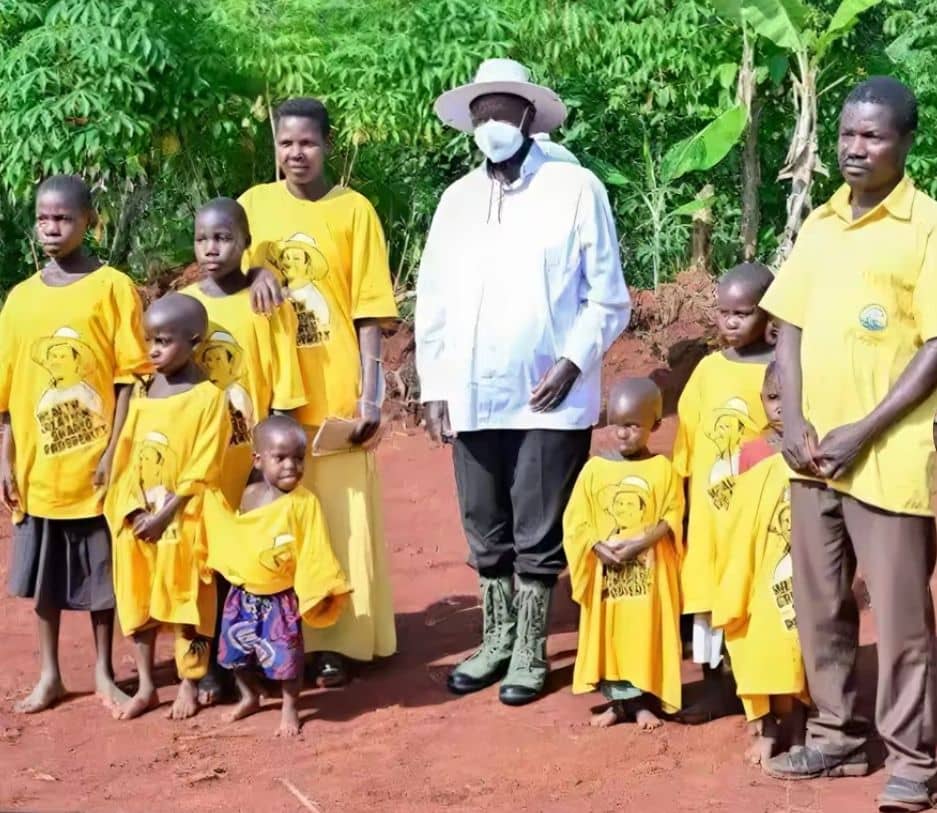
You describe the President’s visit to a rural Ugandan family as a “national mockery.” Yet for many, that very moment was not about optics, but a testament to a leader who, even after decades in power, still walks among the people—not in elitist isolation, but in villages, listening, engaging, and identifying with the everyday citizen. That encounter was not staged—it was a window into the real Uganda, one that the President has never shied away from, and which he has consistently sought to improve.
Yes, the family was poor. Yes, the children were barefoot. But that is precisely the Uganda that needs attention, not to be hidden or sanitized, but to be seen—so that policies and programs can be directed where they are most needed. Leadership is not about parading perfection, but about confronting imperfection with action.
The photo you criticize has not gone viral because of shame—it has sparked national debate, policy discussions, and rekindled interest in rural development. That is not a PR stunt; it is a catalytic moment. One that reminds us how much has been done, and how much more remains to be done.
You raise issues of borrowed shoes and poverty as though these are failures of one man. But Uganda’s socioeconomic realities are shaped by decades of colonial legacy, regional instability, global economic pressures, and complex governance challenges—not the decisions of a single leader. Blame is easy; transformation is difficult.
Under President Museveni’s leadership, Uganda has made undeniable strides: expanded infrastructure, reduced maternal mortality, improved access to education, peace and security in most regions, and a growing digital economy. These are not illusions—they are measurable outcomes, even as poverty and inequality persist, as they do in many nations.
To accuse the President of maintaining “lavish meals” while others suffer is an emotional argument, not a fair assessment. Leaders everywhere are provided for by the state. The real question is whether he has used his office to work for Uganda—and the answer is clear to anyone who sees our roads, schools, hospitals, oil sector, and foreign relations.
As for appointments like Full Figure and Butchaman—however unorthodox—they represent an effort to reach demographics that mainstream leadership has long ignored: the youth in ghetto communities. You may not agree with the method, but the motive is rooted in inclusion.
Uganda is not perfect. No country is. But attacking a moment meant to highlight connection between leader and citizen—however poor—is to miss the deeper truth: the President is still present. Still accountable. Still walking the dusty roads of his country. That, too, is leadership.
Respectfully,
Mary Mutesi
A Hopeful Ugandan
One who sees imperfection, but chooses participation over cynicism