



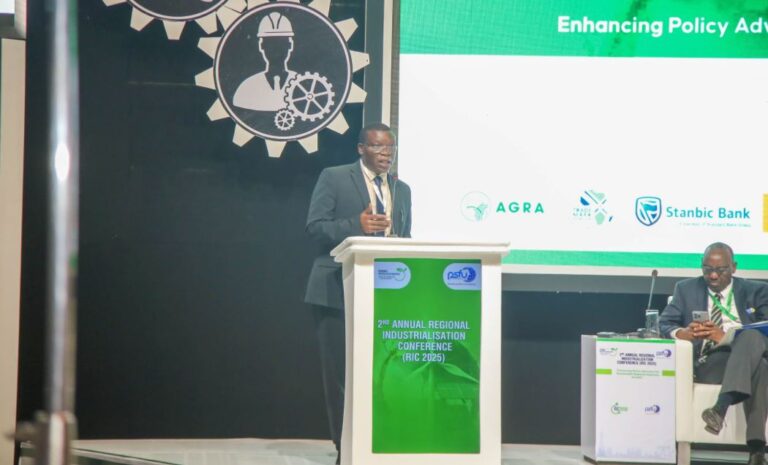

Africa’s industrial revolution will be sown in its fields. This was the powerful message resonating from the 2nd Annual Regional Industrialisation Conference, held today at the Kampala Serena Hotel. Under the theme, “Enhancing Policy Advocacy for Sustainable Regional Industrial Growth,” the conference brought together policymakers, industry leaders, researchers, and regional stakeholders to forge a new path for the continent’s economic development.
The central thesis, delivered in a compelling opening address by David Wozemba, the Country Director at AGRA (Alliance for a Green Revolution in Africa), is that Africa’s industrial prosperity is inextricably linked to the modernisation of its agriculture.
Speaking to a packed audience, Mr. Wozemba emphasised the profound interdependence between agriculture and industrialisation. “Agriculture is not just a food source; it is a critical driver for industrial value chains and contributes significantly to national GDPs across Africa,” he noted, highlighting the sector’s foundational role in Africa’s economic makeup.
The Urgent Need for Agro-Processing
Mr. Wozemba’s address served as an urgent call to action, urging regional leaders to focus on a strategic solution: agro-processing. He argued that while Africa’s farms are productive, the lack of robust processing capabilities means the continent exports raw materials, missing out on immense opportunities for value addition and profit. He explained that by promoting agro-processing, Africa can:
Increase Competitiveness
Transforming raw commodities like coffee, maize, and cocoa into finished, packaged goods enables African products to compete on quality and branding, rather than just price, in the global marketplace.
Unlock Value-Addition
Agro-processing creates higher-value products, significantly increasing export earnings and strengthening local economies.
Create Jobs and Spur Innovation
Agro-processing facilities are industrial hubs that create jobs across the value chain, from skilled factory workers and technicians to logistics and marketing professionals, and foster the innovation required for sustainable growth.
This message directly aligns with the conference’s theme, asserting that industrialisation cannot be a standalone policy. It must be an integrated strategy that champions agricultural transformation as its primary engine.
Roadmap for Regional Trade and Global Relevance
Wozemba’s vision extends beyond national borders. He underscored the critical importance of enhancing inter-regional trade markets, arguing that a fragmented continent cannot compete effectively in the global trade ecosystem. His roadmap for strengthening Africa’s trade position includes three key pillars:
Strengthened Market Access: Breaking down barriers that hinder the free movement of goods and services between African nations.
Harmonised Trade Policies: Creating a consistent and predictable regulatory environment that makes cross-border trade seamless, reducing bureaucracy and the costs of doing business.
Infrastructure Investments: Pouring resources into vital infrastructure like roads, railways, and energy that connect farms to factories and factories to markets.
By collectively addressing these challenges, Africa can transform itself from a collection of disparate markets into a unified economic force, better positioned to negotiate with global trade blocs and attract foreign investment.
Unified Agenda for a Brighter Future
Mr. Wozemba concluded his remarks by urging all stakeholders, from policymakers to the private sector, to align national industrial agendas with inclusive agricultural transformation strategies.
His message is a powerful reminder that sustainable economic development for Africa will not come from importing solutions, but from intelligently leveraging its unique strengths.
The 2nd Annual Regional Industrialisation Conference is therefore more than just a gathering; it is a pivotal moment for a continent grappling with its development trajectory.
The discussions in Kampala are set to lay the groundwork for a new era of agro-industrial growth, with the ultimate goal of fostering shared prosperity and ensuring that Africa’s future is not just prosperous, but also homegrown and sustainable.