




By Edrisa Ssentongo.
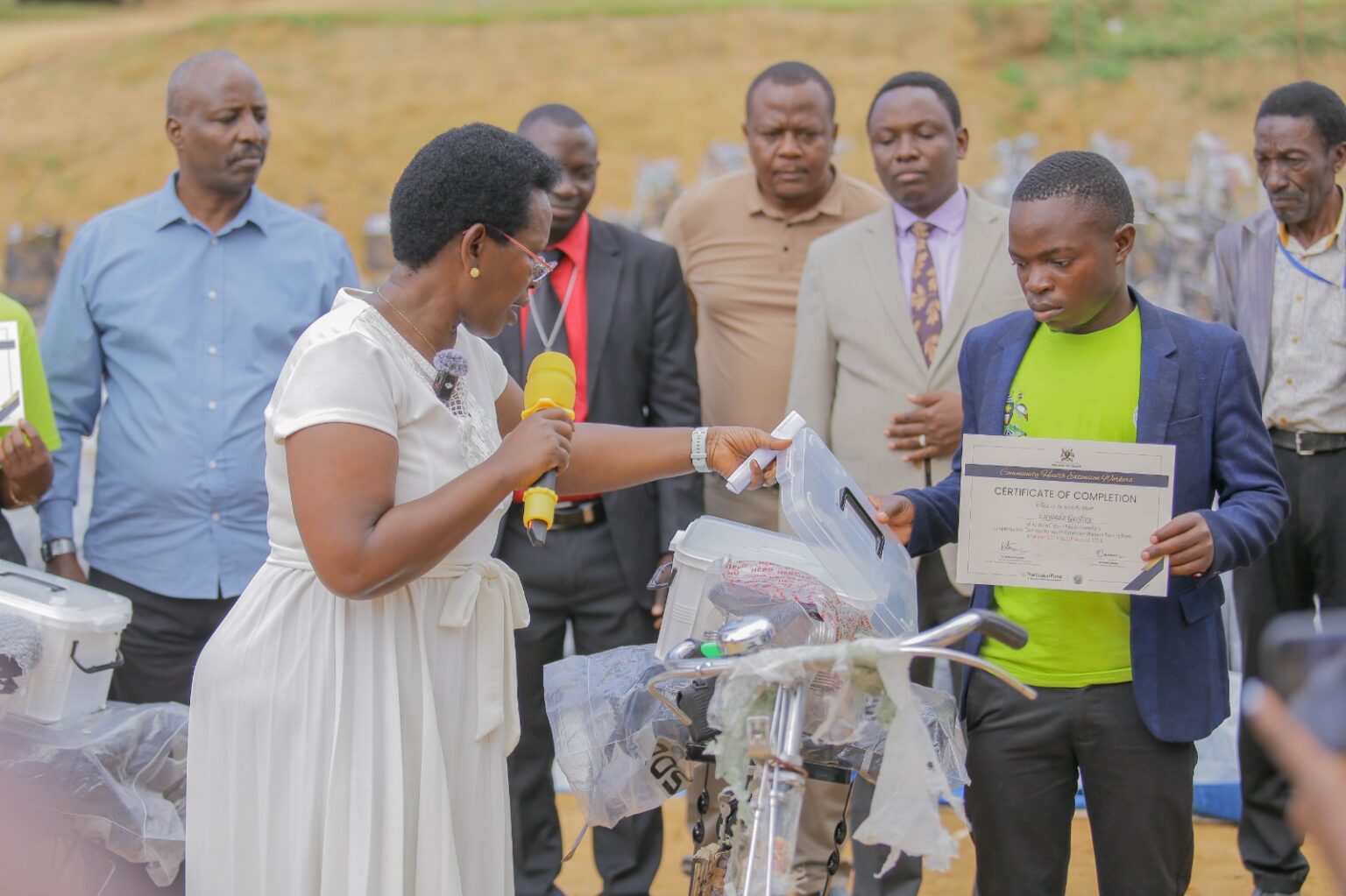
The Permanent Secretary, Ministry of Health, Dr. Diana Atwiine, hands over operational tools to Community Health Extension Workers during the graduation ceremony in Kyotera District, Western Uganda.
In two joyful ceremonies held in Kyotera and Lwengo Districts, Uganda marked a major milestone in its journey toward stronger community health systems, the official graduation and deployment of Community Health Extension Workers (CHEWs). The Permanent Secretary of the Ministry of Health, Dr. Diana Atwiine, emphasized the vital role CHEWs play in bridging the gap between communities and formal healthcare systems.
“The work that you have undertaken is a noble cause. It is not just for employment or a title, it is a responsibility that will make a real difference in the parishes where you come from,” Dr. Atwiine told the graduating CHEWs at the Kyotera District ceremony.
These CHEWs joined others who recently completed training in six other districts of Maracha, Ngora, Namutumba, Koboko, Kween, and Butalejja, bringing the total number of newly trained CHEWs to 1,138. Each CHEW was equipped with a digital tool, blood pressure testing equipment, and a bicycle to support inter-parish movement, supervision, and real-time data collection in their communities.
The Permanent Secretary, Ministry of Health, Dr. Diana Atwiine, expressed excitement at the passing out of CHEWs, noting that 30% of total outpatient cases in Kyotera District are due to malaria, and 3% of children visiting health facilities suffer from diarrhoea, both largely preventable diseases. She emphasized that with CHWs now deployed at village level, Uganda has a strong frontline force to educate households, promote hygiene, support malaria prevention, and address these avoidable illnesses right from the community level.
Dr. Richard Kabanda, Commissioner for Health Services, Health Promotion, Education and Strategic Communication at the Ministry of Health, highlighted the strategic value of the CHEWs initiative saying, “CHEWs are the bridge between communities and formal health services. They serve as catalysts for health promotion, disease prevention, and socioeconomic transformation. If we reduce the disease burden through prevention and health education, we can ease pressure on our health facilities, save vital resources, and invest in building serious tertiary institutions. We cannot grow as a country if all our money is spent treating preventable illnesses like worms.”
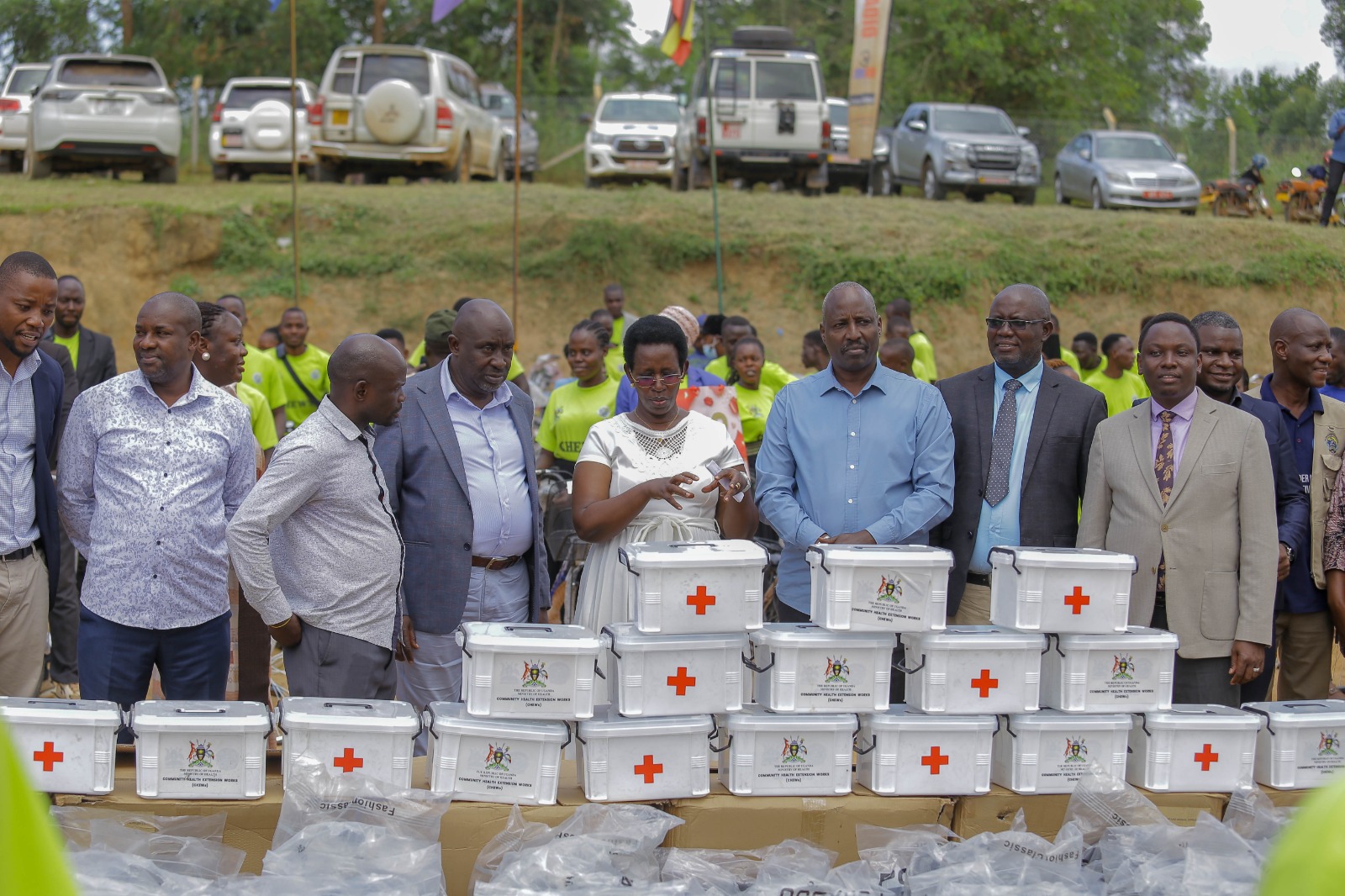
Dr. Kabanda also took time to recognize the key partners contributing to this achievement. He acknowledged partners like UNEPI, UNICEF, CDC, USAID, PATH, and Makerere University, and gave special appreciation to Living Goods for its instrumental role in developing and strengthening workflows for CHEWs through the BIRCH project.
The District Health Officers praised the initiative for showing an early impact. In Kyotera, Dr. Edward Muwanga, the District Health Officer, reported a significant increase in family planning services within just six months, crediting the success to community-based healthcare strategies. “With the deployment of CHEWs and improved supervision, we expect these numbers to rise even higher,” Dr. Muwanga noted.
Digital transformation was also a key highlight of the event. With ongoing support supervision and electronic medical registration systems, some health facilities have already achieved 100% electronic patient registration. These digital tools are expected to enhance the timeliness, accuracy, and evidence base of health interventions.
Most of the CHEWs who graduated are already enrolled on the electronic Community Health Information System (eCHIS), which will enhance service delivery and Performance Management. Digitization is a key enabler in standardizing healthcare provision and the government is investing resources to steadily scale eCHIS nationwide.
In Lwengo District, Dr. Moses Kafumbe echoed the importance of this progress: “Support from partners and government programs is vital to sustain these gains and ensure no Ugandan is left behind, no matter where they live,” he said.
Closing the ceremony, Dr. Atwiine paid tribute to the Village Health Teams (VHTs) who have served as volunteers and will now work under the supervision of CHEWs.“Even as volunteers, their role is crucial. They give what they can to improve health at the village level, and their efforts are not in vain,” she emphasized.